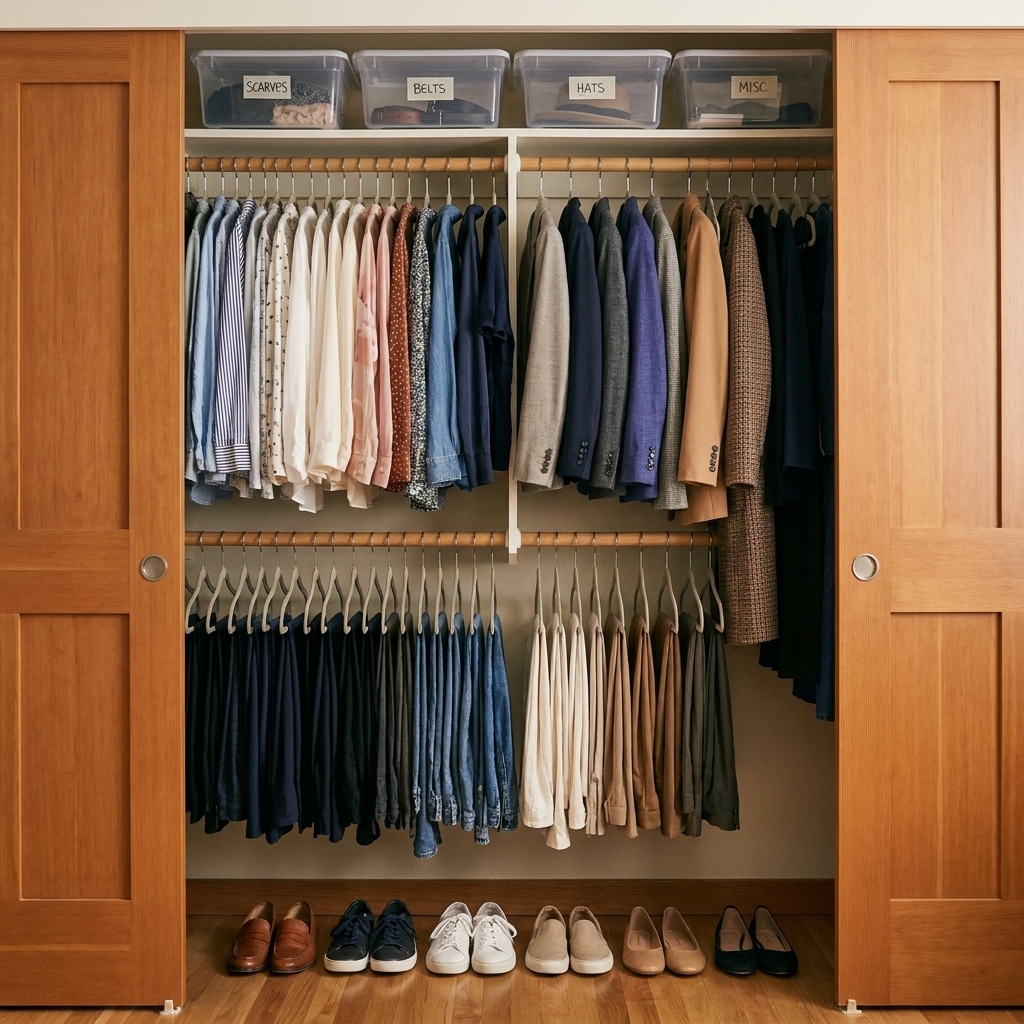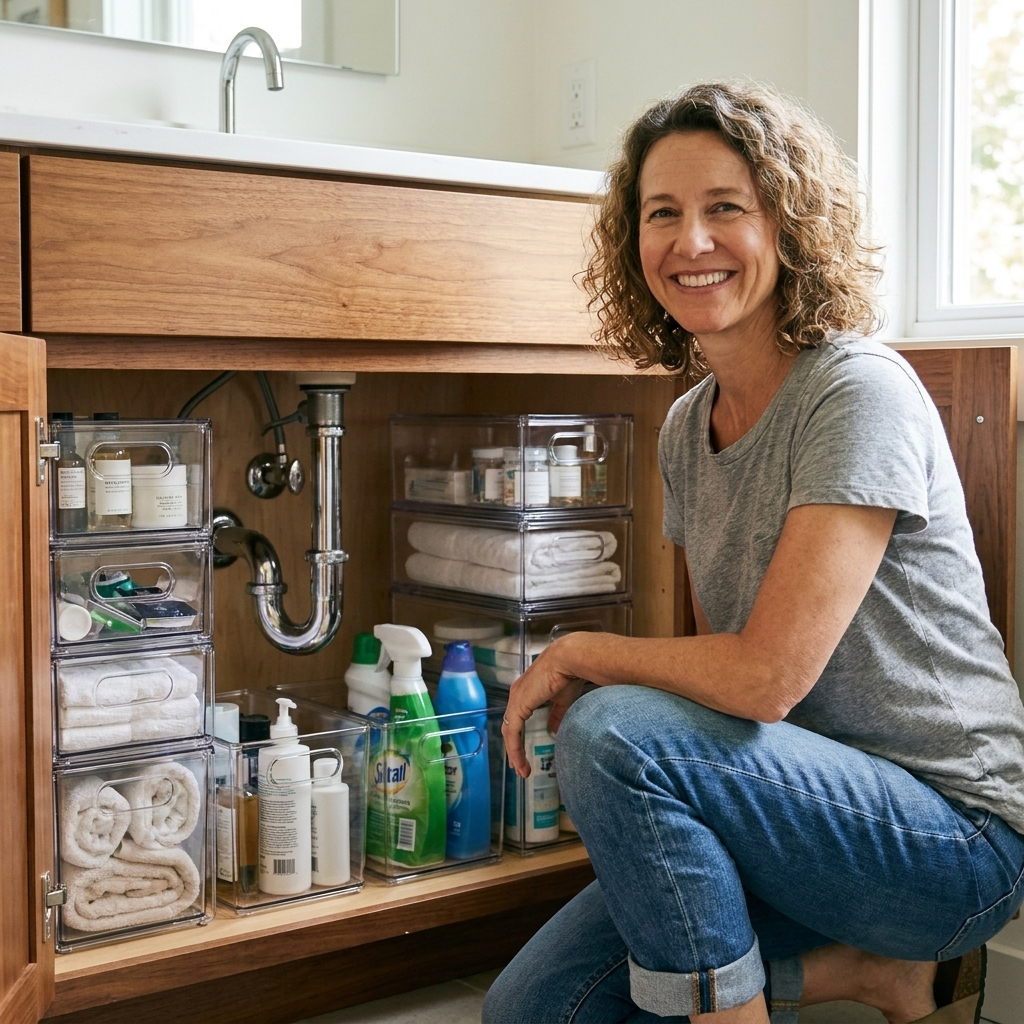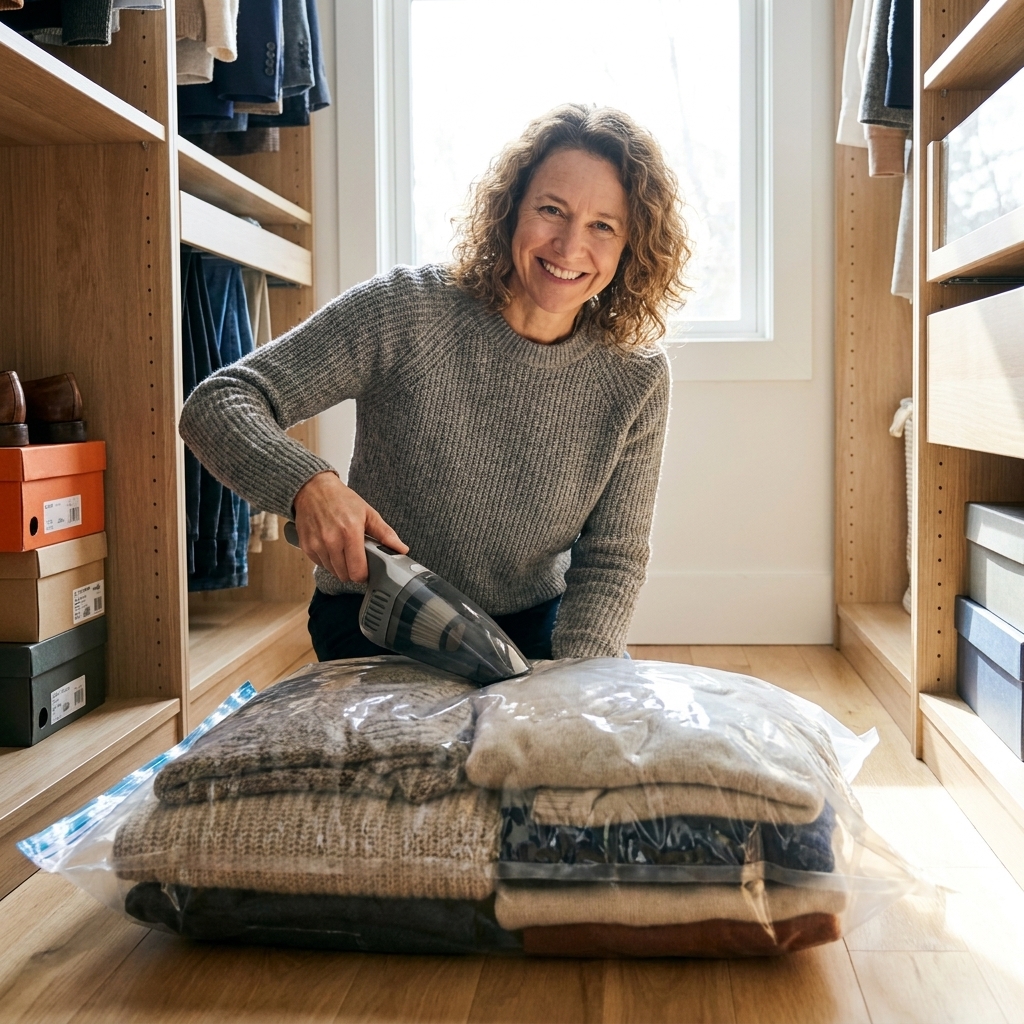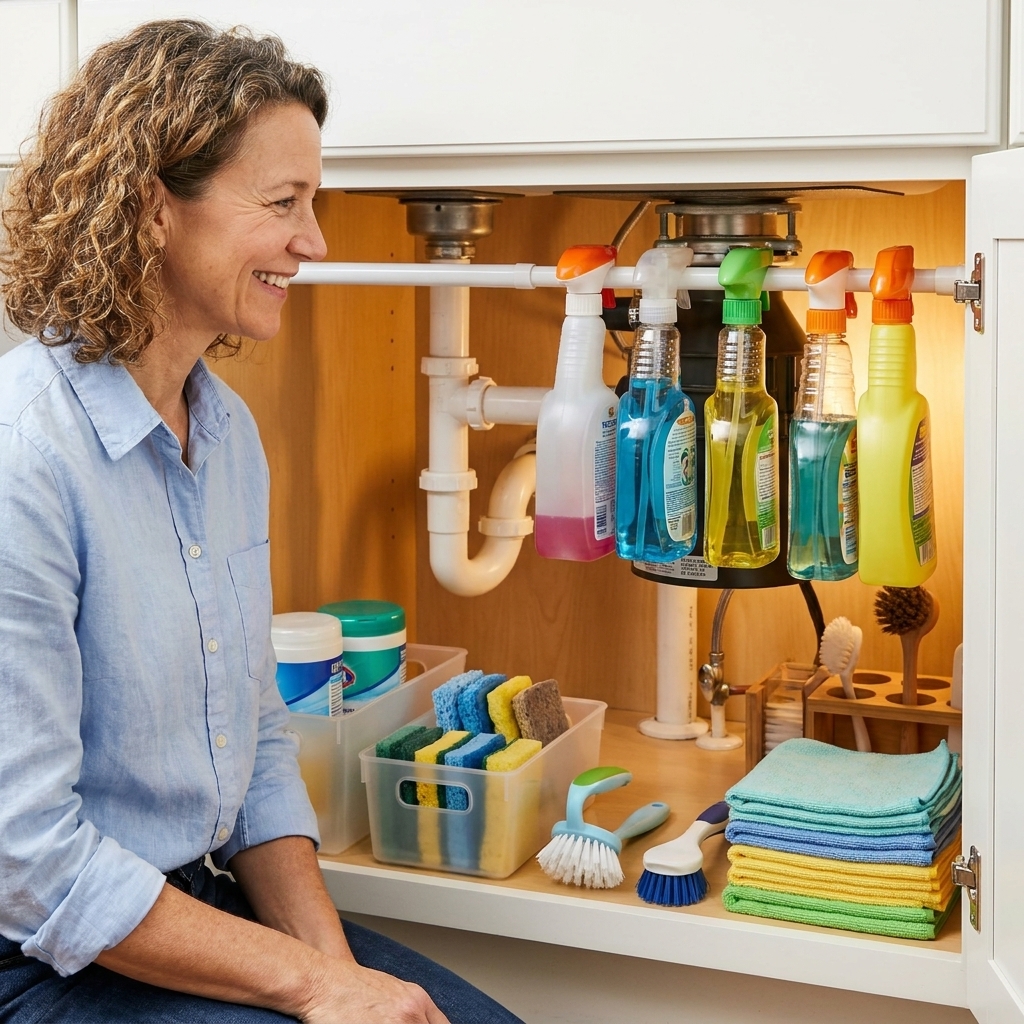
If your linen closet turns into a soft-goods avalanche every time you pull out one towel, you’re in very good company. Linen closets love to look fine from the outside, then explode the moment real life happens. The goal isn’t perfection. The goal is a closet you can shop like a little home store: grab what you need, put things back fast, and never fear the top shelf.
Start with a quick reset (15 minutes)
I’m a big believer in a short reset before you buy anything or fold a single fitted sheet. You need to see what you’re working with.
Empty one shelf at a time. This keeps you from creating a laundry-mountain on the hallway floor.
Toss the obvious no-gos immediately: torn towels, scratchy sheets nobody likes, mystery pillowcases with no matching set, and anything that still smells musty after washing and fully drying.
Quick note: If you’re on the fence, a stubborn musty smell is sometimes fixable with a hot wash plus oxygen bleach (or white vinegar in the rinse), then a thorough dry (sunlight helps). If it still smells off, it’s probably not worth the shelf space.
Wipe shelves. A damp cloth plus a drop of dish soap does the job. Let it dry while you sort.
Group by category on the floor or a bed: bath towels, hand towels, washcloths, sheet sets, duvet covers, blankets, guest items, and backstock.
Quick mindset shift: your linen closet is a high-turnover supply closet, not a museum. It should be designed for speed.
Build zones that match how you live
The easiest linen closets are organized top to bottom by how often you reach for things. Put everyday items at eye level and “rarely used” higher up.
My go-to zone map
Eye level: everyday bath towels, hand towels, washcloths.
Upper shelves: guest bedding, spare blankets, extra pillows, seasonal items.
Lower shelves: overflow and backstock (toilet paper, tissues, extra soap), hair tools in a bin, or a small laundry caddy if this closet is near bedrooms.
Door space (optional): a slim over-the-door rack for spray bottles or a hanging organizer for first-aid and travel-size items if you don’t have a separate place.
If multiple people grab towels, keep the towel zone as simple as possible. Fewer categories means fewer messes.
Folding that stays stacked
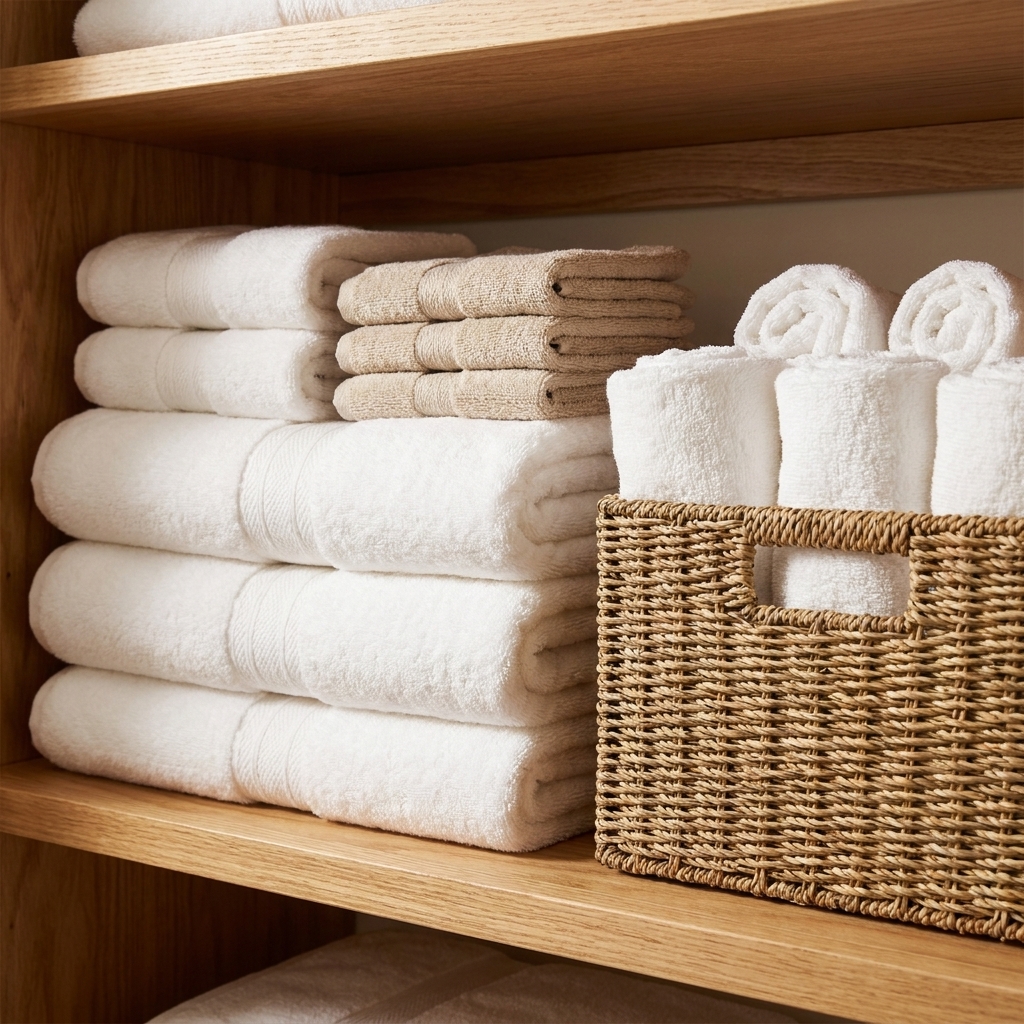
I’m going to say the quiet part out loud: the “perfect” fold is the one that doesn’t topple over when someone yanks one item out. Pick a fold that creates consistent shapes and fits your shelf depth.
Towels: stable stacks
The shelf-stack fold (fast and tidy):
Lay the towel flat.
Fold in thirds lengthwise (hot-dog style) to create a long rectangle.
Fold in half, then in half again until it matches the depth of your shelf.
Pro tip: Make one “towel template.” Fold the first towel to your ideal size, then fold every towel to match it. Uniform stacks are the secret to a closet that looks calm even when it’s full.
Sheets: no unraveling
Let’s tackle the most chaotic item first: sheets. You’ve got two options that work in real homes.
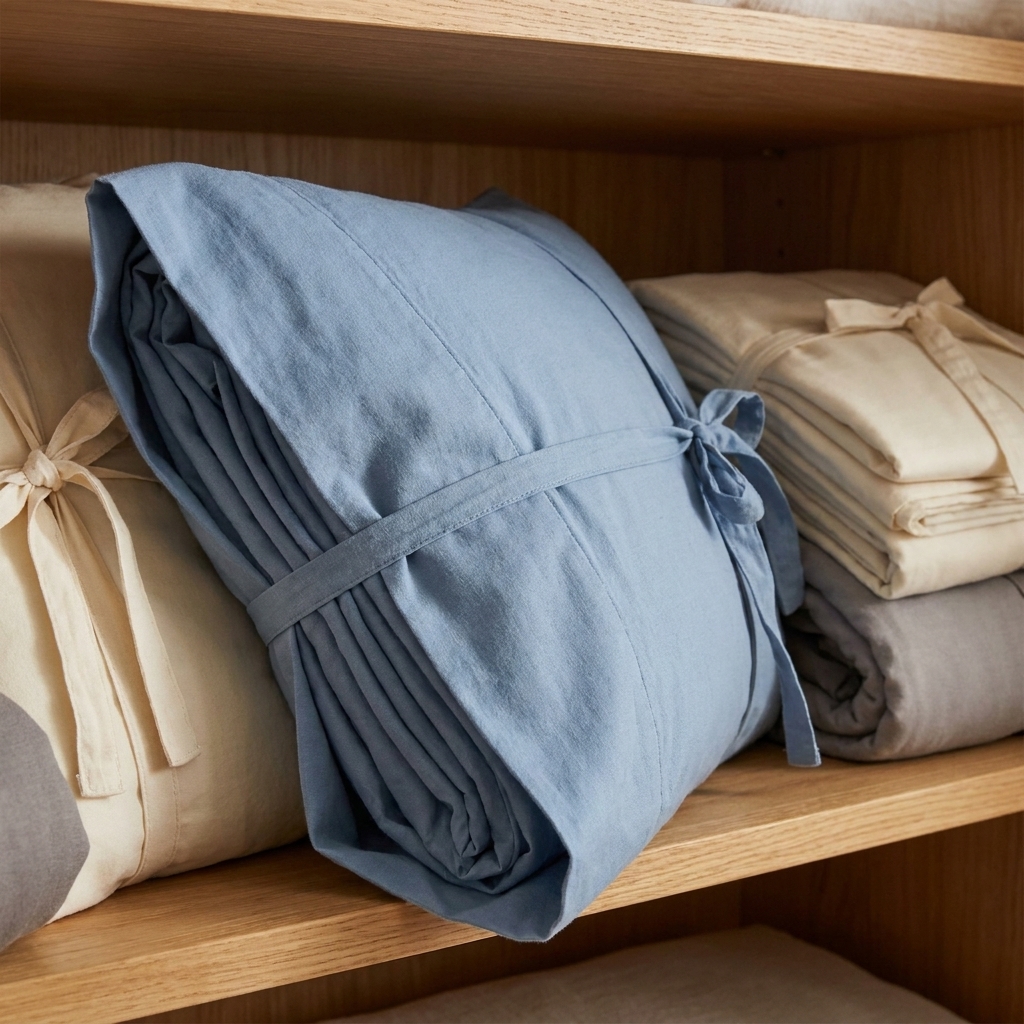
Option 1: The sheet-set bundle (my favorite)
This is the method that saves your sanity because you’ll never hunt for matching pillowcases again.
Fold the flat sheet into a rectangle that fits your shelf.
Fold the fitted sheet as best you can. Neat corners are lovely, but “folded into a rectangle” is the real requirement.
Fold pillowcases into thirds.
Stack: flat sheet on bottom, fitted sheet on top, pillowcases on top.
Wrap the whole stack with one pillowcase like an envelope so it becomes a single, contained bundle.
The result is one grab-and-go brick per bed size. It also keeps sets from slumping into a messy pile.
Option 2: File fold for shelves or bins
If your closet shelves are shallow or you use bins, file folding is your friend.
Fold sheets into a tall rectangle.
Stand them vertically like files in a drawer.
Use a shelf divider or a bin to keep them upright.
This makes it easy to pull one set without disturbing the others.
Sorting rules that prevent stuffed shelves
A linen closet looks messy for two reasons: mixed categories and overstuffed stacks. Here are sorting rules I use in busy houses.
Rule 1: Sort by bed size first
Keep king, queen, full, twin in separate sections.
If you’ve got kids, give each child a mini zone: two sheet sets plus one blanket is a solid starting point for many households.
Rule 2: Set simple quantity caps
This is the part nobody wants to hear, but it’s the difference between “organized” and “always collapsing.” These are good starting points for most homes. Adjust based on laundry frequency, allergies, sports, and how often you host.
Sheets: Many households do well with 2 sets per bed (one on, one clean). Add a third if you have frequent accidents or heavy allergy washing.
Bath towels: A practical baseline is 2 per person plus 2 extras for guests.
Hand towels: Aim for 1 per bathroom in use plus 2 to 4 backups total.
Washcloths: More flexible, but store them in a bin so they can’t avalanche.
Rule 3: Keep guest mode contained
Guests are wonderful. Guest linens scattered all over your closet aren’t. Create one bin labeled Guest with:
1 to 2 sheet sets that fit your guest bed or air mattress
2 pillowcases
1 lightweight blanket
Spare travel toiletries if you keep them
Tools worth buying
You don’t need fancy containers, but the right two or three tools make your system hold up when you’re tired, in a hurry, or delegating to other family members.
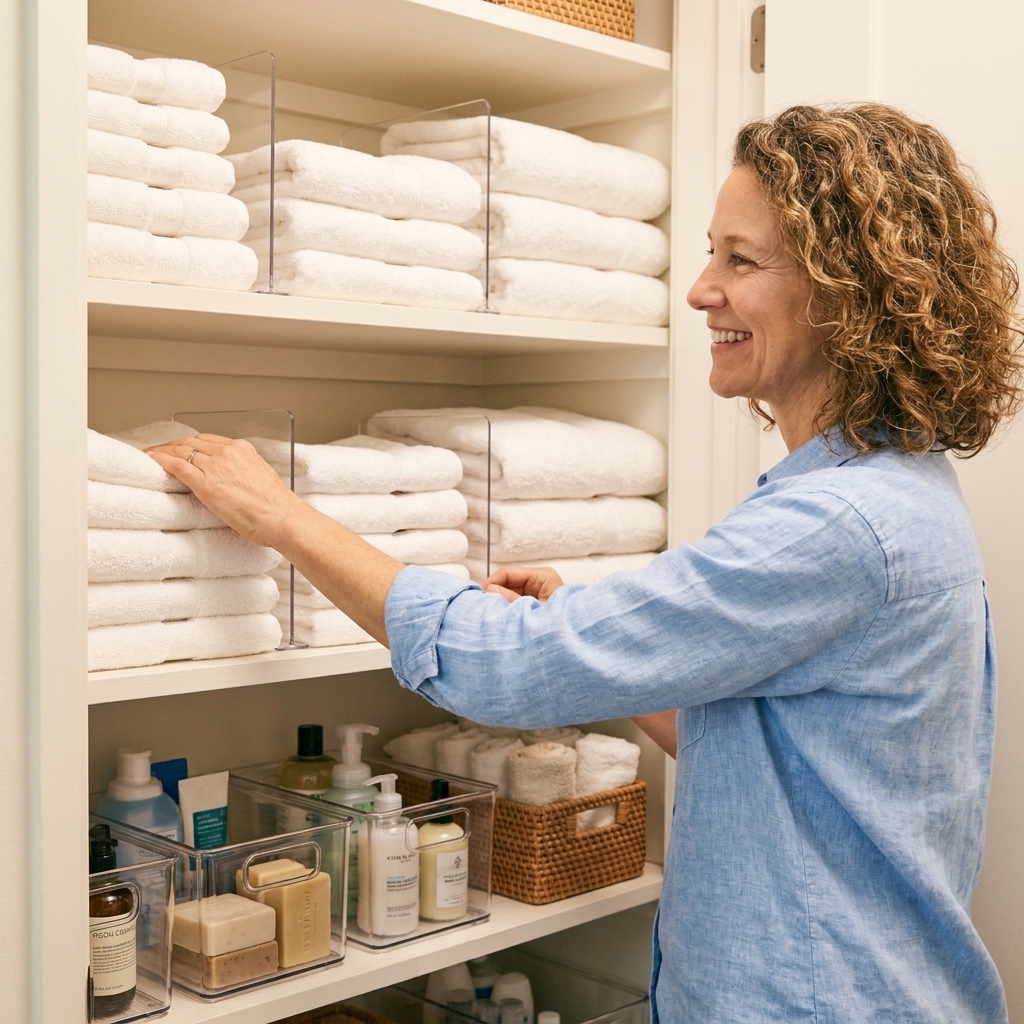
Shelf dividers: the stack fence
If you only buy one thing, buy shelf dividers. They stop stacks from leaning into each other and turning into one giant towel blob.
Use them between towel stacks, between sheet sizes, and between “everyday” and “guest.”
If your shelves are deep, use two dividers per category so stacks don’t migrate backward.
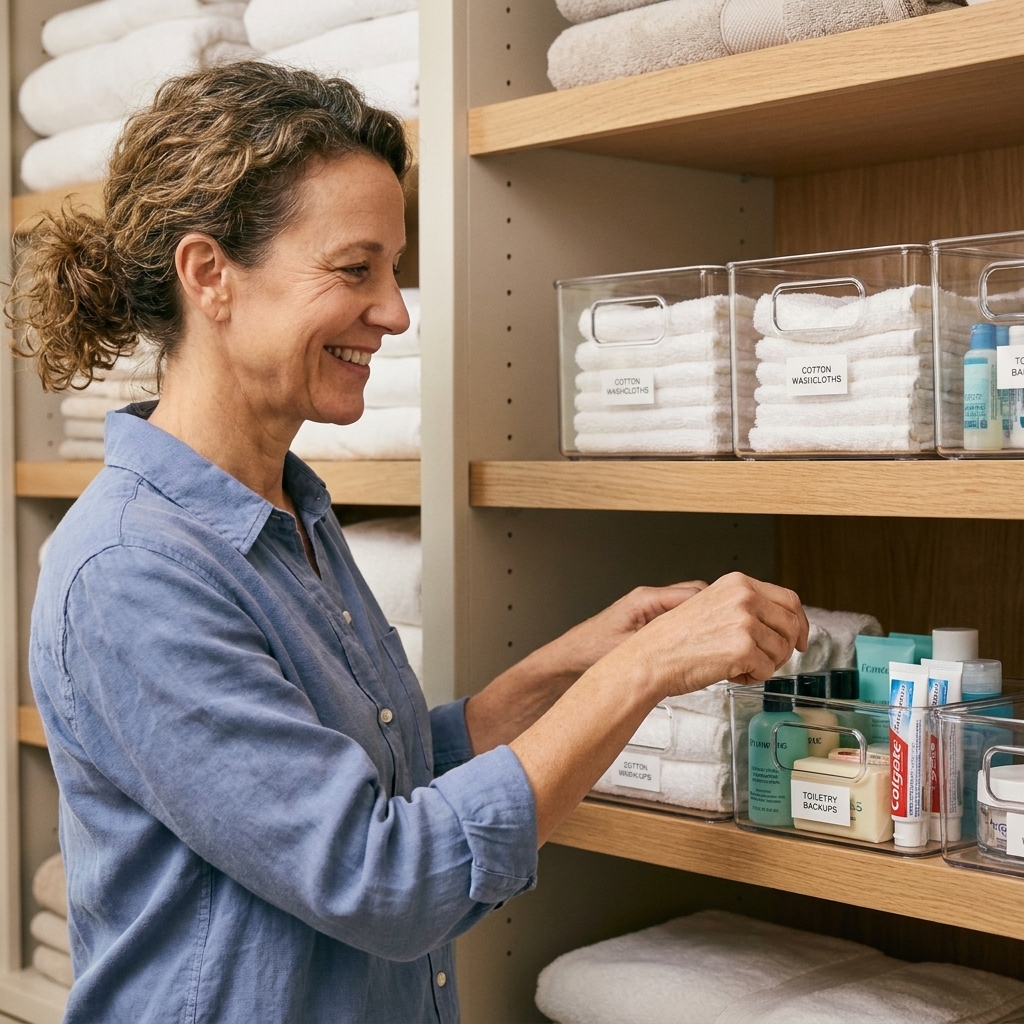
Bins: corral the small stuff
Bins are for anything that’s hard to stack.
Best bin jobs: washcloths, extra toiletry backups, feminine products, travel items, small first-aid supplies.
Clear bins are great when you want to see inventory without pulling everything out.
Opaque bins are great when visual clutter stresses you out.
Lazy Susans and turntables
Turntables are perfect for short bottles and small items on an upper shelf. They aren’t great for tall stacks of linens. Use one for:
Cotton balls, cotton swabs, travel-size toiletries
Small medicine bottles (only if safe and out of reach of kids)
Hair products if this closet is your get-ready station
Under-shelf baskets: bonus space
If you’ve got tall shelf spacing, an under-shelf basket can create a new “slot” for pillowcases or hand towels. This is one of my favorite cheap wins.
Labels people actually use
Labels aren’t just for pretty photos. They’re communication. A good label answers, “Where does this go when I’m putting it away quickly?”
What to label
By size: King Sheets, Queen Sheets, Twin Sheets.
By room: Kids Bath, Guest, Primary Bath.
By function: Backstock, First Aid, Travel.
Where labels work best
On the front edge of bins
On shelf dividers (if yours have a flat face)
On the shelf itself if categories tend to migrate
My reformed-messy trick: Keep labels simple and big enough to read from standing height. Tiny perfect script labels are lovely, but not when you’re trying to shove towels away before dinner.
Layout examples
Small closet (3 to 4 shelves)
Top: guest bin and seasonal blanket
Middle: bath towels and hand towels separated with dividers
Lower: sheet bundles by size
Bottom: backstock bin
Deep shelves that swallow linens
Use bins as drawers. One bin per sheet size, one bin for washcloths, one bin for backups.
Put rarely used items behind everyday items only if they’re in a labeled bin you can lift out.
No linen closet
You can still use the same system in:
A dresser drawer (file-fold sheets and pillowcases)
An under-bed bin (one per bed, labeled)
A hallway cabinet (towels in stacks with dividers, sheets as bundles)
Keep it tidy with a 10-minute reset
This is the part that makes your system stick long-term. Once a week, set a timer for 10 minutes.
Straighten towel stacks
Return orphan items to their category (or start a small “lonely sock” style basket for stray pillowcases)
Pull anything that belongs elsewhere
Check backstock: if it’s overflowing, you’re buying faster than you’re using
If your household is anything like mine, this little reset is the difference between “organized once” and “organized for real life.”
Quick troubleshooting
My stacks fall over constantly
Your piles are either too tall or too soft. Lower the stack height and add shelf dividers. You can also store towels in bins so they’re contained.
I can’t fold fitted sheets neatly
You don’t need a perfect fitted-sheet fold. Aim for a rectangle, then use the pillowcase bundle method so the set stays contained.
We always run out of washcloths
Washcloths disappear because they migrate. Give them one bin home and do a quick “cloth sweep” during laundry: bathroom floor, kids rooms, gym bags.
My closet smells stale
Wash everything, wipe shelves, and make sure items are fully dry before storing. If it’s a damp area, a small moisture absorber can help. Replace it as directed on the package, and keep it out of reach of kids and pets. Also don’t pack stacks too tightly. Airflow matters.
Linen closet checklist
Zones set top to bottom by frequency
Sheet sets bundled in pillowcases or file-folded
Towels folded to a consistent “template” size
Shelf dividers between stacks
Bins for small or floppy items
Simple labels that match how your household thinks
10-minute weekly reset to keep it from drifting
Once you’ve got zones, realistic quantity caps, and a couple of guardrails like dividers and bins, a linen closet stops being a problem spot and starts acting like storage that actually supports your week. If you’ve got a go-to folding method or a clever bin setup, share it in the comments so others can steal your best idea.