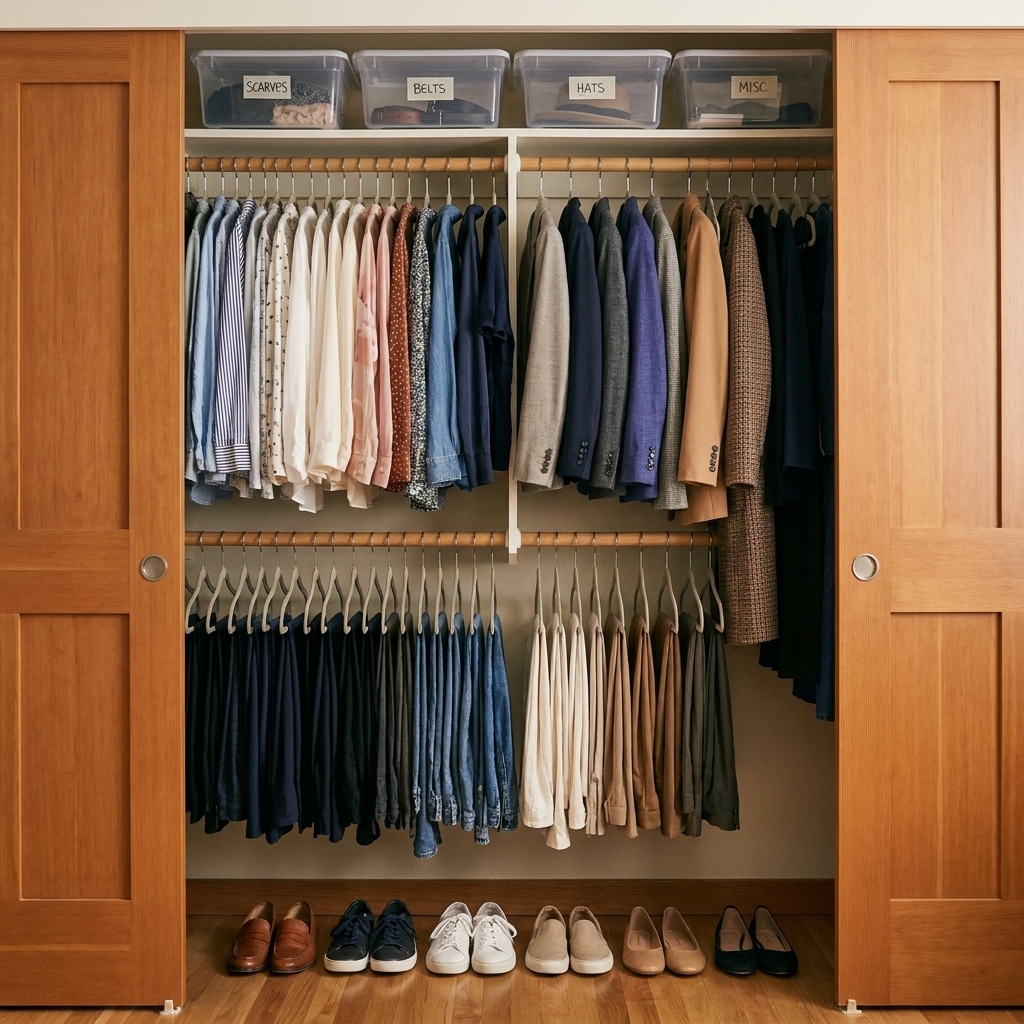
If you are anything like me, winter coats do not politely “wait their turn.” They sprawl. They slump. They multiply on hooks like tribbles. And bulky sweaters take up an entire shelf while somehow still ending up in a floor pile.
The good news is you do not need a picture-perfect closet to store winter wear well. You just need a repeatable off-season routine that keeps your coats and sweaters clean, protected, and out of your prime real estate.

Before you store anything: clean it
I learned this the hard way: storing “pretty clean” winter clothes is how you get mystery stains that set permanently, and that faint basement smell that never fully leaves.
Quick cleaning checklist
- Read care labels. If it says dry clean only, that is the safest route, especially for structured wool coats. Some items can handle careful hand-washing, but if you are not 100% sure, do not experiment right before months of storage.
- Launder sweaters. Use a gentle cycle and lay flat to dry if needed. Make sure they are completely dry before storing.
- Spot-check cuffs, collars, and underarms. Body oils are the biggest “invisible” problem during storage.
- Empty every pocket. Tissues, lip balm, receipts, coins. All of it.
- Let outerwear air out. Give coats a few hours on a sturdy hanger in a well-ventilated room.
If you only do one thing from this entire article, do this: store clean, fully dry items. Everything else just makes clean storage easier.
Sort like a reformed messy person
Do not pull out every single cold-weather item and try to Marie Kondo your entire life at once. Use three quick piles so you can move forward without spiraling.
- Keep and store: you wore it, it fits, you like it.
- Donate or sell: you did not reach for it all winter; it itches, it does not fit, or you own three versions already.
- Repair: loose buttons, broken zipper, small seam. Add these to a short “fix it” list and deal with it within two weeks, or let it go.
My personal rule: if it made me grumpy every time I wore it, it does not deserve premium storage space in my home.
How to fold bulky sweaters
Hanging heavy sweaters is a fast track to shoulder bumps and stretched-out knits. Folding wins almost every time, especially for wool, cashmere, alpaca, and chunky cotton.
The no-stretch sweater fold
- Lay the sweater face down on a flat surface.
- Fold one sleeve across the back, then fold it down at the elbow so it fits within the body width.
- Repeat on the other side.
- Fold the bottom up about one third.
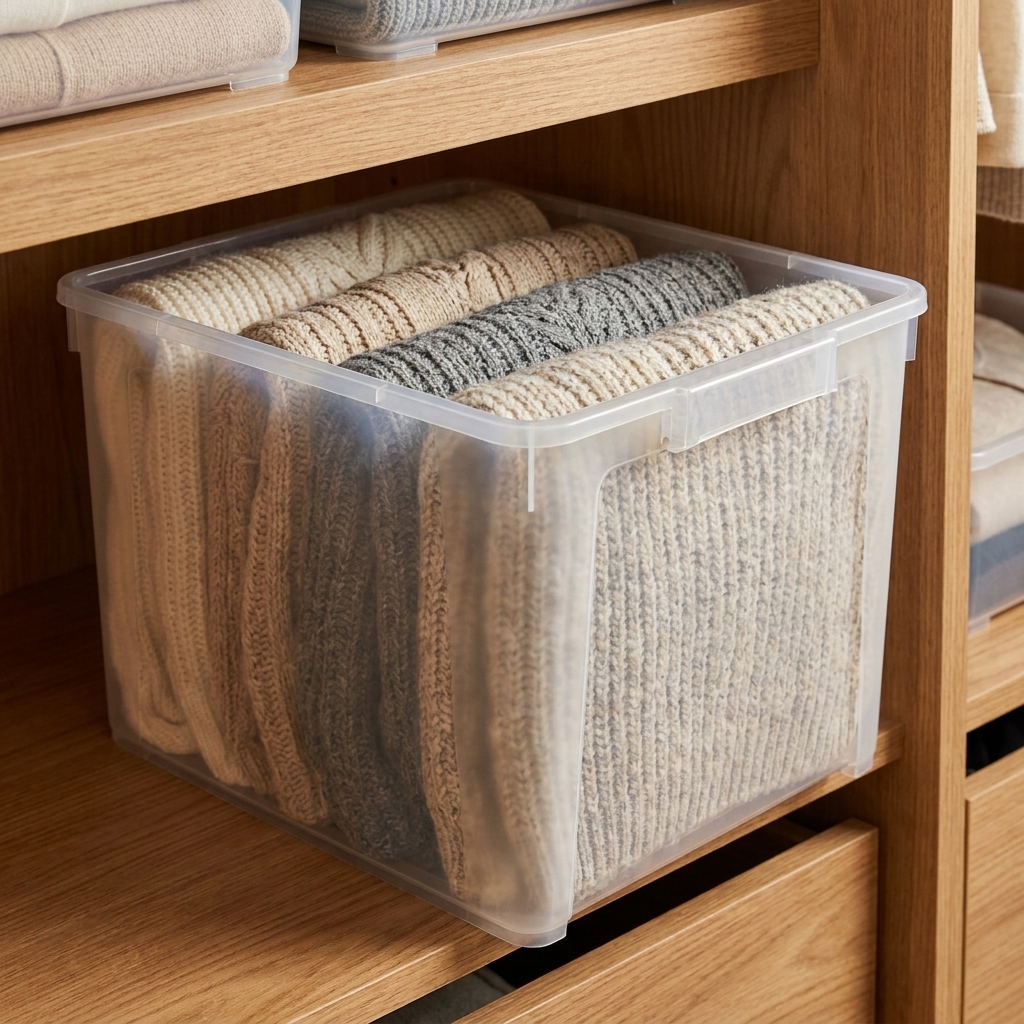
- Fold up again to make a compact rectangle that stands neatly in a bin.
Space saver tip: Store sweaters vertically like files inside a bin. You can see everything at once, and you will not wreck the stack every time you pull one out.
Vacuum-sealing: when it helps
Vacuum storage bags are amazing for saving space, but they are not perfect for every fabric or item. Think of them as a tool, not a lifestyle.
Best items for vacuum bags
- Puffer jackets (fully dry)
- Fleece pullovers
- Cotton hoodies and sweatshirts
- Synthetic scarves, hats, gloves
- Extra blankets and throws
Items I do not vacuum-seal (or I do it carefully)
- Wool and cashmere: Compression can flatten loft and create stubborn creases. If you do seal them, go light on the suction and avoid leaving them packed for extremely long stretches.
- Leather and suede: Avoid. They need to breathe and can warp or develop moisture issues.
- Structured coats: Wool coats with shoulder structure can crease badly when compressed.
How to vacuum-seal without regrets
- Fold items smoothly, not stuffed.
- Do not overfill the bag. Leave space so the seal closes cleanly.
- Add a cedar block or lavender sachet if you like natural moth deterrents. Keep it from touching delicate knits directly by placing it in a small cotton pouch. (They help, but they are not a force field.)
- Seal, vacuum, then stop as soon as it is flat. You want “compressed,” not “brick.”
- Label the bag with what is inside and where it belongs next winter.
Reality check: Vacuum bags save the most space under beds and on high closet shelves. If your closet has one top shelf, that is prime vacuum-bag territory.
Puffer note: If your puffer looks sad and wrinkly when you unseal it, give it time. A good shake, a day on a hanger, and some airflow usually bring the loft back.
Coats: hang the right ones
Coats take up a ridiculous amount of visual and physical space. The trick is choosing what stays accessible and what gets moved out.
What to keep in the main closet
- One light jacket for chilly mornings
- A rain shell or trench if you use it year-round
- One “nice” coat if spring is still unpredictable where you live
What to store away
- Heavy wool coats
- Puffers you will not use for months
- Ski jackets and snow gear
Best way to store coats off-season
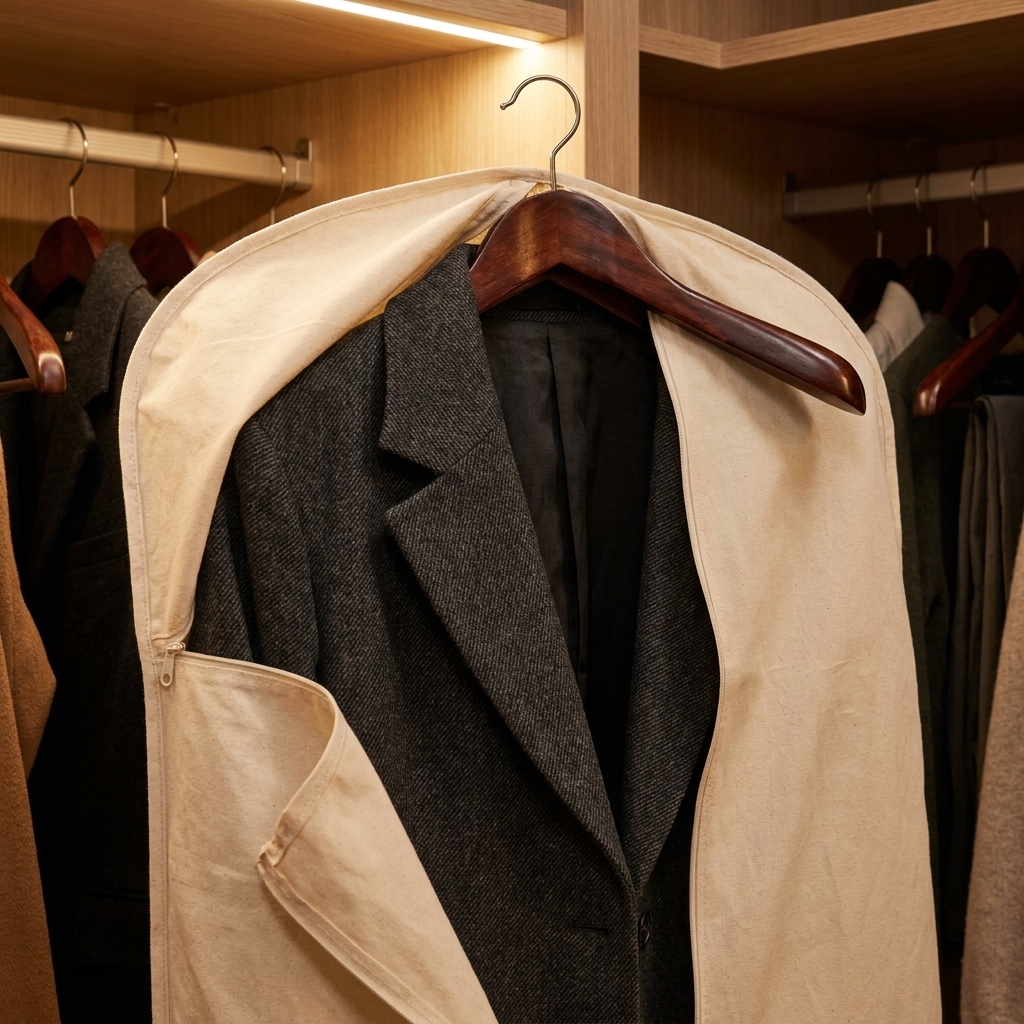
- Use breathable garment bags for wool coats. Look for cotton or canvas, not sealed plastic.
- Choose sturdy hangers. Wide-shoulder hangers prevent dents and sagging.
- Button or zip them so they keep their shape.
- Do not cram. Coats need airflow, or they can come out stale.
Choose the right storage spot
Where you store winter wear matters as much as how you store it. Aim for cool, dry, and stable.
Good storage locations
- Top closet shelf: Great for vacuum bags and labeled bins.
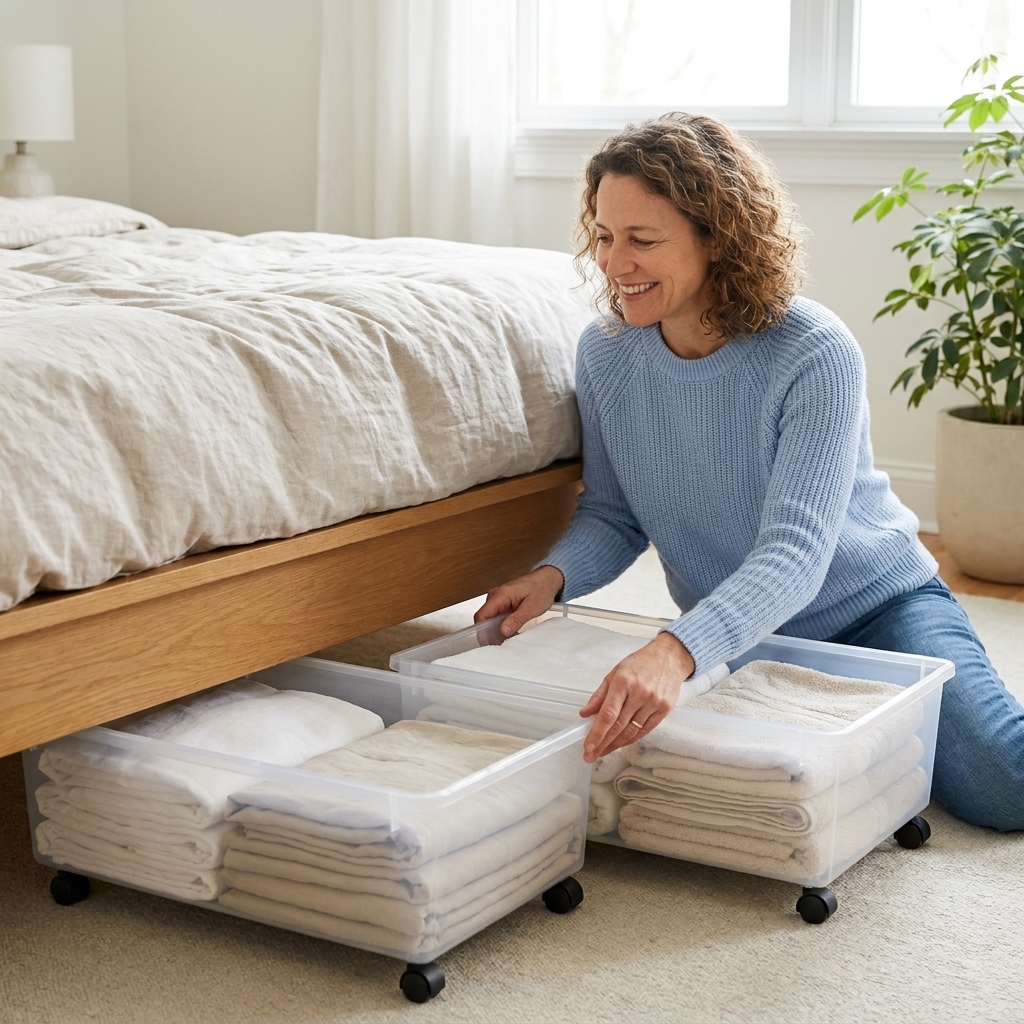
- Under the bed: Perfect for low-profile zip bins, especially in small homes.
- Linen closet or hallway closet: If it stays dry and you can keep items contained.
Use caution with these locations
- Basements: Higher moisture risk. Only store here if everything is sealed and you use a dehumidifier.
- Attics: Temperature swings can be rough on fabrics. Avoid for delicate knits and structured coats.
- Garage: Pests and odors. I skip it entirely for clothing.
If you are unsure, store one “test” sweater in a bin for two weeks where you plan to stash everything. If it smells weird when you open it, choose a different spot.
My favorite low-fuss containers
You do not need twenty matching bins to make this work. You need containers that match the way you actually put things away.
- Clear lidded bins: Best for folded sweaters and accessories. You can see what is inside without reopening everything.
- Fabric zip bags: Best under beds. Choose ones with strong zippers and handles.
- Vacuum bags: Best for puffers, fleece, and soft bulk when space is tight.
- Breathable garment bags: Best for wool coats and nicer outerwear.
Labeling tip: Keep labels boring and specific. “Sweaters” turns into a mystery bin fast. “Chunky knits, size M-L” is the kind of label your future self will thank you for.
Stop moths and musty smells
I am not here for panic-buying twenty moth products. The basics work.
Simple protection plan
- Clean clothes only. This is the big one.
- Keep items contained. Lidded bins, sealed bags, or garment bags.
- Add a deterrent if you want. Cedar blocks, cedar rings, or lavender sachets. Helpful for prevention, not a cure for an active problem.
- Do a mid-off-season check. Open bins once halfway through storage to inspect and air things out if you can.
If moths have been an issue in your home, prioritize airtight storage for sweaters and consider having wool items professionally cleaned before storing. For extra peace of mind, you can quarantine new thrifted wool, freeze items you suspect were exposed (once they are dry), and use moth traps to monitor activity.
Boots and snow gear: store them separately
Boots are their own ecosystem, and they should not share a bin with your sweaters.
- Clean first: wipe off dirt, and remove salt stains with a damp cloth. Let them dry fully away from direct heat.
- Hold the shape: stuff boots with paper or boot shapers so they do not collapse.
- Let them breathe: a ventilated bin or an open shelf in a dry closet is better than airtight storage unless you are absolutely sure they are bone-dry.
- Keep them contained: store boots in their own bin or bag so any lingering odor or grime does not transfer to clothing.
Step-by-step: the 45-minute reset
This is the exact routine I do when the weather flips and I need my closet back.
- Set a timer for 45 minutes. Perfection is not the goal. Progress is.
- Pull winter coats and bulky sweaters only. Not every scarf you have ever owned.
- Make three piles: store, donate, repair.
- Clean check: anything questionable goes in a laundry basket or dry-clean pile.
- Fold sweaters. Place them into a clear bin or fabric zip bag.
- Decide vacuum vs not. Vacuum-seal the “soft bulk” items first.
- Bag coats. Use breathable garment bags for wool and structured coats.
- Store up high or under-bed. Put the bulkiest items farthest from daily reach.
- Reset the closet front line. Leave only the current-season jackets and everyday layers.
Even if you stop after step five, you will still feel a noticeable difference. That is the magic of moving the bulky stuff out of the prime zone.
Quick FAQ
Can I store coats in plastic garment bags?
For long-term storage, I prefer breathable cotton garment bags for wool and other natural fibers. Plastic can trap stale air and odors and can create condensation issues if anything goes in even slightly damp. If you do use plastic for dust protection, make sure the coat is fully dry and consider leaving room for airflow.
Is it okay to store sweaters in vacuum bags all summer?
For synthetics and fleece, yes. For delicate natural fibers like cashmere and some wools, I prefer breathable bins. If you do vacuum-seal them, do not compress them into a rock and try not to leave them packed for extremely long periods.
How do I keep stored clothes from smelling stale?
Store only clean, fully dry items, choose a dry location, and use sealed containers. A quick air-out day halfway through the off-season helps too.
Should I keep winter boots with coats and sweaters?
Only if they are totally clean and dry, and even then I like storing boots separately. It is easier to prevent lingering moisture, salt, and odors from transferring to clothing.
A “future you” tip
Before you slide bins away, tuck one note inside each container with two things: what is in it and where it should go when it comes back out. When fall hits and life is busy, this turns re-unpacking into a five-minute job instead of a whole weekend project.
Your closet does not need to look like a catalog. It just needs to work for the version of you who is trying to get out the door on a Monday morning.