Twice a year, my closet tries to convince me it is a bottomless pit. Sweaters multiply, sandals migrate, and somehow one single hanger becomes home to three scarves and a mystery belt I have never once worn in public.
The fix is not a “perfect closet.” It is a simple, repeatable swap that keeps only what you actually wear in your active space, and tucks the rest away like a well-behaved guest until the next season.
This is my realistic, reformed-messy-person routine for seasonal wardrobe swaps. It is designed for busy households, limited storage, and the kind of life where laundry sometimes lives in a basket for a day or two. No shame. Just systems.
What a seasonal swap does
A twice-a-year wardrobe swap is a maintenance habit, not a massive decluttering marathon. The goal is to:
- Make your daily closet easier. Fewer choices, less digging, fewer “nothing to wear” moments.
- Protect off-season items. Properly cleaned and stored clothes last longer.
- Stop the creep. If your closet is always full, it is hard to notice what you do not wear.
- Create a natural donation rhythm. Twice a year is often enough to keep clutter from rebuilding.
Think of it like rotating your pantry shelves so the staples you actually use stay front and center. Same space, calmer experience.
When to do it
I like to schedule swaps around the moments your body already knows the season changed:
- Spring swap: when the forecast is consistently warmer and you stop reaching for heavy layers.
- Fall swap: when mornings are cool enough that you want a real jacket again.
If you live somewhere with weird shoulder-season weather, do a “hybrid closet” for a few weeks. Keep a small section for in-between pieces you reach for constantly, like a light sweater, a rain shell, and one pair of closed-toe shoes. The goal is to stop swapping back and forth daily.
How to make it stick
- Put it on the calendar as a 90-minute reset, not an all-day overhaul.
- Pair it with something pleasant: a podcast, a comfort show in the background, or a fancy coffee.
- Do it the same weekend you change seasonal household items, like bedding or entryway gear.
Supplies that help
You can do this with what you already have. If you want a few “make it easier” items, these are the ones I reach for again and again:
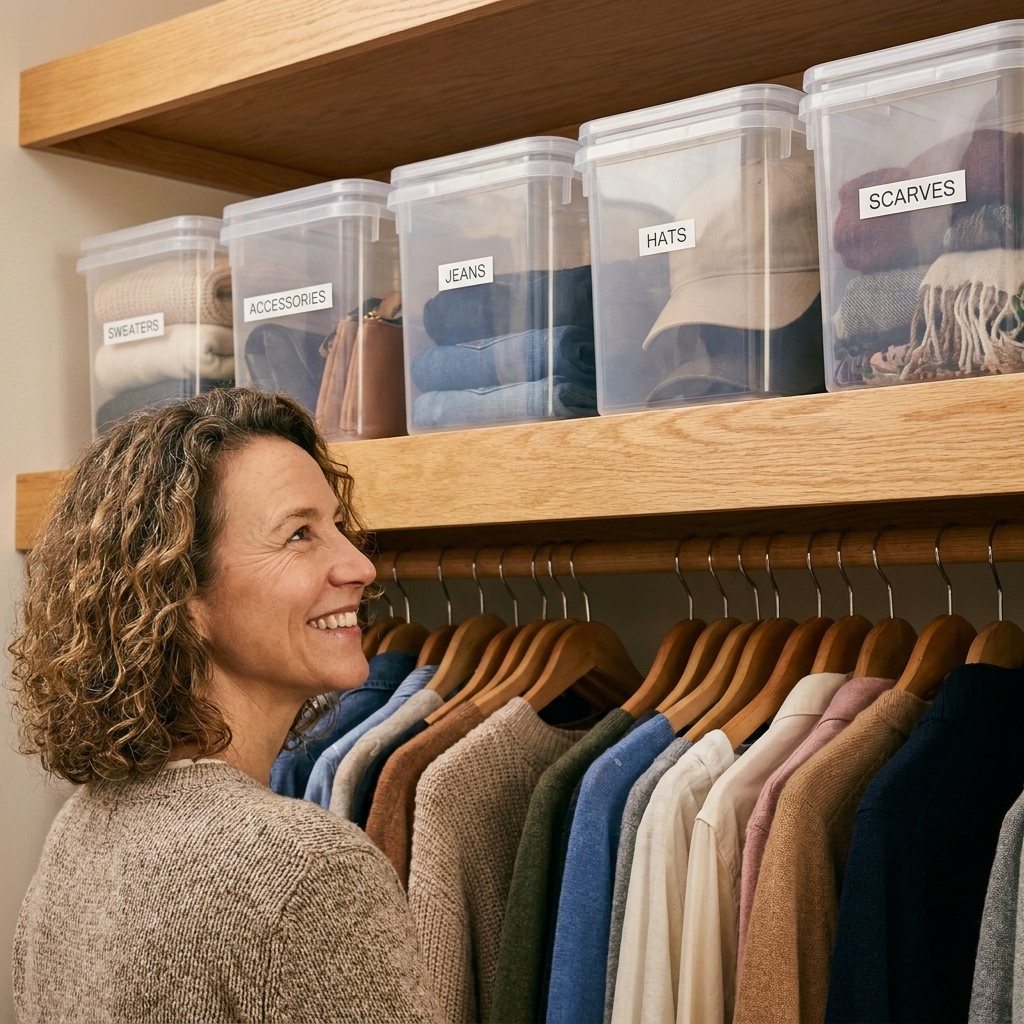
- Clear bins with lids for visibility and stacking.
- Under-bed storage bags for bulky knits, extra blankets, or rarely used items.
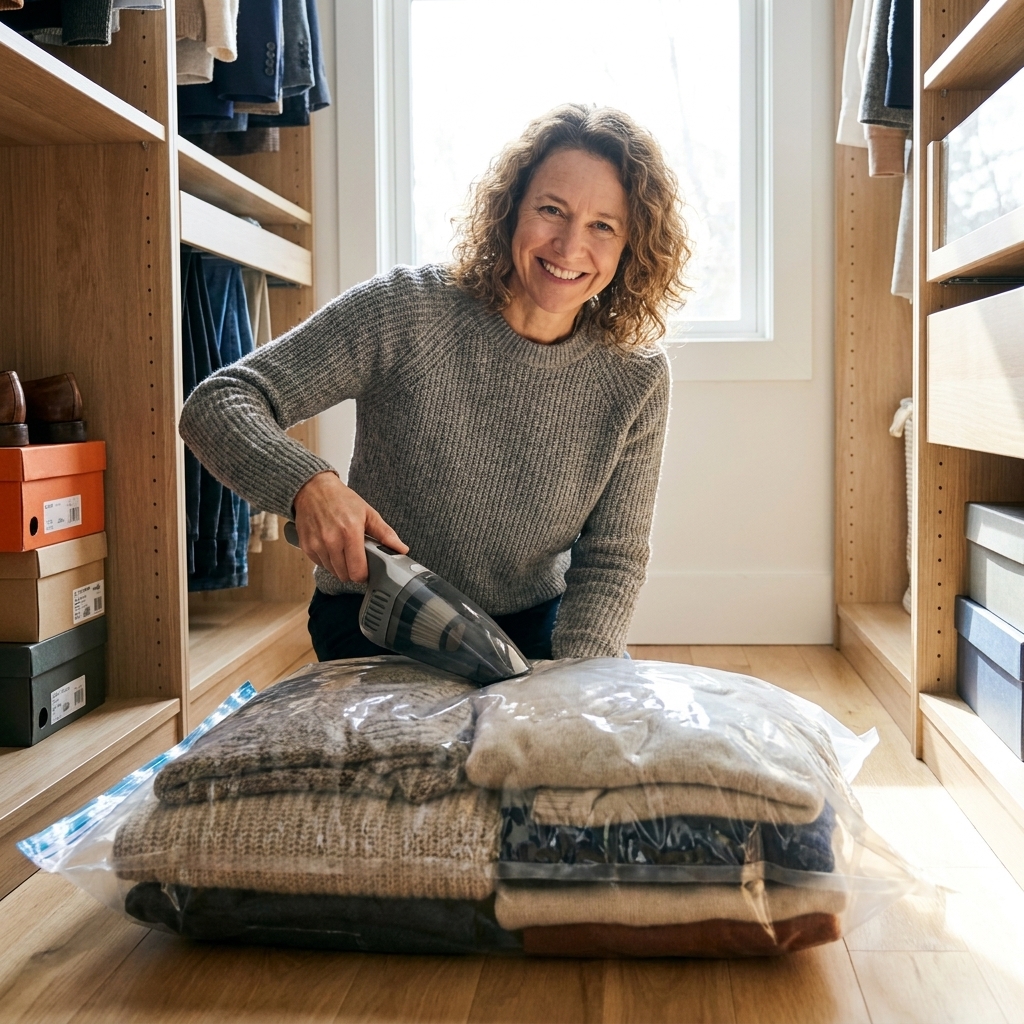
- Vacuum-seal bags for saving space, with one warning: compression can flatten loft and create stubborn creases, so they are not ideal for long-term storage of down, puffy coats, or fluffy knits you want to keep plush.
- Drawer dividers for tanks, socks, scarves, and workout gear.
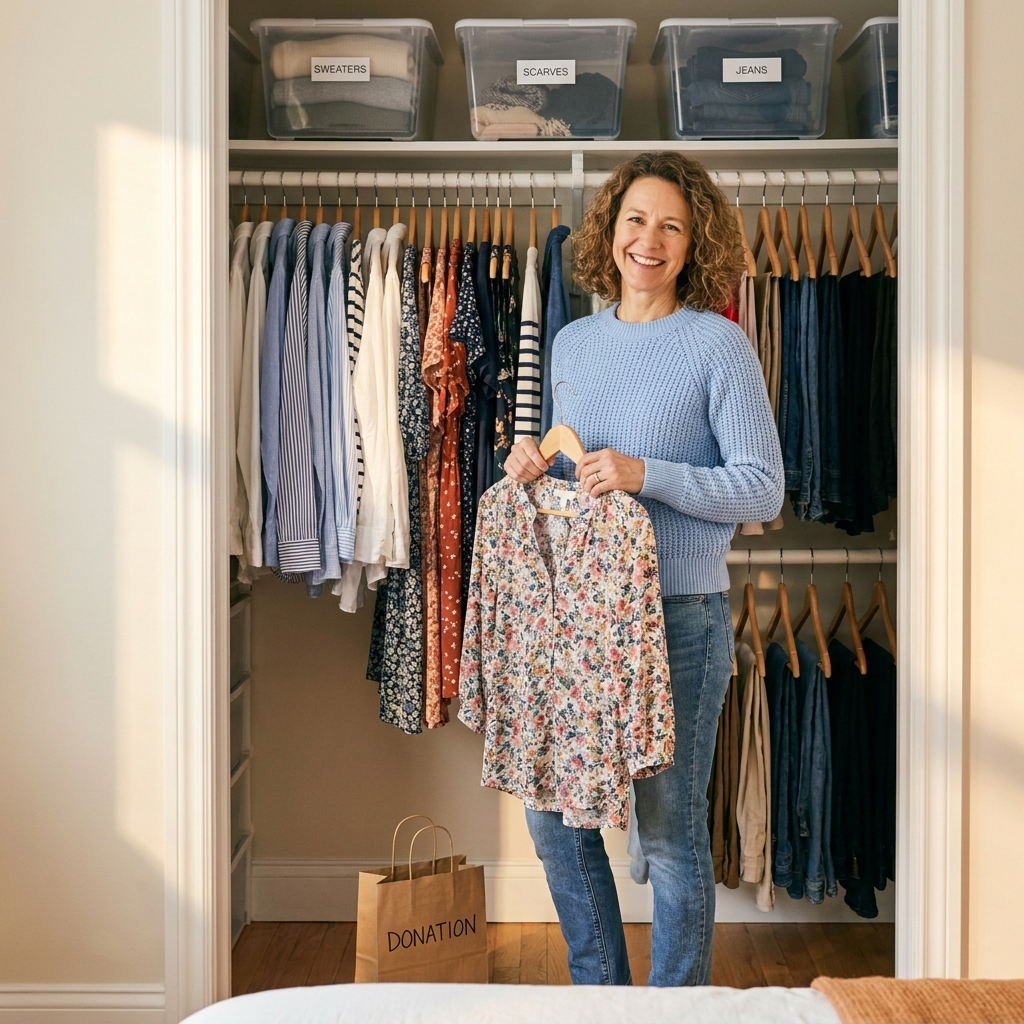
- A donation bag or box that lives nearby during the swap.
- Label tape or a permanent marker so you are not mystery-binning your future self.
The 7-step swap
This is the exact order I use, because it keeps the mess contained. You do not need to pull everything out of the closet at once unless you love chaos. I do not.
Step 1: Set up three zones
- Keep out (in-season)
- Store away (off-season)
- Exit (donate, sell, recycle, trash)
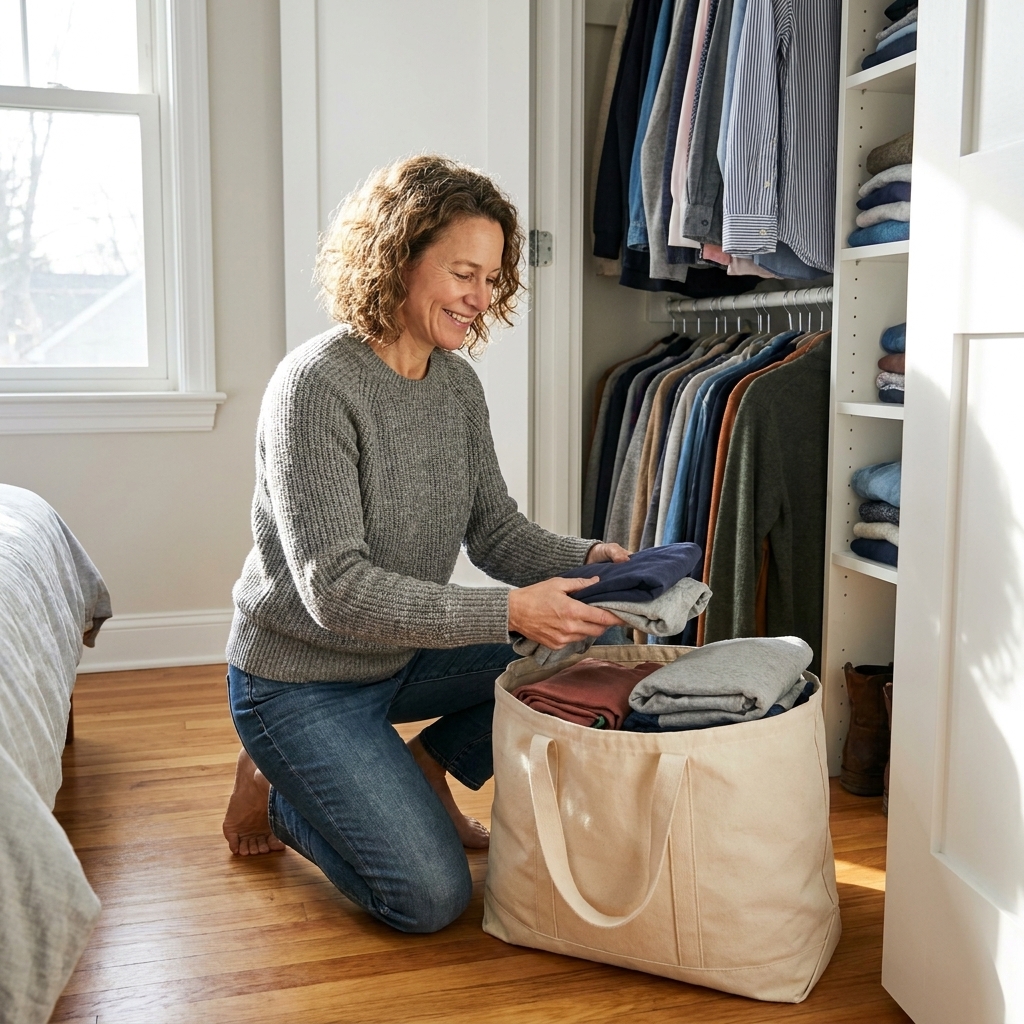
A bed works well as the “keep out” zone. A laundry basket works as the “store away” catcher. A bag by the door is your “exit” zone.
Step 2: Start with the obvious categories
Pick one category and finish it before moving on. My usual order:
- Shoes
- Coats and heavy layers
- Sweaters or summer tops
- Bottoms
- Accessories
Starting with shoes and coats creates instant breathing room fast, which is motivating.
Quick shoe note: before you store pairs away, knock off dirt, wipe down sneakers, and condition leather if it is looking thirsty. Stuff tall boots with rolled paper or boot shapers so they keep their shape.
Step 3: Do a quick real-life edit
This is the no-drama filter I use. If any of these are true, it goes to the exit zone:
- It does not fit comfortably right now.
- It itches, pinches, rides up, or requires adjusting all day.
- You avoided wearing it last season even when it was clean.
- It is stained or damaged and you will not repair it within two weeks.
You are not building a museum. You are building a closet you can get dressed from on a busy morning.
Step 4: Reset your prime space
Prime real estate is the easiest-to-reach space. Give it to your most-worn items:
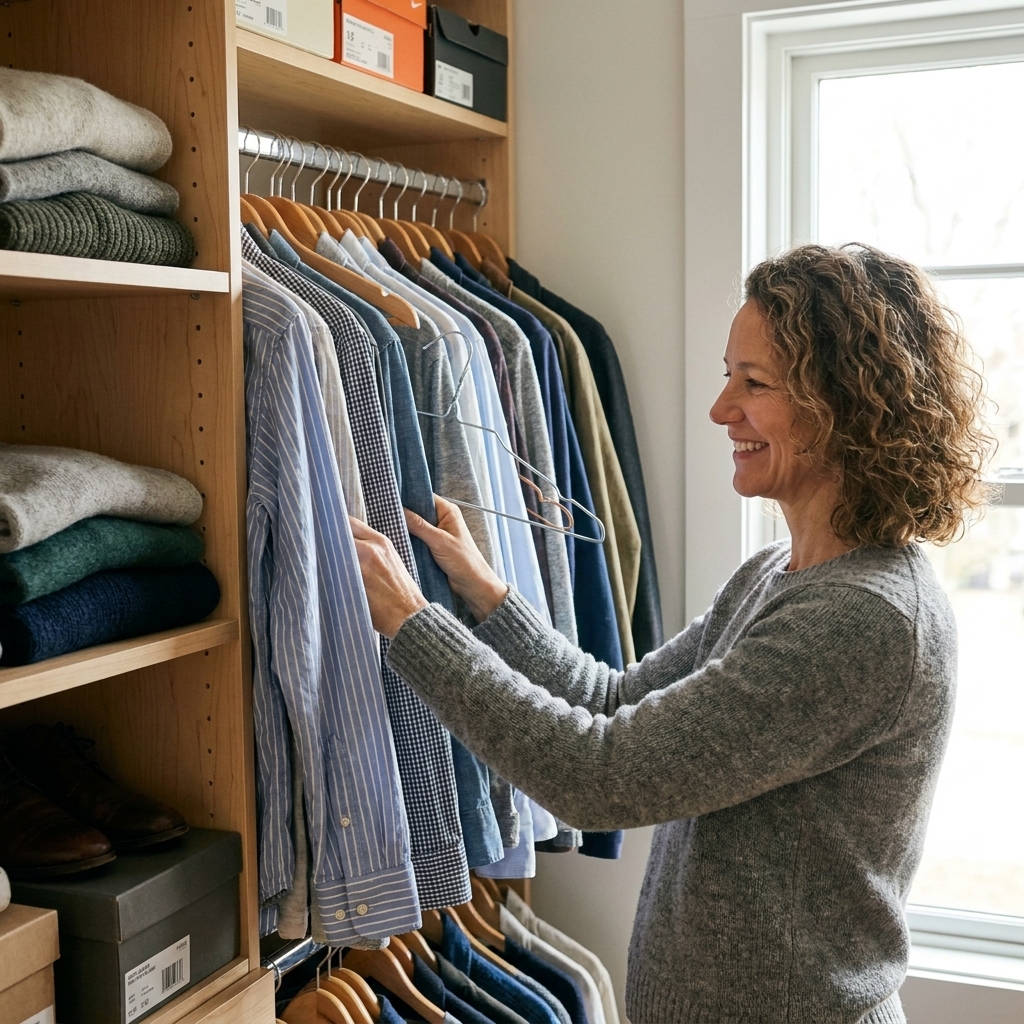
- Hang your go-to pieces at eye level.
- Put everyday shoes where your hand naturally reaches.
- Keep a small basket for in-season accessories you use constantly.
If something is “special occasion only,” it does not belong in the most convenient spot.
One hanger detail that matters: heavy sweaters are happiest folded, and structured coats do better on sturdy, shaped hangers so shoulders do not slump.
Step 5: Store off-season items well
Storage is where good intentions go to die if the system is fussy. Keep it simple:
- Clean first. Wash or dry-clean before storing. Residue from body oils, deodorant, and everyday life can contribute to discoloration over time and make stains harder to remove later. It can also attract pests like clothes moths and carpet beetles.
- Group by type. Sweaters together, summer shorts together, etc.
- Label like you mean it. “Winter sweaters” beats “clothes.”
- Use breathable storage for natural fibers if you have moth concerns.
My rule: if I cannot find it in 10 seconds, the label is not specific enough.
If you use cedar blocks or lavender sachets, think of them as a nice bonus, not a force field. Clean clothes and sealed, sensible storage do the heavy lifting.
For dry-clean-only pieces: air them out, spot-check for stains, and store them in a breathable garment bag. Avoid storing items long-term in thin plastic from the cleaner, since it can trap moisture.
Step 6: Create a one-bin maybe buffer
If you are stuck on items, give yourself a small buffer. Pick one bin or one section of a shelf and call it:
- Maybe, revisit next swap
It keeps you moving and prevents decision fatigue. Just keep the container limited. Unlimited “maybe” becomes clutter in a pretty box.
Step 7: Finish with a 10-minute reset
- Put empty hangers back where they belong.
- Wipe the closet floor and shelf edges quickly.
- Replace a fresh cedar block or lavender sachet if you use them.
- Take the donation bag to your car immediately.
If you do nothing else, do the donation bag to car step. It is the difference between progress and “donations that live in the hallway for six months.”
What stays vs what stores
If your climate is mild, you might not need a full swap. Aim for a closet that holds what you wear in the next 4 to 6 weeks.
Keep active
- Your current season basics (work outfits, school pickup outfits, weekend outfits)
- One or two “just in case” layers (a light jacket, a cardigan)
- Workout gear you actually use
- Comfort items you reach for weekly
Store away
- Bulky extremes (puffy coats, heavy wool, thick boots, beach coverups)
- Formal wear you use rarely
- Items that only work in very specific weather
Exit
- Duplicates you never choose
- Items that require a “special bra” or constant adjusting
- Things you keep only because they were expensive
Where to store things
You do not need a fancy storage room. Choose the least annoying option for your home layout.
Good storage spots
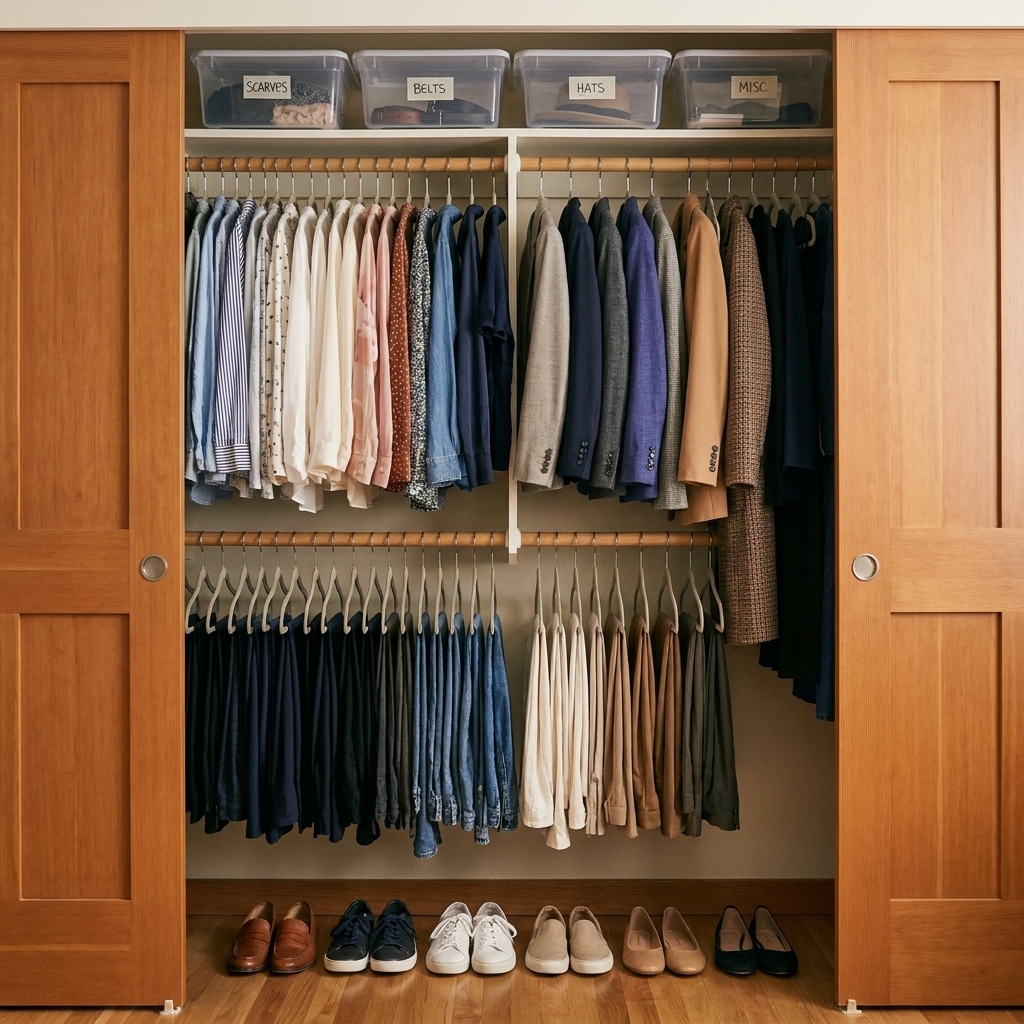
- Top closet shelf: best for labeled bins of off-season basics.
- Under the bed: best for bulky categories like sweaters and jeans.
- Suitcase storage: underrated. If you have luggage, let it earn its keep.
- Hall closet bin: best for coats and accessories if your bedroom closet is small.
Basements and garages
Humidity, temperature swings, and pests can damage fabric over time, and sometimes quickly in humid or pest-prone spaces. If you must store there, use sealed bins, keep items off the floor, and store only items that are not precious or delicate.
Easy-to-derail categories
Kids clothes
Kids sizes change mid-season, so I keep a small “next size” bin instead of fully swapping. During your twice-a-year swap:
- Pull out anything too small immediately.
- Store hand-me-downs by size, not season.
- Keep one spare outfit in the next size for surprise growth spurts.
Sentimental items
Sentimental clothes deserve respect and boundaries. Give them a dedicated container. If a sentimental item is living in your daily closet, it is usually taking up space and still making you feel guilty.
Workwear and uniforms
If you wear uniforms or specific work clothing, treat it like its own mini-closet. Keep it together, keep it visible, and do not mix it with “nice tops I never wear.”
Accessories
Accessories are tiny clutter magnets. The fix is not more tiny boxes. The fix is limits:
- One basket for cold-weather accessories.
- One tray or divider section for daily jewelry.
- One small bin for dress-up items.
Between-swap maintenance
The twice-a-year swap is the big reset. These tiny habits keep it from unraveling.
The 60-second hanger sweep
- Hang up what you wore again.
- Put “not dirty but not clean” items on one hook or one chair, not five different surfaces.
- Return shoes to their home.
The Sunday 10-minute reset
- Put away laundry fully.
- Rehang anything that fell into a pile.
- Move one item you did not wear at all this week into the “maybe” area.
One-in, one-out for hot spots
For me, that is sweaters and jeans. For you, it might be graphic tees or leggings. Pick one category that tends to grow and apply the rule there only. It is easier to maintain than trying to be perfect everywhere.
Troubleshooting
“I do not have room to store off-season clothes.”
Reduce the volume before you buy more storage. Start with bulky duplicates: extra hoodies, too many denim options, coats you do not reach for. Then use under-bed space or luggage. If your storage is scattered, keep a simple inventory list inside the closet door.
“I forget what I own when it is stored away.”
Clear bins help. Labels help more. Also, store by outfit type (work tops, lounge sets) not by vague labels like “summer.”
“My closet gets messy two weeks after the swap.”
That usually means the homes are too complicated. Aim for:
- One bin per category, not four micro-bins.
- One easy donation spot.
- One place for in-between clothes.
“I swap and still feel like I have nothing to wear.”
That is often a mismatch between your lifestyle and your wardrobe. During the next swap, take note of what you actually reach for. If you live in leggings but own 12 fussy blouses, the closet is not the problem. The mix is.
FAQ
How often should you rotate seasonal clothes?
Most households do well with two swaps a year: spring and fall. If your weather swings dramatically, a small mid-season mini-swap for outerwear can help.
Should you wash clothes before storing them?
Yes. Even if they look clean, deodorant residue and body oils can contribute to discoloration over time and attract pests.
What is the best way to store sweaters?
Fold them and store them in a bin or drawer. Hanging heavy sweaters can stretch them out.
What if I hate making donation decisions?
Use the one-bin “maybe” buffer and revisit next swap. You will be amazed how much easier decisions feel after six months of not missing the item.
The quick recap
If you only remember one thing, make it this: keep the active closet for the season you are living in. Everything else can wait its turn.
Set a timer, make three zones, start with shoes and coats, and get the donation bag to your car. You will feel the difference the next morning when getting dressed takes two minutes instead of twelve.