Under-bed storage is the hidden MVP of small closets and busy households. It is also the place where good intentions go to die if you shove random stuff under there in flimsy bags and call it a day. (Ask me how I know.)
The goal is simple: store the right categories in the right low-profile containers, so you can slide things in and out without crawling around like you are searching for buried treasure.
Before you buy bins: measure and check airflow
Quick reality check: not every bed is a storage bed. Some frames sit too low, some have center supports that block long containers, and some bedrooms run humid. Do this first:
- Measure clearance height: from floor to the lowest part of the bed frame. Subtract about 0.5 to 1 inch so containers do not scrape.
- Measure usable width: supports and legs can reduce the space. Measure from leg to leg, not just mattress width.
- Check the floor: low-pile carpet often works best with smooth-bottom bins or larger, softer wheels. High-pile carpet can make most rolling bins a workout. Wood or tile typically pairs well with rolling bins.
- Consider dust and airflow: under-bed zones collect dust. If your home is humid, avoid storing anything that hates moisture.
If you want the easiest maintenance, pick a setup you can access from both sides of the bed. If one side is against a wall, plan for shorter bins that pull from the open side.
One more reality check: if your bed sits very low, storage options shrink fast. Bed risers can create clearance, but only use them if they are rated for the weight of your bed and you are comfortable with the extra height and stability.
Best containers (and why they work)
Under-bed storage succeeds or fails based on the container. You want low profile, sturdy, and easy to grab. Here are the options I have found work in real life.
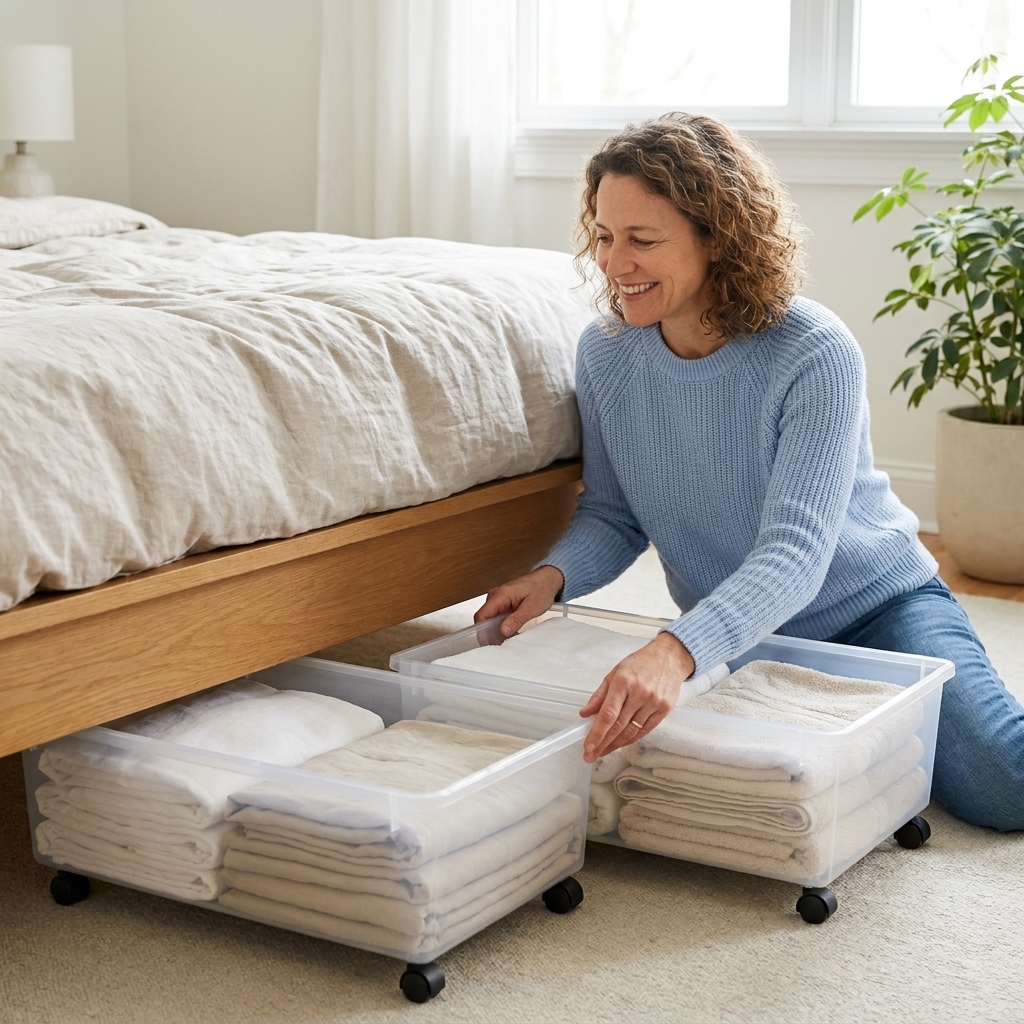
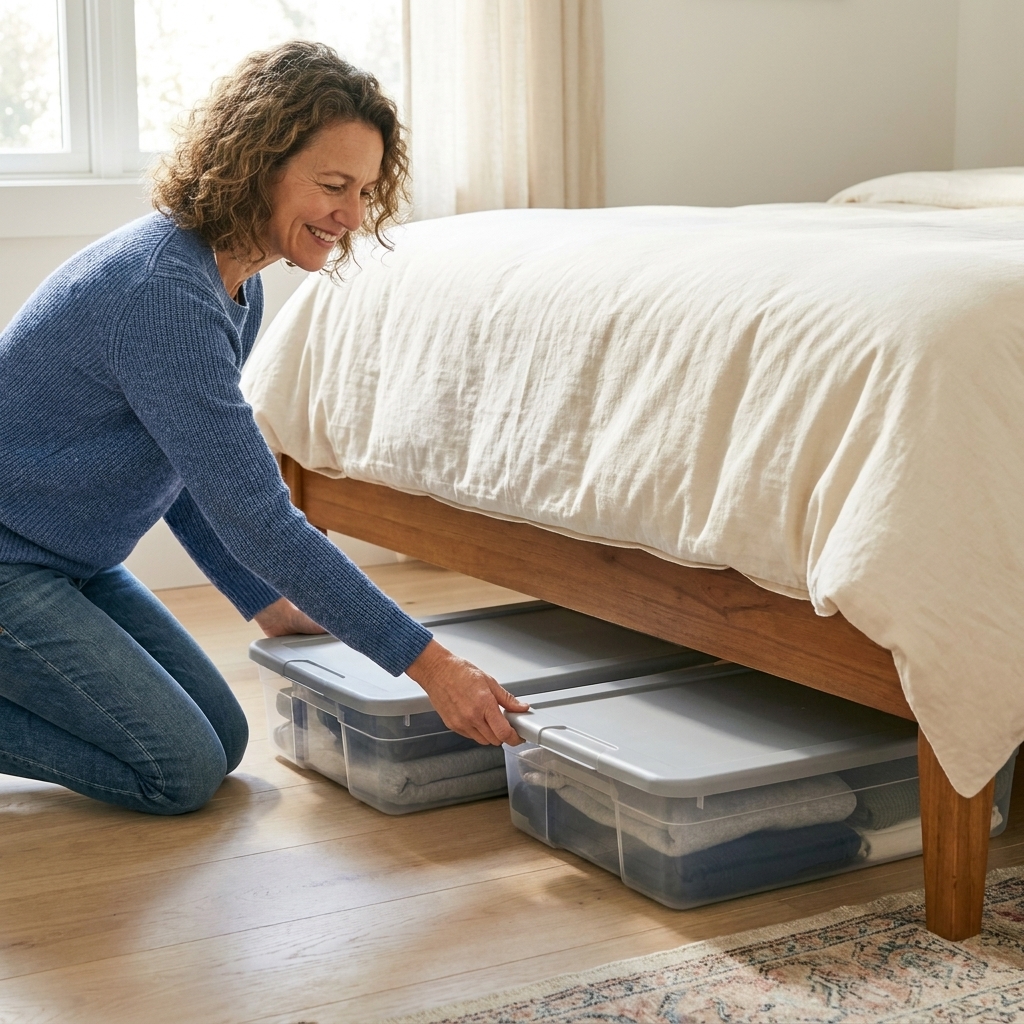
1) Low-profile rolling bins with lids
This is my favorite for everyday categories because it reduces the friction. If you have to lift the mattress corner or yank a saggy bag, you will stop using it.
- Look for built-in wheels (not clip-on casters that pop off).
- Choose hard sides so the bin does not collapse when half full.
- Pick a latching lid if dust is a problem.
2) Clear lidded boxes (no wheels)
Great for lighter items and carpeted rooms where wheels fight you. Add furniture sliders under the box if needed.
- Clear is helpful if you are not labeling consistently yet.
- Make sure the lid fits snugly to keep dust out.
3) Fabric zip bags with structure
Fabric can work, but only if it has a firm base and strong zipper. Floppy bags turn into dust bunnies that go after your sweaters.
- Choose ones with reinforced sides and a handle on the front.
- Avoid ultra-thin fabric “under-bed organizers” that sag and drag, unless you truly have no other option.
4) Vacuum-seal bags (use sparingly)
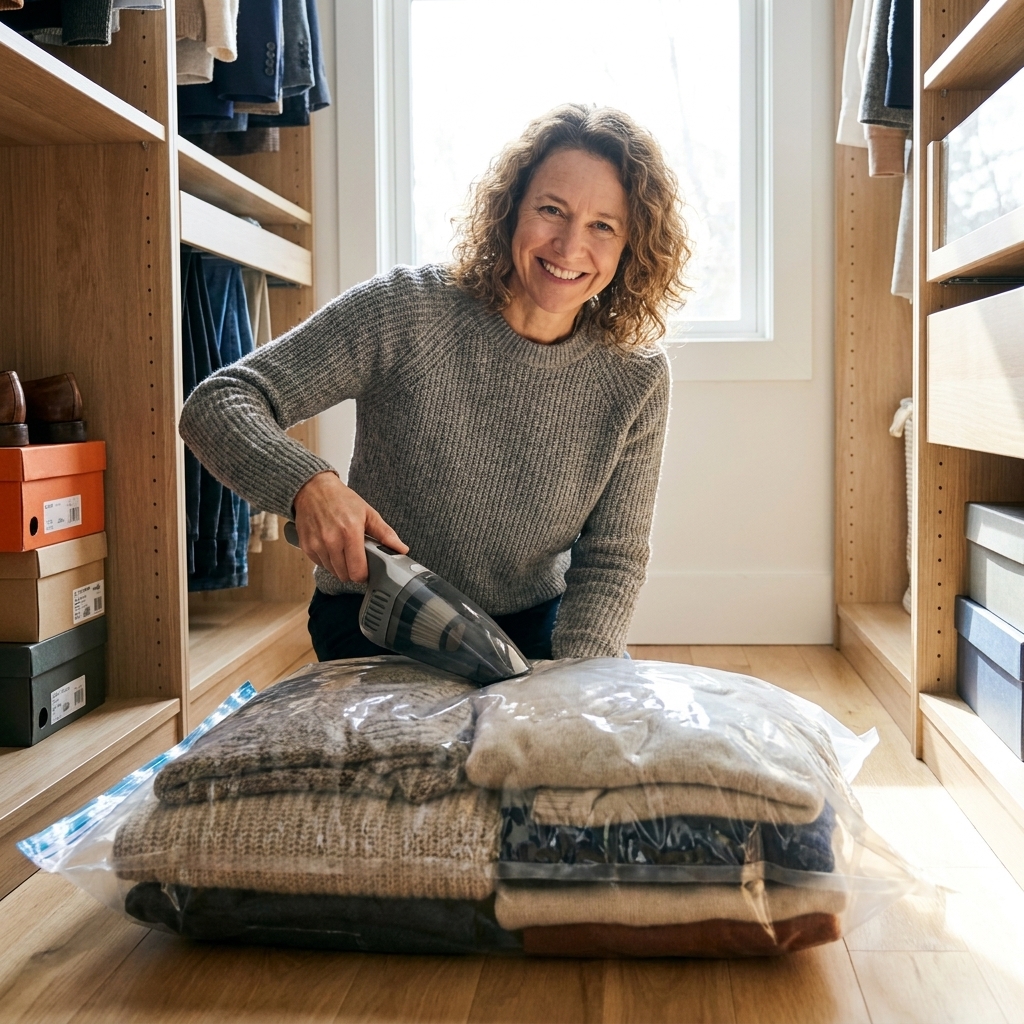
These are the classic “space saver” bags people mean, and yes, they can be great. They are fantastic for long-term, truly seasonal items, but they can create a false sense of “I stored it neatly” while you slowly forget what is inside.
- Best for guest bedding, puffy seasonal coats, and spare comforters.
- Not great for anything you want to access regularly.
- Label them clearly so they do not become mystery pancakes.
What to store under the bed
The best under-bed storage items have three things in common: they are used seasonally, they are soft or flexible, and they are not sensitive to temperature swings or a little dust.
Seasonal clothing and accessories
- Off-season sweaters, shorts, swimsuits
- Scarves, hats, gloves
- Special-occasion outfits you only wear a few times a year
Tip: store clothing by season, not by person, if you are short on space. One bin labeled “Winter Accessories” beats five half-full bins.
Extra bedding
- Spare sheet sets (especially if you rotate)
- Extra pillowcases
- Guest blankets and comforters
If you have kids with occasional nighttime accidents, keep one quick-grab backup set more accessible, like in a linen closet. Under-bed is better for the “not tonight” extras.
Shoes you do not wear weekly
- Dress shoes
- Seasonal boots and sandals
- Sports cleats (when not in season)
Use a hard-sided bin. Shoes in fabric bags get squished and scuffed.
Sentimental items (only the stable, protected ones)
- Photo albums in a clean, rigid container, fully dry, with minimal humidity swings
- Baby keepsake items in a labeled lidded box
- Letters and cards in a sealed container, ideally in acid-free sleeves or folders
One nuance: truly archival items prefer cool, dry, stable conditions. Under the bed can be fine for everyday sentimental items, but avoid sealing anything that is even slightly damp, and skip this location if the room runs humid. If you add a desiccant packet, monitor it and replace as needed.
If you store sentimental items under the bed, commit to one container per person. Otherwise, it becomes a memory landfill.
Gift wrap and party supplies
- Wrapping paper (in a slim tube or long under-bed box)
- Gift bags, tissue paper, ribbon
- Unused candles, banners, paper goods
This is one of the best under-bed wins because it is bulky but light.
Overflow from tiny closets (with rules)
If your closet is truly bursting, under-bed can hold overflow, but only if it is a single, defined category. Examples:
- Handbags and clutches
- Workout gear
- Extra towels (if your linen closet is a shoebox)
What to avoid under the bed
I say this lovingly as a former “it will be fine under there” person: under-bed storage is not a climate-controlled vault. Skip anything that can be damaged, attract pests, or create safety issues.
Food and pet treats
This invites pests and odors. Even sealed packages can attract attention you do not want.
Delicates that need ideal conditions
- Leather goods you care about (humidity swings are real)
- Fine wool or cashmere without proper protection
- Feather pillows and down items in humid homes
If you must store delicate textiles, use a sealed container, ensure items are freshly cleaned and completely dry, and consider a moisture absorber only if your room tends to run damp. Check it regularly.
Electronics and loose batteries
- Old laptops, cameras, game consoles
- Loose lithium batteries and power banks
The bigger risks here are heat, humidity, crushing damage, and battery leakage or thermal issues. Store electronics in a drier, more temperature-stable spot. Store batteries according to the manufacturer’s guidance, keep them away from metal objects, and recycle damaged or swollen batteries through your local household hazardous waste program.
Important documents
Passports, birth certificates, insurance papers, and legal documents deserve a consistent home that you can access quickly. Under the bed is not that.
Anything you need weekly
If you reach for it every week, under-bed storage will slowly annoy you, and then you will abandon the system. Under-bed is best for seasonal, occasional-use categories.
Loose clutter with no category
This is the big one. Under-bed storage is not a clutter portal. If you cannot name the category in three words or less, it is not ready for a bin.
Set it up so it stays organized
You do not need perfection. You need a setup that works when you are tired, busy, and not in the mood to “maintain a system.”
Step 1: Choose 2 to 4 categories
Most beds can handle two large bins per side, or a few smaller ones. Keep categories broad.
- Example for adults: “Winter clothing”, “Extra bedding”, “Gift wrap”
- Example for kids: “Next size up”, “Seasonal gear”, “Memory box”
Step 2: Use matching containers when possible
Matching bins slide better and visually read as intentional. If matching is not realistic, aim for the same height so everything moves smoothly.
Step 3: Make it pull-out friendly
- Wheels for hard floors
- Front handles for fabric bins
- A clearance gap so lids open without scraping the frame
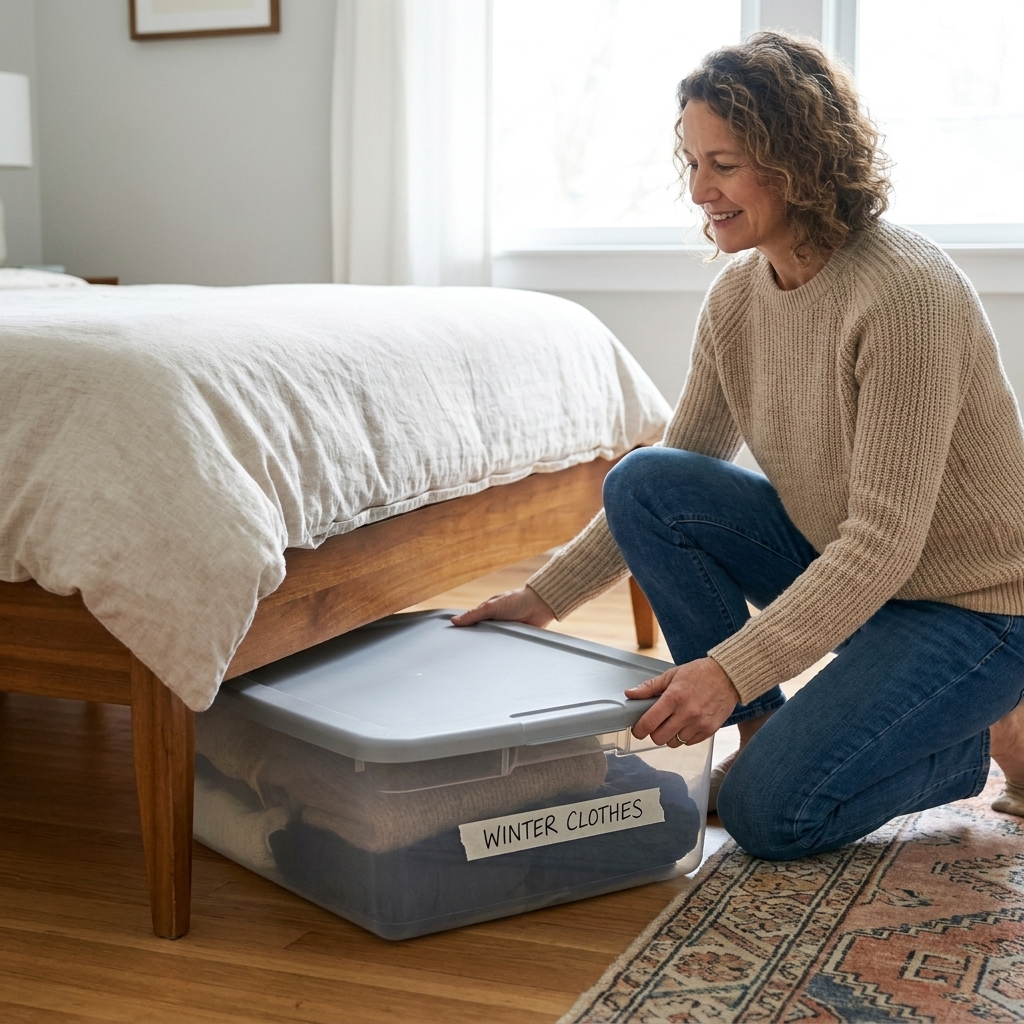
Step 4: Label for your future self
Even clear bins benefit from a label because “I will remember” is a lie I have told myself many times.
- Use short labels like “Guest sheets” or “Winter accessories.”
- Add a date if it helps, like “Kids clothes 2026-2027.”
Step 5: Add a dust and pest plan
Dust is the price of admission under the bed. Make it manageable:
- Choose lidded containers.
- Do a quick under-bed vacuum monthly, or at least seasonally if you are realistic about life.
- If you have allergies, consider a bed skirt or a lower-gap frame.
- Only store clean, fully dry textiles. If you have had moth issues, use tight containers and follow fabric care guidance. Skip mothballs in bedrooms, since the fumes are not something you want to live with.
Room-by-room ideas
Main bedroom
- Off-season clothing
- Extra sheet sets
- Dress shoes and clutches
Keep anything you would rather not explain during a frantic scarf hunt stored somewhere more private.
Kids’ rooms
- Next size up clothes
- Seasonal sports gear
- School memory box
For kids, I love bins that are easy for them to slide. If they cannot access it, they will pile stuff next to the bed instead.
Guest room
- Extra towels and guest bedding
- Spare pillows (in sealed bins)
- Holiday decor overflow (only if you truly have no closet space)
If the guest room rarely gets used, under-bed storage is a great place for “company-ready” extras.
Dorms and small apartments
- Seasonal clothing
- Extra linens
- Cleaning supplies backup (sealed and upright)
Skip anything that could leak. No one wants mystery cleaner under the bed.
Quick container checklist
- Height: about 0.5 to 1 inch lower than bed clearance
- Lid: yes, ideally latching if dust is heavy
- Mobility: wheels for hard floors, handles or sliders for carpet
- Structure: hard sides or reinforced fabric
- Visibility: clear bins or a clear label holder
- Size: big enough for the category, not so big it becomes a junk drawer
Maintenance: quick and seasonal resets
Two tiny routines keep under-bed storage from turning into the House Bermuda Triangle.
Monthly: the 2-minute sweep
- Run a vacuum attachment along the accessible edges.
- Make sure bins are fully closed and pushed back neatly.
Seasonal: the 10-minute reset
- Pull everything out and do a quick dust and vacuum under the bed.
- Wipe lids and handles (dust transfers fast).
- Do a one-minute edit: anything you did not use this season gets reconsidered.
- Re-label if categories have shifted.
- Slide back with intention: most-used bin closest to the side you access.
FAQ
Is it okay to store clothes under the bed?
Yes, as long as they are clean, completely dry, and stored in a closed container. Avoid storing delicate fabrics in humid rooms unless you are using a well-sealed bin and checking it seasonally.
Should I use vacuum bags under the bed?
Sometimes. Vacuum-seal bags are great for bulky comforters and long-term seasonal items, but not ideal for things you want to access often. Label them clearly so they do not become mystery pancakes.
How do I keep under-bed storage from getting dusty?
Use lidded containers, avoid open baskets, and do a quick vacuum monthly or seasonally. Dust happens, but the right container makes it manageable.
What is the biggest under-bed storage mistake?
Storing random clutter with no category. Under-bed space should be a small set of boring, useful categories, not a hidden pile of decisions you postponed.
Takeaway
Under-bed storage works best when it is boring in the best way: a few clear categories, sturdy low-profile containers, and simple resets you will actually do. Pick the right bins, store the right stuff, and you will gain a surprising amount of breathing room in your closets without making your life harder.