If your hallway is basically a shoe museum and your closet floor is doing its best impression of a booby trap, you are in good company. I am a reformed messy person, and shoes were one of my longest-running “I will deal with it later” problems.
The good news: you do not need a bigger closet. You need storage that respects two things about small spaces: walking paths are sacred, and shoes multiply when you are not looking.
Below are seven space-saving shoe storage solutions that work especially well in narrow hallways and small closets, plus a few rules of thumb so the system actually sticks.
Before you buy: 3 quick measurements
- Your clear walkway width: Measure the hallway from wall to wall, then decide how much you can borrow without bumping hips or catching a toe. In many homes, about 6 to 10 inches of depth is a workable target for hallway storage, but the only number that matters is what your hallway can spare.
- Your door swing: Open the closet and entry doors fully and note what space they steal. This determines whether you can do an over-the-door rack, wall hooks, or a cabinet.
- Your shoe types: Sneakers and flats store easily. Boots and chunky heels are the bullies. Count those first so your storage is sized for the real problem.
One more quick reality check: most adult shoes are roughly 10 to 12 inches long, which is why ultra-shallow options usually store shoes at an angle (tilt-out cabinets) or with toes staggered.
Now to the fun part: solutions that get shoes off the floor without turning your hallway into an obstacle course.
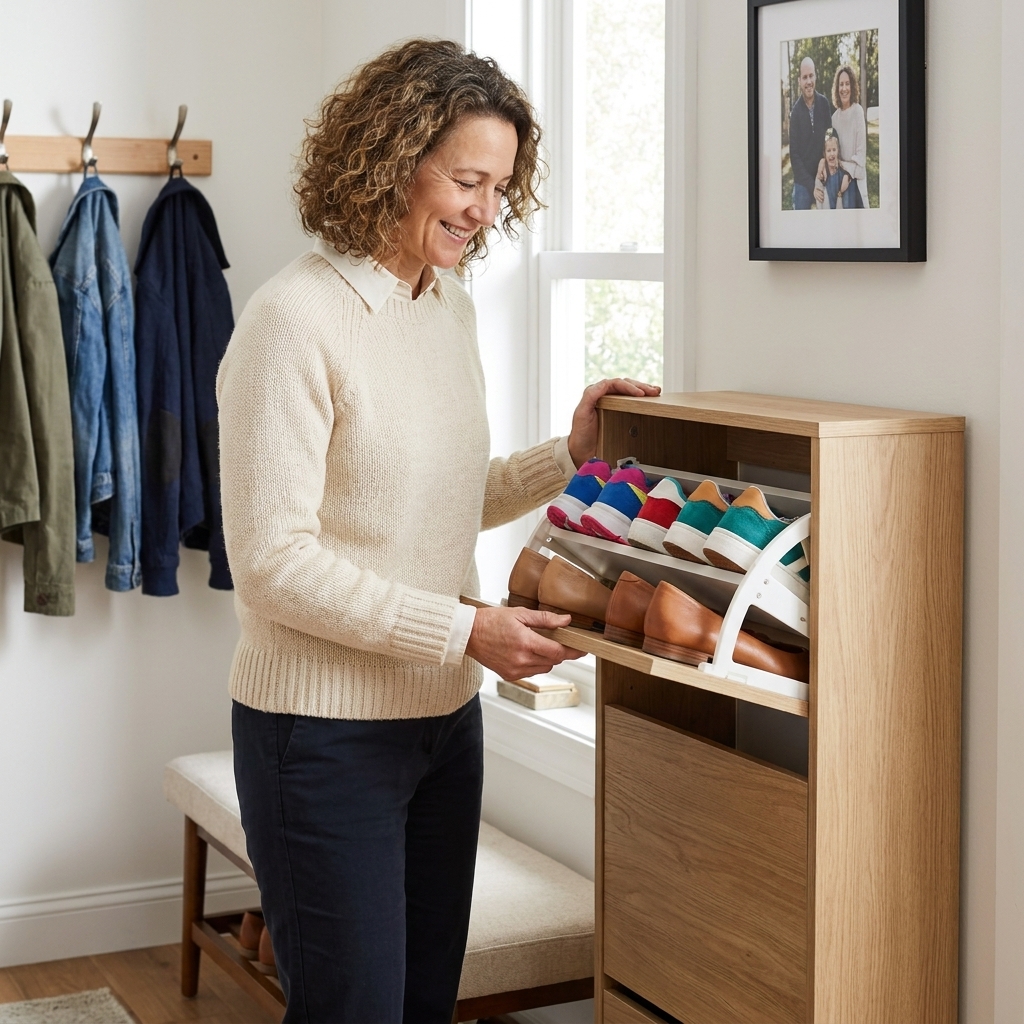
1) Slim shoe cabinet
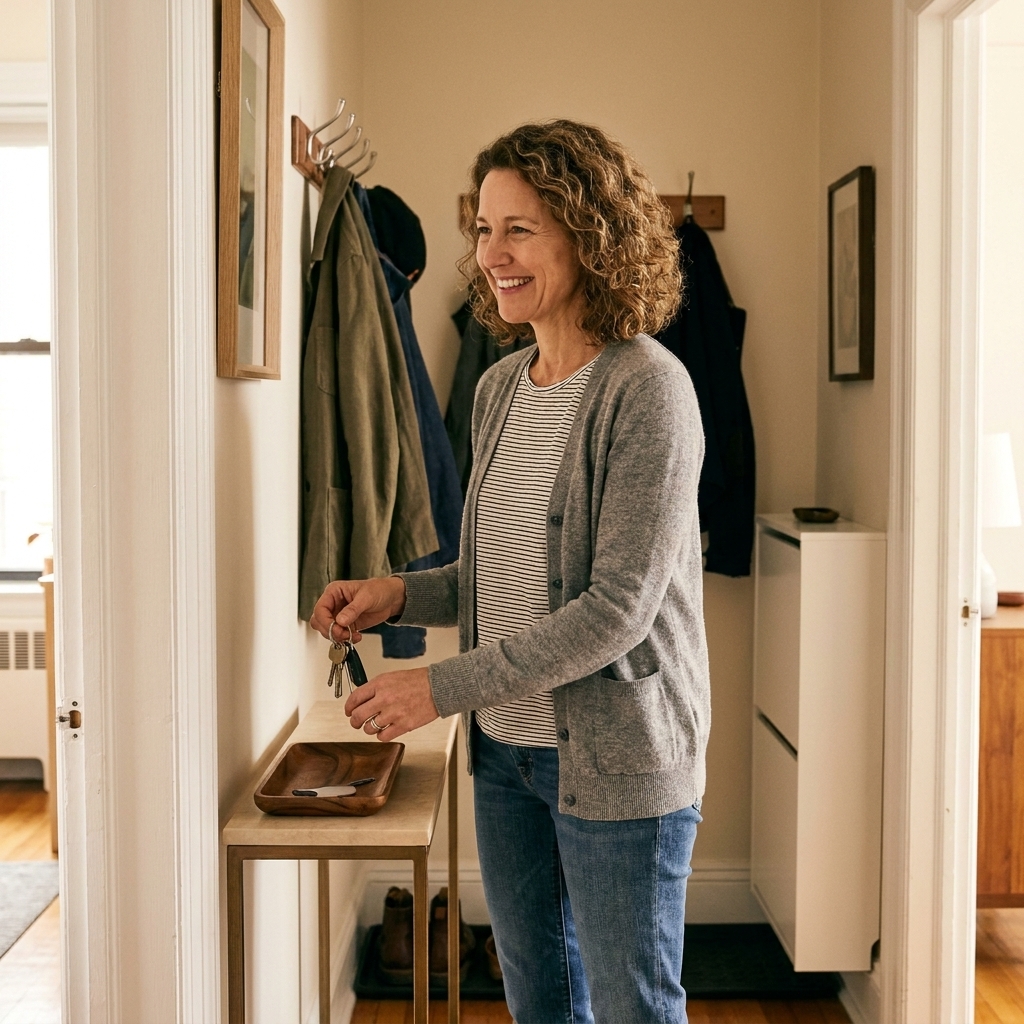
If you have a narrow hallway, a tilt-out shoe cabinet is one of the best upgrades you can make. It stores shoes vertically, keeps the visual clutter hidden, and typically stays within that single-digit depth range you measured.
Why it works
- Shallow profile: Many are roughly 7 to 10 inches deep, which helps your walkway stay open.
- Looks tidy fast: Closed fronts hide the chaos even when you are rushing.
- Great for shared households: You can assign a row per person.
Make it stick
- Reserve it for daily shoes only. Seasonal and special occasion pairs live elsewhere.
- Add a small basket or tray on top for keys, dog leash, and sunglasses, so the cabinet becomes a true landing zone.
- If shoes come in wet, let them dry first before closing them into a cabinet. A damp pair plus a closed door equals a funk factory.
2) Over-the-door organizer
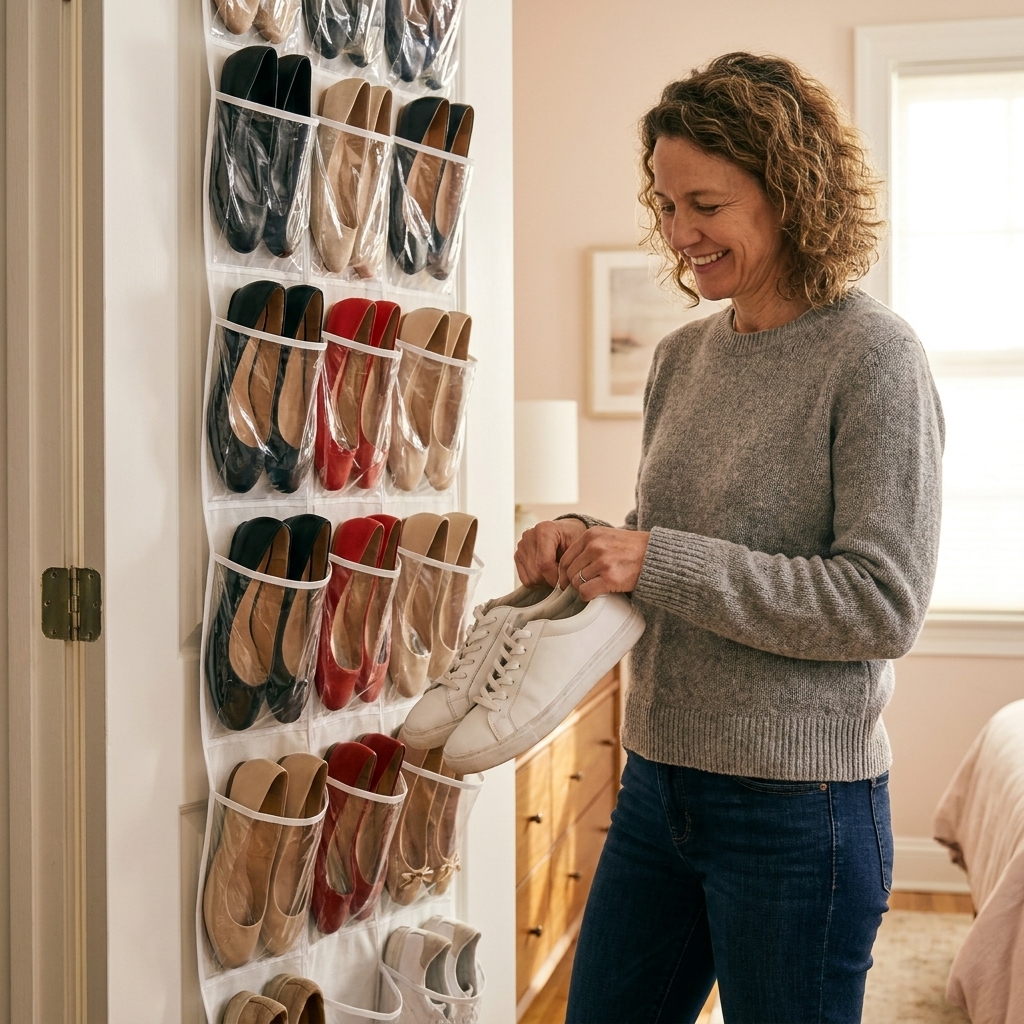
I know the classic over-the-door organizer can look a little dorm-room-ish, but hear me out: it is unbeatable for tiny closets because it uses space you already have.
Best use cases
- Closet doors: Perfect when your closet floor needs to be freed up.
- Linen closet doors: Great overflow storage if your entry closet is basically a postage stamp.
My real-life tips
- Choose clear pockets so you can actually see what you own.
- Put light shoes up top and heavier pairs lower to reduce door sway.
- If the organizer bangs, add small felt pads where it touches the door.
3) Upright boot storage
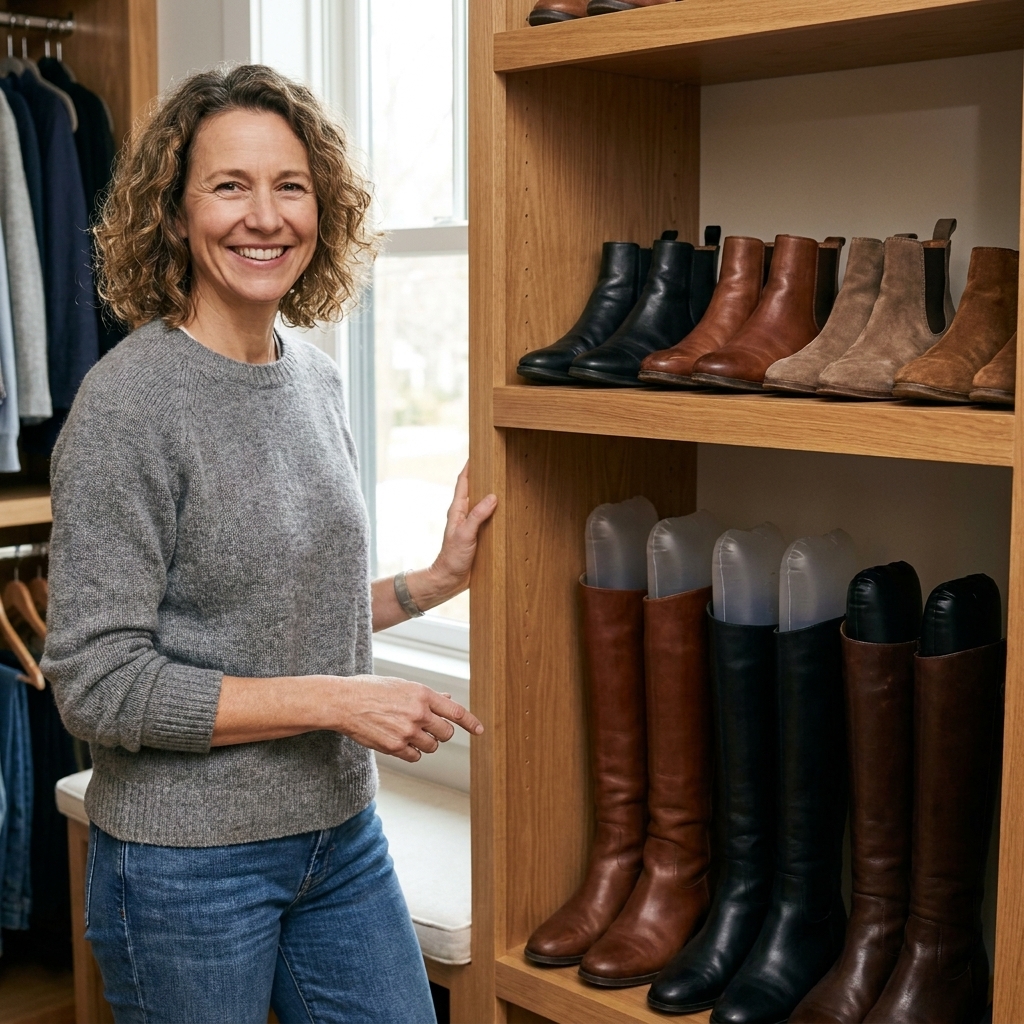
Boots are often the reason shoe storage fails. They do not stack well, they fall over, and they hog shelf space. The fix is to store them upright on purpose.
Options that work
- Boot shapers or boot trees: Helps tall boots keep their shape and stand neatly.
- Hangers on a closet rod: If you have the height, boot clips or boot hangers are more secure than relying on delicate pull straps.
- Clear tall bins: For off-season boots, especially muddy winter pairs.
Make it stick
- Give boots a single designated zone. Mixing them with sneakers invites the flop pile.
- Store boot care (spray, brush) right next to them so they do not migrate around the house.
4) Stackable clear shoe boxes
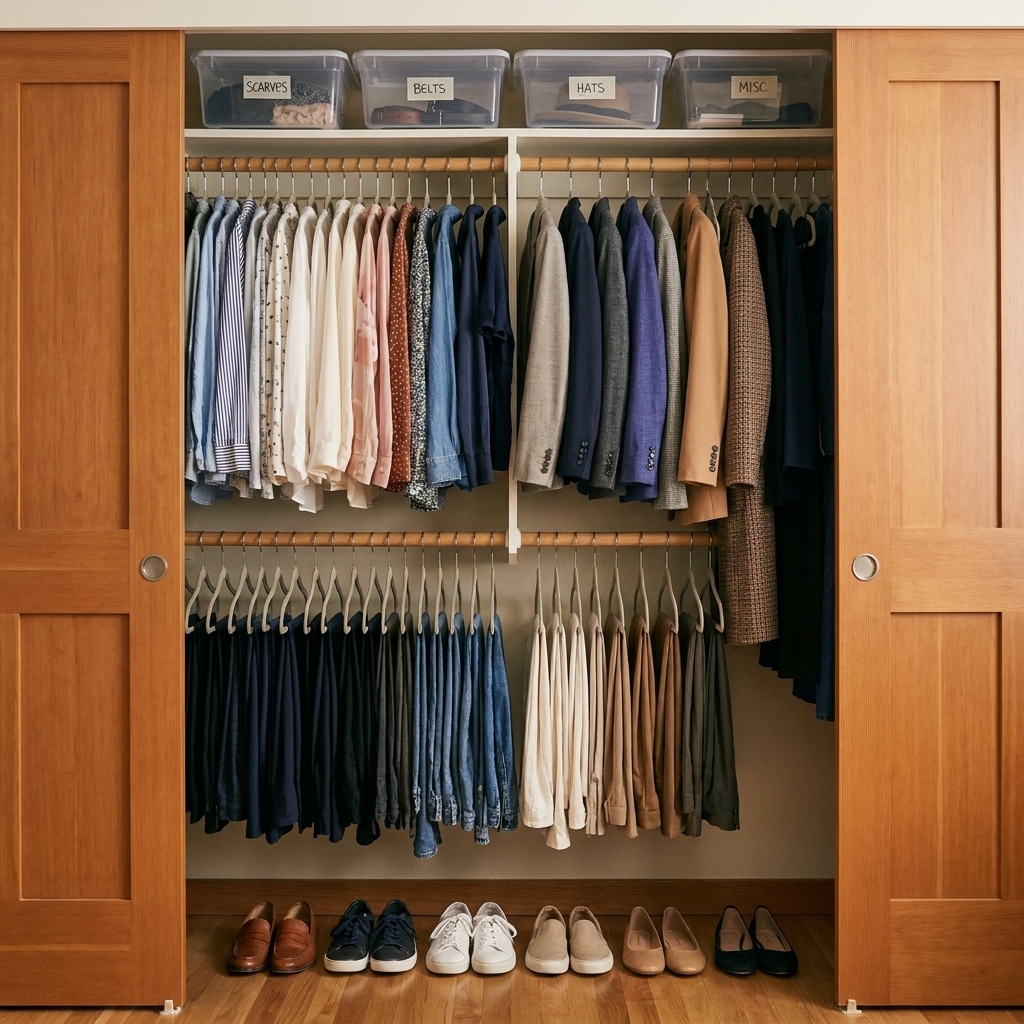
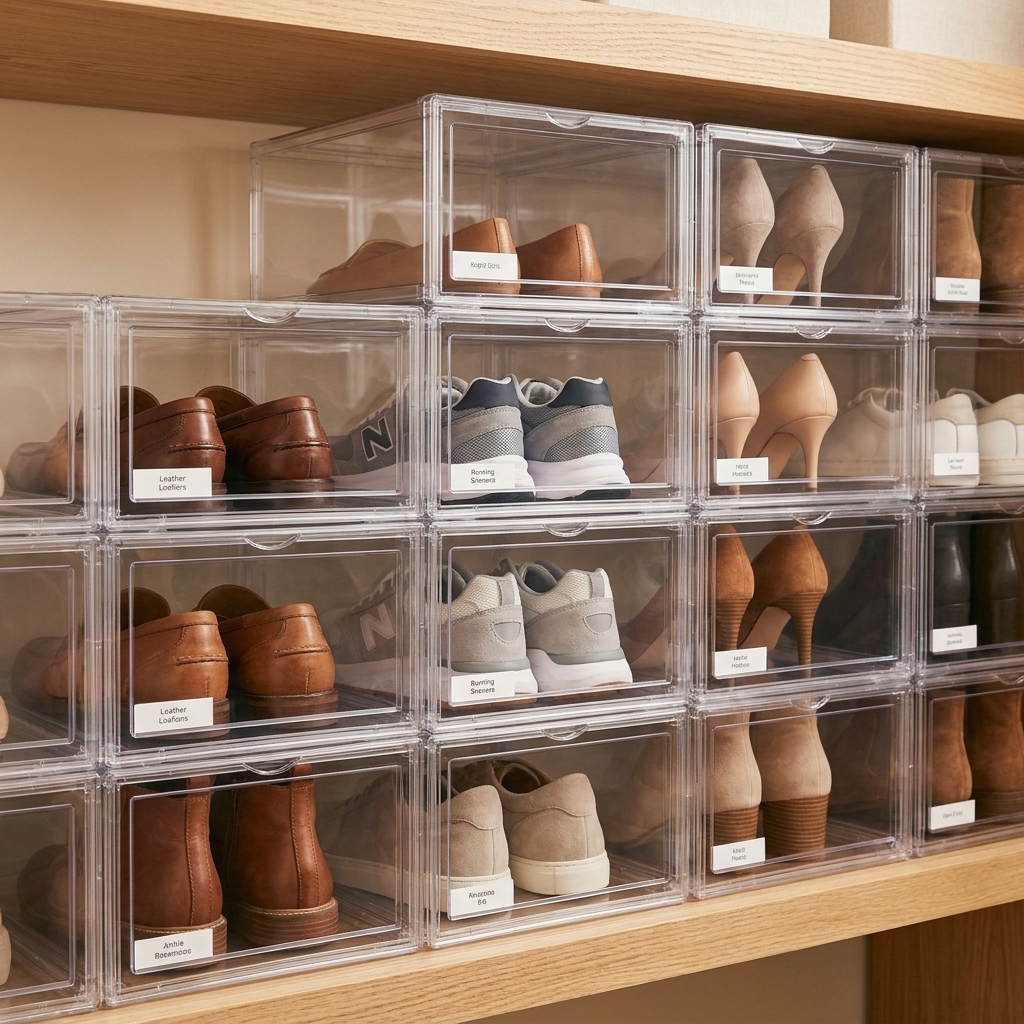
If your closet is small but your shoe collection is not, stackable clear boxes can be a game-changer. They let you build upward instead of outward, and they protect shoes from dust.
Why I like them
- You can see what you have without digging.
- They stack cleanly on closet shelves, on the floor under a short-hang section, or in a dedicated shoe tower.
- They create natural limits: When the stack is full, something has to go.
My setup tip
Group by category instead of color: everyday sneakers, work shoes, dress shoes, sandals. When you are running late, category beats pretty.
If odor is an issue, drop a cedar sachet or a little baking-soda deodorizer in the box, and never store shoes that are still damp.
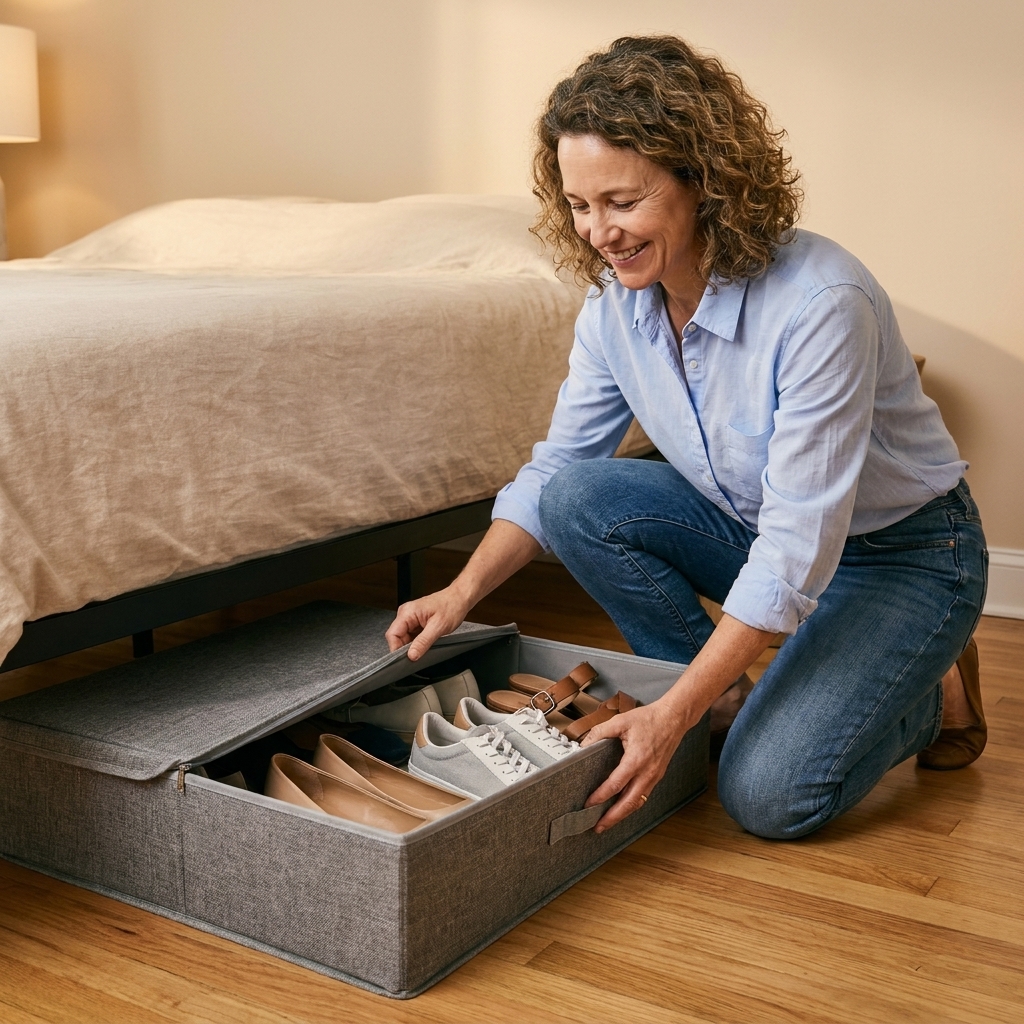
5) Under-bed shoe bins
Under-bed storage is the quiet hero of small homes. If your hallway and closet have hit capacity, put the rarely-worn shoes under the bed so your daily space can breathe.
What to store here
- Special occasion heels
- Out-of-season sandals or winter boots
- Backup gym shoes
Make it stick
- Use low-profile, lidded bins so shoes stay clean.
- Store shoes in pairs with toes facing the same direction so you can scan quickly.
- Do a simple swap twice a year: spring and fall.
6) Wall rails and hooks
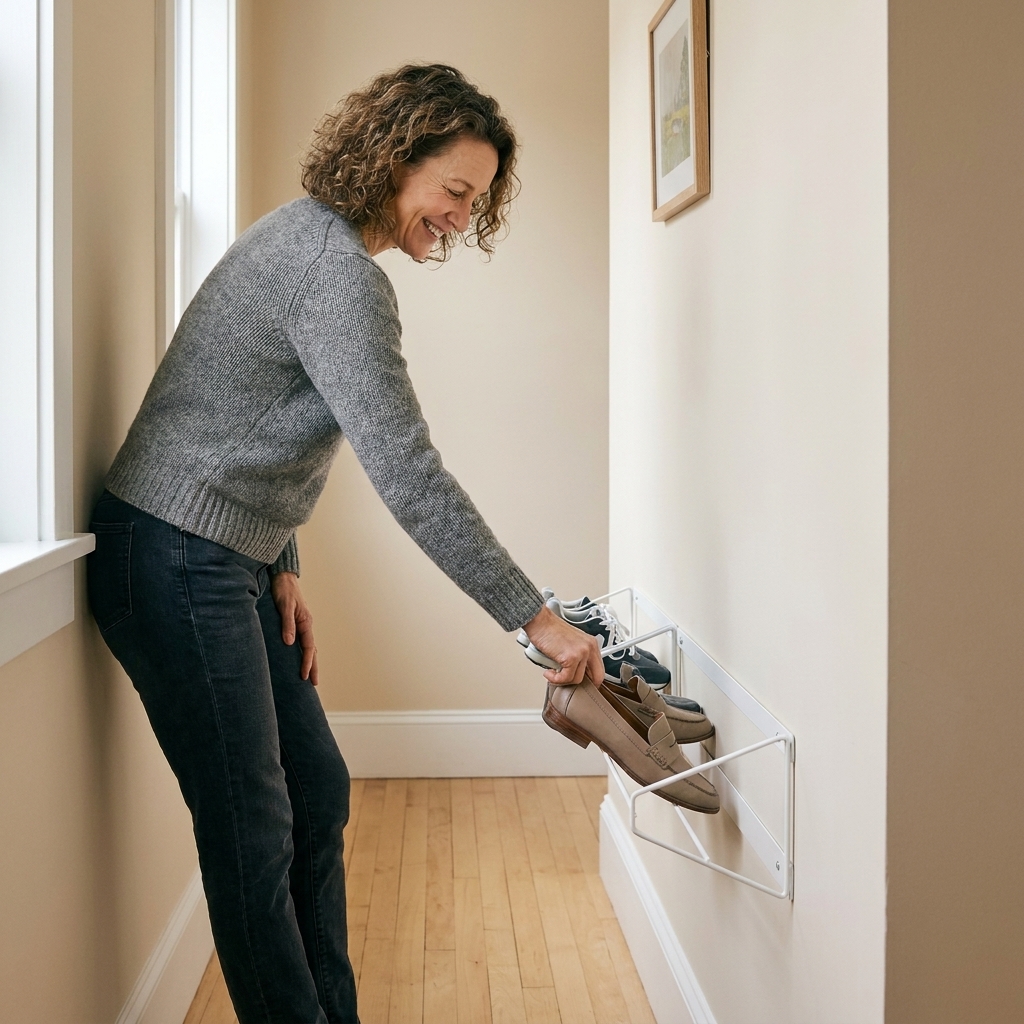
If your hallway is narrow, the floor is not the place for storage. The wall is. A simple rail with hooks or a shallow wall-mounted rack can keep the most-used pairs off the ground while still easy to grab.
Best for
- Kids shoes that somehow always end up in the middle of the hallway
- Dog-walking shoes
- Lightweight sneakers and flats
What to know before you mount
- Heavier shoes (and most boots) do not hang nicely, and they can scuff walls. Keep wall storage for lighter pairs and put a washable runner or doormat below.
- For a sturdy setup, use studs or wall anchors. If you rent, look for renter-friendly systems with clear weight limits, or consider a tension-rod setup inside a closet instead of drilling into the hallway wall.
7) Slim shoe bench
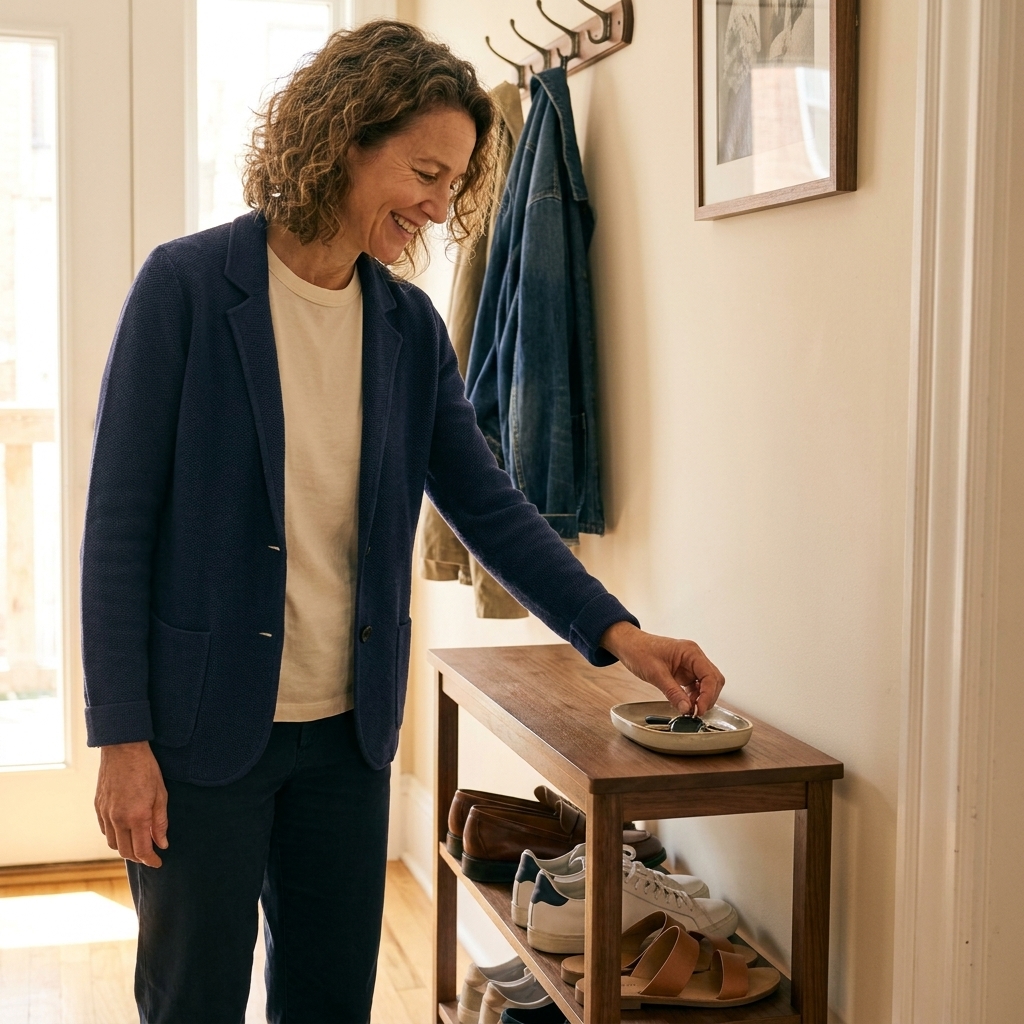
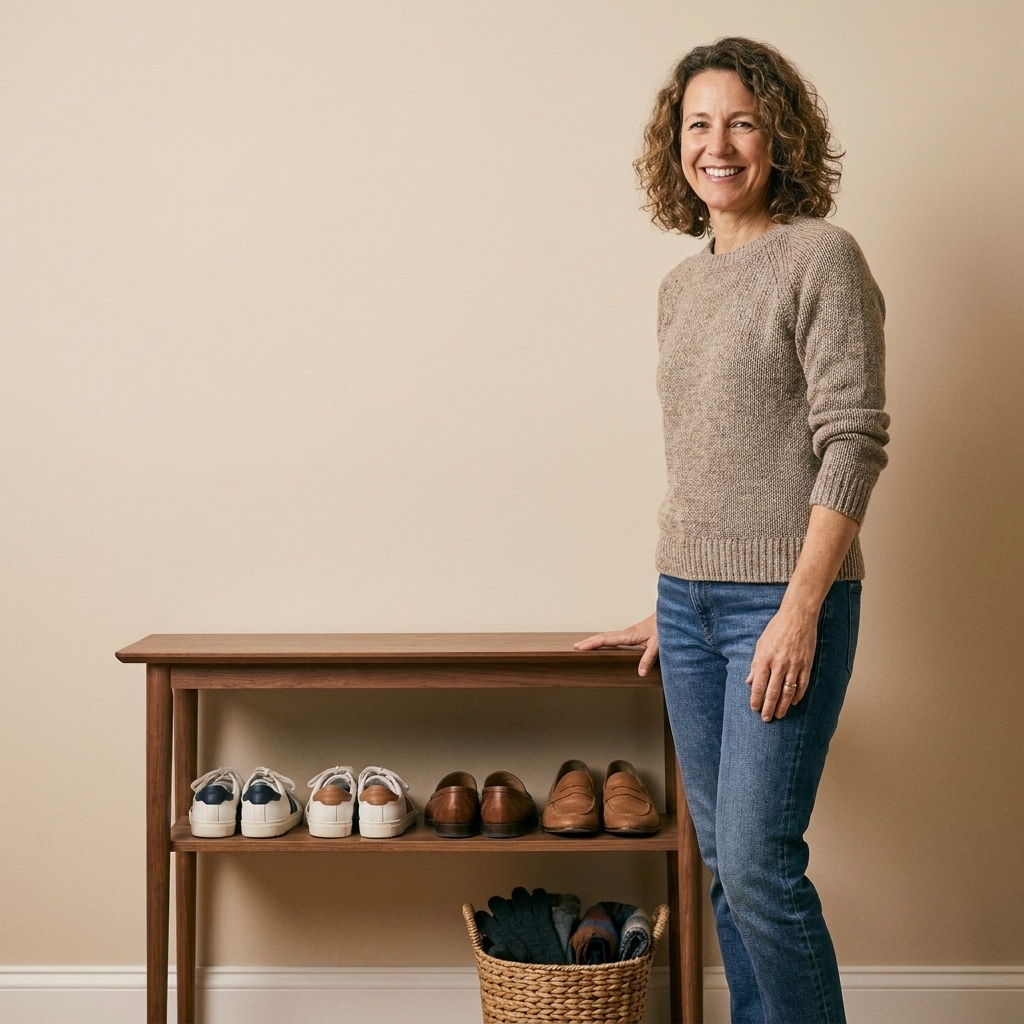
I resisted a bench for years because I assumed it would become a clutter magnet. The truth is: a narrow shoe bench can be the difference between “shoes everywhere” and “shoes contained,” especially if anyone in your house prefers sitting to put shoes on.
Choose a bench that behaves
- Open cubbies: Fast to use, best for daily shoes.
- Keep the storage simple: One shelf is often easier to maintain than three. More shelves can work too, but only if you limit how many pairs live there.
- Depth matters: Aim for a bench that stays within your measured borrow depth so the hallway still feels like a hallway.
My rule
The bench stores only “today shoes.” Everything else gets a different home. This one boundary keeps the bench from turning into the Shoe Hotel where nobody ever checks out.
Keep the floor clear: my mini system
Even great storage fails if the rules are fuzzy. Here is the simple system I use in busy seasons when shoes are coming and going nonstop.
- One landing spot: Pick one shoe zone near the door. Shoes do not get temporary homes in the hallway.
- Daily limit: Set a container limit, not a willpower limit. Example: the cabinet holds 12 pairs total. When it is full, something gets put away elsewhere.
- Weekly 5-minute reset: On Sunday (or any day you are already tidying), put stray pairs back, wipe the cabinet top, and toss any trash or flyers that landed there.
Safety note from someone who has hip-checked a bench at full speed: keep emergency paths and door swings clear. If the storage makes you sidestep, squeeze, or trip, it is not the right storage for that spot.
FAQ
How do I store shoes in a hallway without narrowing the walkway?
Go shallow and vertical. Tilt-out shoe cabinets, wall-mounted racks, and a slim bench can work well, as long as they stay within your measured clearance. If you can, keep storage to one side of the hallway and avoid anything that sticks out at ankle level.
What is the best solution for too many shoes and a tiny closet?
Combine two zones: keep daily shoes at the door in a slim cabinet or bench, then store overflow in stackable clear boxes on a shelf or in under-bed bins. Splitting “now” shoes from “not right now” shoes prevents closet-floor piles.
How do I stop shoes from piling up even with storage?
The fix is usually a capacity rule. Decide how many pairs your entry storage can hold and treat it like a hard limit. When the space is full, something must be put into overflow storage or donated.
A quick pep talk
If your current system is “shoes wherever they land,” you are not failing. You just do not have a system yet. Start with one solution that fits your space, then add an overflow plan so the hallway is not doing all the work.
Your goal is not a magazine entryway. Your goal is being able to walk through your house without kicking a sneaker into next week.