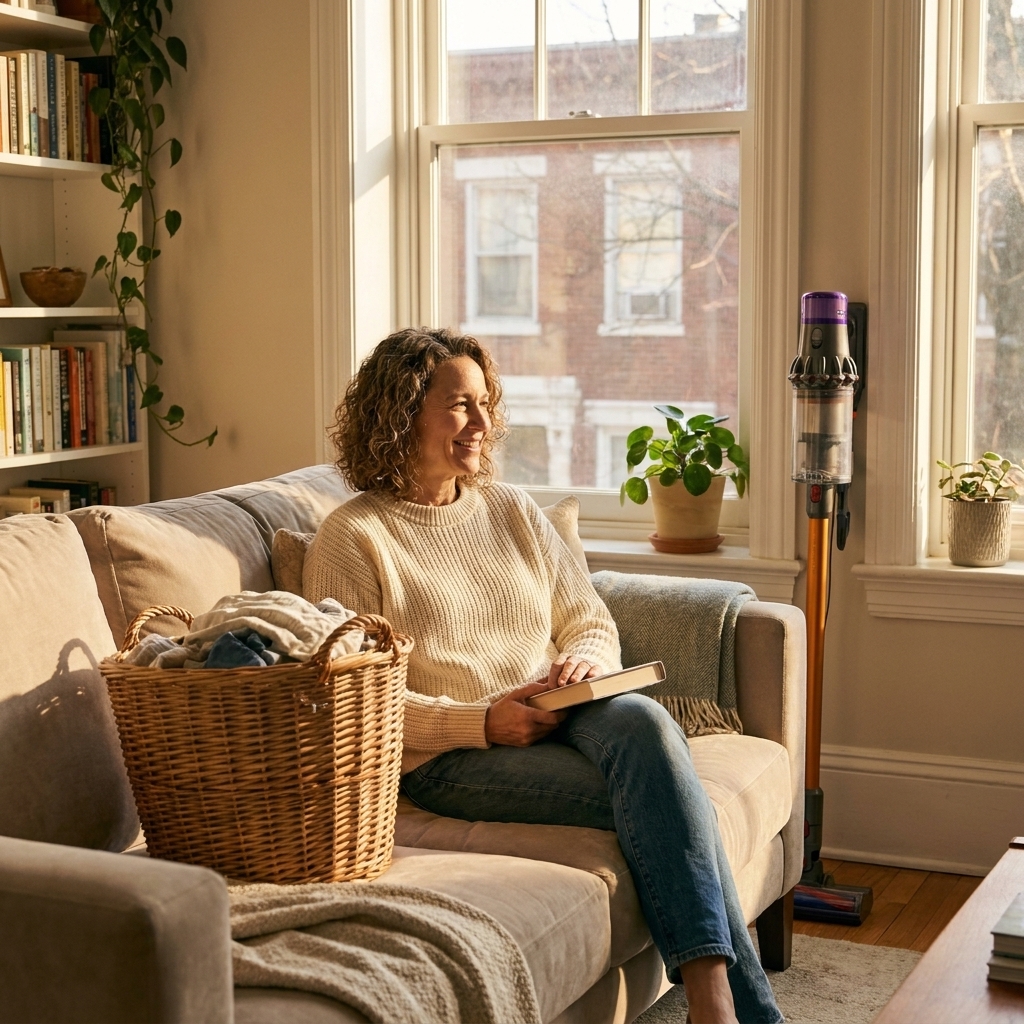
If you don't have a mudroom, your entryway is basically asked to do the impossible: catch every shoe, coat, backpack, package, and random paper before it migrates into the rest of the house. If you're a reformed messy person like me, you already know what happens when the entryway doesn't have a plan. The clutter spreads. Fast.
The good news is you don't need a dedicated room to get that calm, “everything has a place” feeling. You need a drop zone that matches your actual habits, fits your actual hallway, and is easy to reset in under five minutes.
Start with the drop zone rule
A functional entryway has one job: stop stuff at the door. I keep it simple with one rule:
- Only daily-use items live here. If it's not used at least a few times a week, it gets stored elsewhere.
Think: today's shoes, the coats you actually wear right now, keys, dog leash, work bag, school backpacks, and incoming mail. Seasonal gear and “maybe later” items are what turn an entryway into a hallway obstacle course.
Measure the space you really have
Most hallway entryways fail because we buy furniture that sticks out too far. Before you shop or rearrange anything, grab a tape measure and note:
- Depth you can spare while still comfortably walking through and opening the front door.
- Wall space you can use for vertical storage.
- Door swing for the front door and any nearby closet doors.
- Where people naturally drop things the second they walk in.
That last one matters more than it sounds. Your “drop spot” isn't a moral failing, it's data. Build the system where your hands already go.
Quick clearance gut-check: If you have to turn sideways or shuffle around your furniture, it's too deep for the space. In tight hallways, wall-mounted pieces and closed shoe storage usually win.
The five-zone entryway that works
Even a tiny entry can function like a mudroom if you assign clear zones. You might not have room for all five, but aim for as many as your space allows.
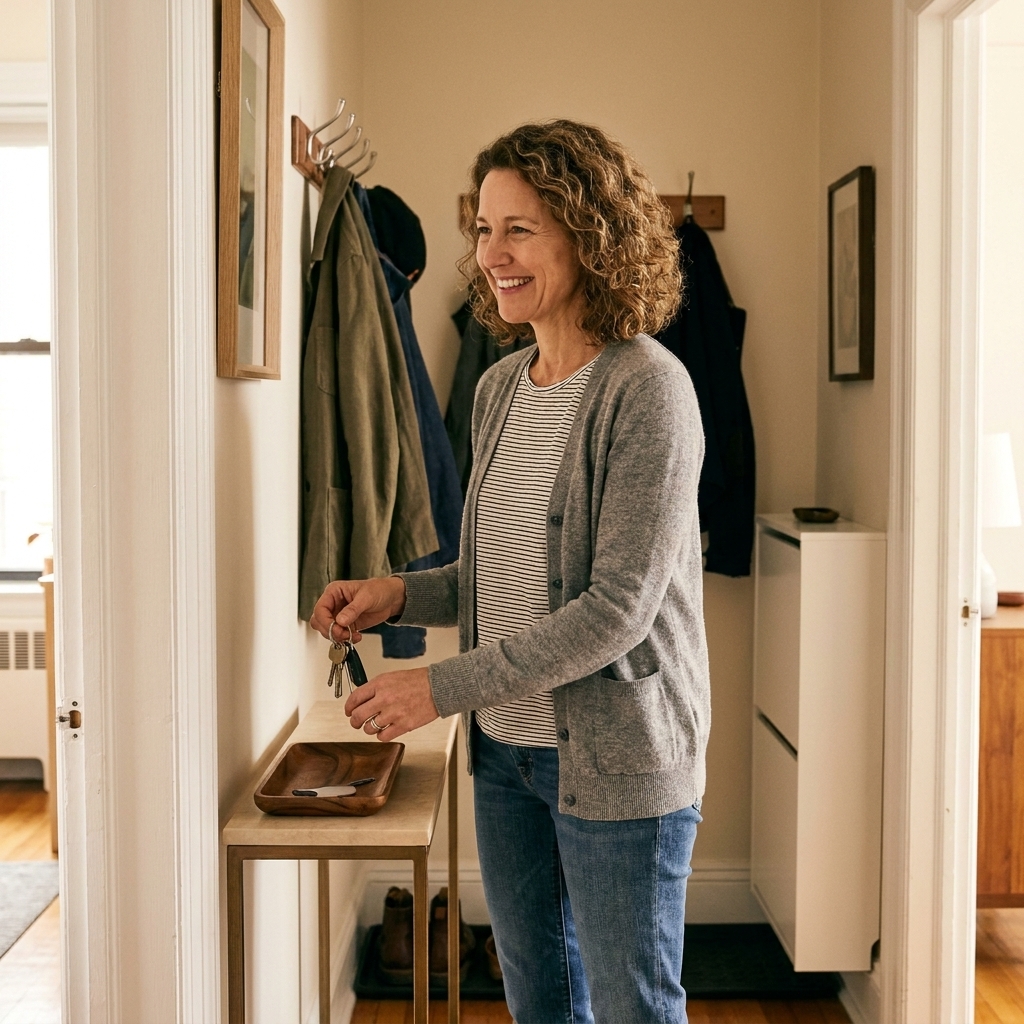
1) Keys and tiny essentials
This is the zone that prevents the frantic “Where are my keys?” morning spiral.
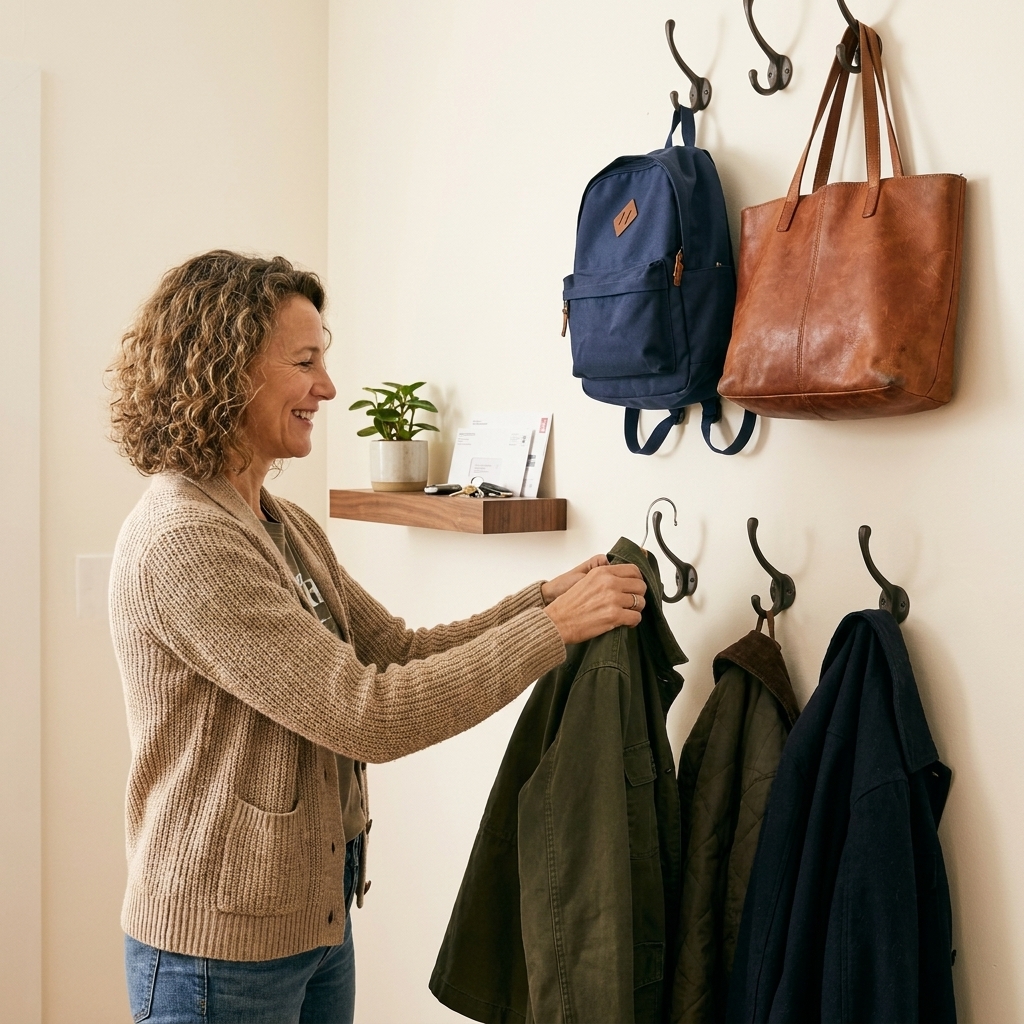
- A small wall-mounted shelf with hooks underneath
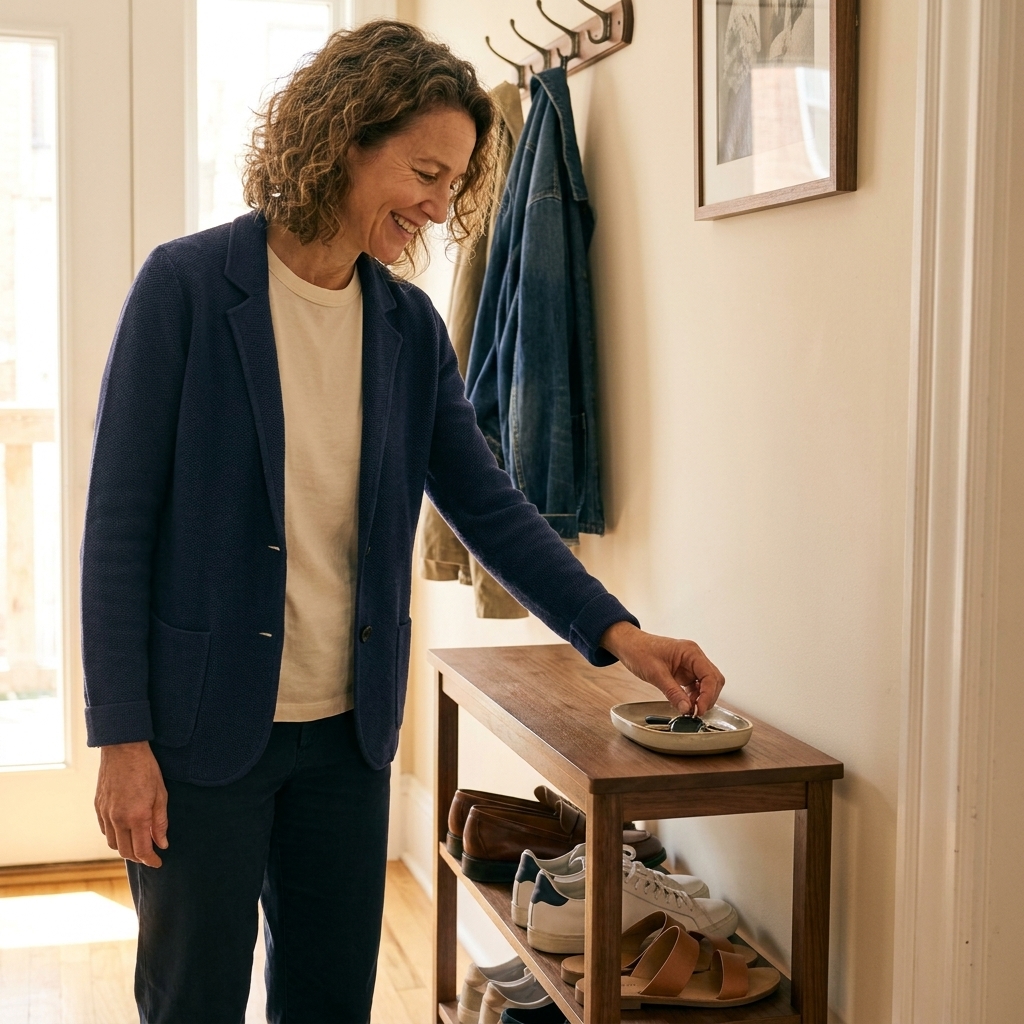
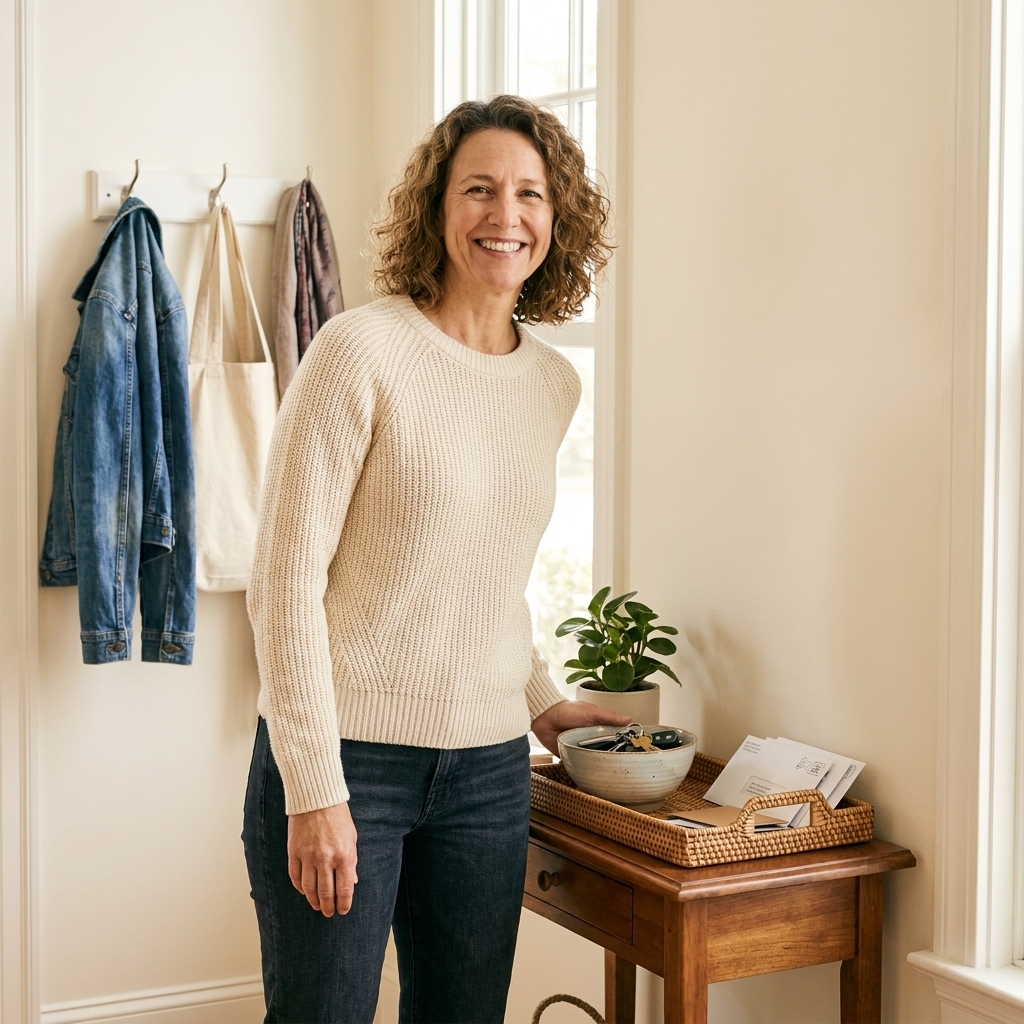
- A tray or shallow bowl on a slim console
- A key hook strip mounted at eye level
My reformed-messy tip: Keep the container shallow. Deep bowls turn into mystery bins.
2) Coats and bags
Wall hooks beat overstuffed closet floors in a compact entry. The trick is choosing hooks that match the load.
- Sturdy single hooks for heavy backpacks and totes
- Double hooks for a coat plus a bag
- Plan 1 to 2 hooks per person depending on your reality (coat only vs. coat plus backpack)
Mount hooks where kids can actually reach them. A second, lower row is often the difference between “we have a system” and “everything is on the floor.”
3) Shoes (contained, not scattered)
Shoes are one of the biggest hallway clutter culprits, especially in homes where people kick them off mid-step. The goal is containment.
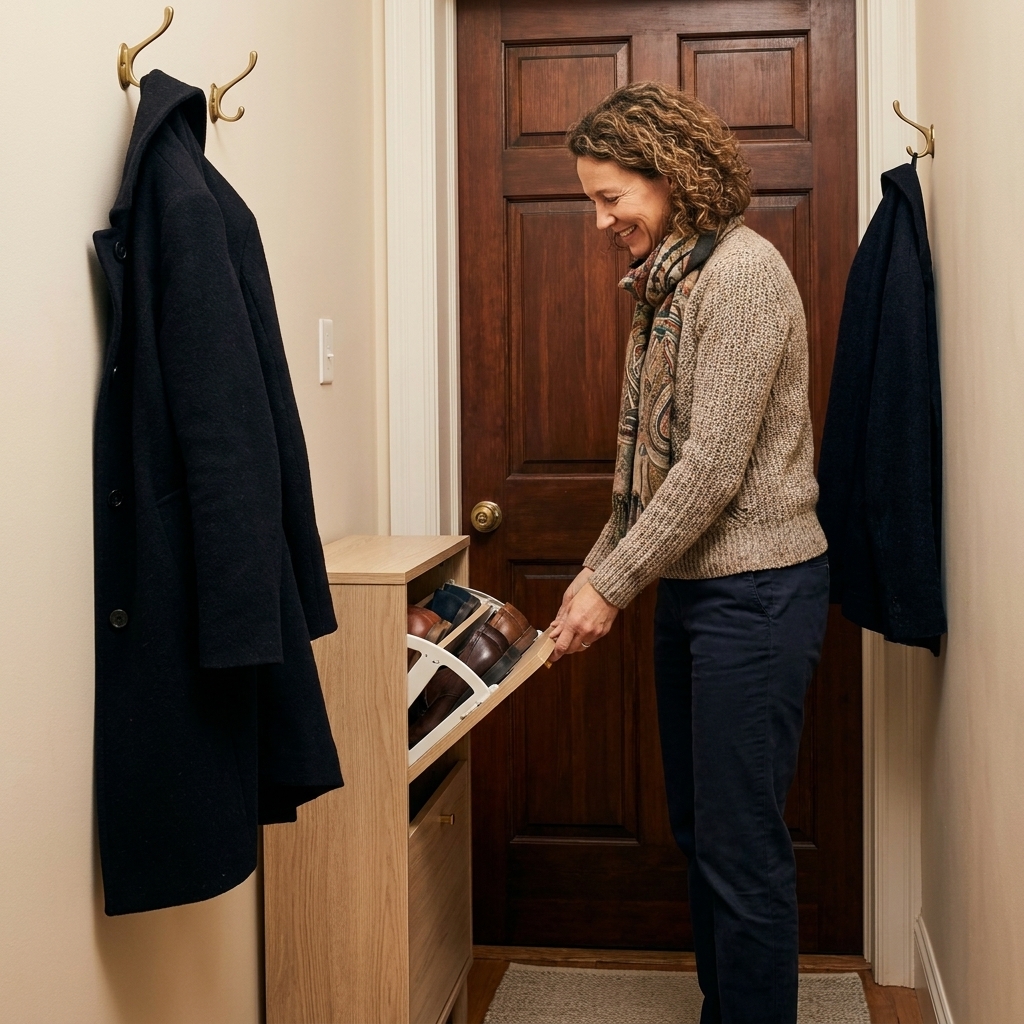
- Shoe cabinet (tilt-out style): great for tight depth and visual calm
- Vertical shoe rack: narrow footprint, holds a surprising amount
- Boot tray: best if your household will never, ever close a cabinet door consistently
Simple capacity rule: allow 1 to 2 pairs per person at the door. Everything else lives in bedrooms or closets.
4) Mail and papers (the paper quarantine)
If paper piles start in the entryway, they tend to end on your kitchen counter. Give paper a quick, clear landing zone.
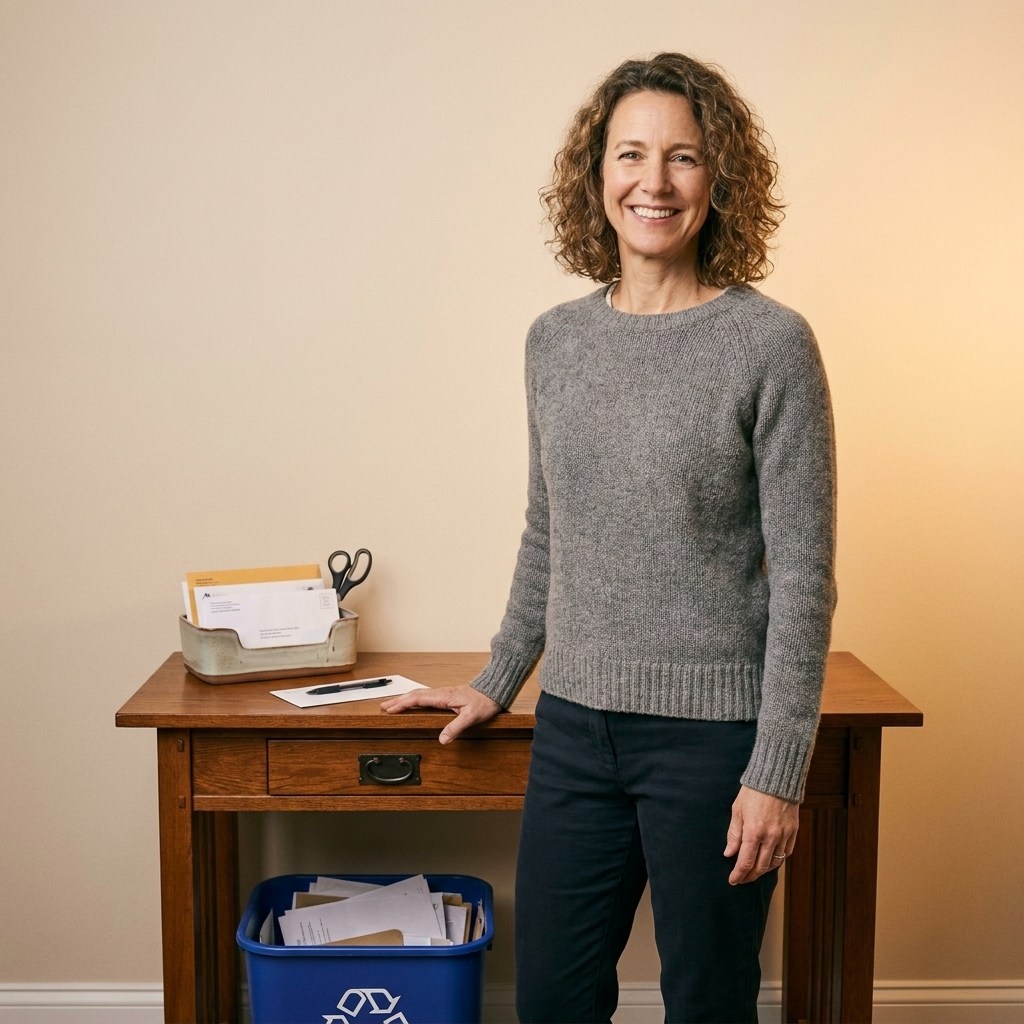
- A wall-mounted file sorter with 2 to 3 slots
- A lidded box for “to file” papers
- A small basket labeled in your mind as “inbox”
Then pair it with a habit: open mail over a recycling bin and immediately toss envelopes and inserts. This can cut paper clutter dramatically without organizing a single thing.
5) The “launch pad” for leaving
This is for what needs to go out the door next. Think returns, library books, a package, or a form that must be signed.
- A single basket on a shelf
- A tote bag hung on a dedicated hook
- A small spot on a bench, if you have one
Important: Keep it small on purpose. A launch pad should nudge you to deal with items, not store them indefinitely.
Furniture ideas for hallways
You can build a great drop zone without a huge entry console. Here are pieces that work when space is limited.
Slim console table
Look for a narrow depth and an open bottom so the space feels lighter. Add a tray for keys and a small basket underneath for quick-grab items.
Wall-mounted shelf with hooks
This is my favorite “mudroom substitute.” It combines the key zone and coat zone without taking floor space.
Storage bench (only if you have clearance)
A bench is helpful for kids and shoes, but it can become a clutter magnet. If you go this route, choose one with closed storage and give each person a single bin.
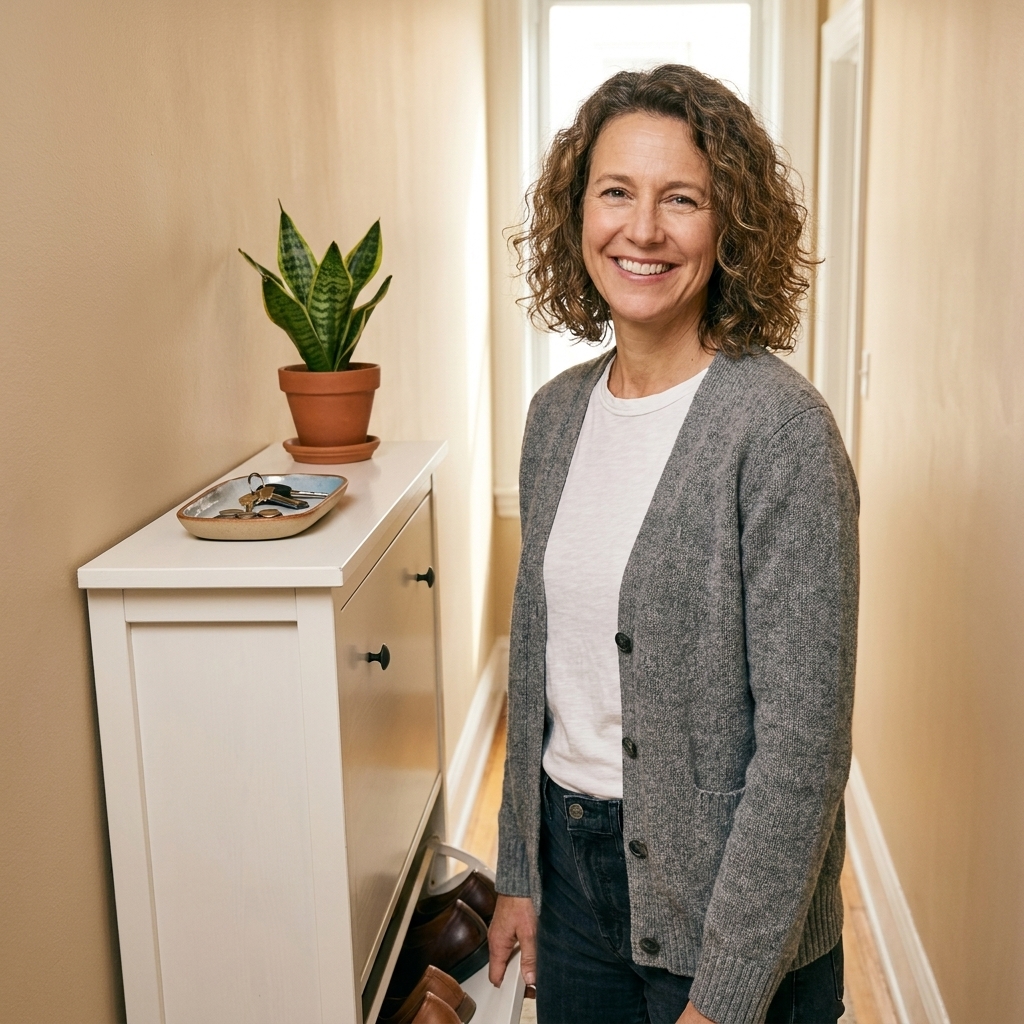
Tilt-out shoe cabinet
These are gold in narrow spaces. They keep shoes out of sight and off the floor without sticking out too far.
Over-the-door hooks
If you rent, or you have zero wall space, over-the-door hooks are an easy win. Use them for lightweight items like hats, scarves, and dog leashes.
Set it up in an afternoon
If your entryway is currently a pile, don't try to “organize” the pile. Reset the space first, then add storage.
Step 1: Clear everything to a nearby room
Yes, everything. You need to see the floor and walls. This takes five minutes and immediately reduces the overwhelm.
Step 2: Choose the minimum you want at the door
- 2 pairs of shoes per person (max)
- 1 coat per person (current season)
- 1 bag per person
- Keys and wallet zone
- One mail solution
Anything beyond that gets stored elsewhere.
Step 3: Install the vertical pieces first
Hooks and shelves do the heavy lifting in small spaces. Get those placed at realistic heights, especially for kids.
Step 4: Add one shoe solution
Pick one container type and commit. A rack plus random piles is how shoe clutter creeps back.
Step 5: Add the paper quarantine
Don't skip this. Paper is the sneaky clutter that looks “temporary” until it isn't.
Step 6: Make it safe and sturdy
If you're mounting hooks or shelves, use studs when you can. If you can't, use the right wall anchors for your wall type and keep an eye on weight ratings, especially for backpacks. If you're using removable hooks, stick to lightweight items and follow the package limits.
Make it stick with two routines
The best entryway system is the one you can maintain on a tired Tuesday.
The 60-second nightly sweep
Before bed, do a fast reset:
- Shoes into the rack or cabinet
- Bags on hooks
- Keys back in the tray
- Mail into the inbox
If you can do it in under a minute, you'll actually do it.
The Sunday reset check
Once a week:
- Return extra shoes to bedrooms
- Swap out seasonal coats if needed
- Empty the paper inbox and recycle junk
- Wipe the tray and shelf
I love the peaceful feeling of a Sunday reset, and the entryway is one of the quickest places to get an immediate “ahh” effect.
Common problems (and fixes)
“We don't have any wall space.”
Use the back of the front door with over-the-door hooks, add a slim shoe cabinet, and place a small tray on a nearby surface like a bookshelf. If you have a radiator cover, only use it as a drop spot if it's designed to be a shelf and stays cool enough to be safe. When in doubt, skip it and use a wall-mounted key hook strip instead.
“My family won't hang things up.”
Lower the effort. Add more hooks than you think you need, mount them at reachable heights, and use open bins. Closed lids and high shelves are where good intentions go to die.
“Shoes still end up everywhere.”
Make the shoe home closer than the floor. Put the rack or cabinet exactly where shoes land now, even if it's not the spot you'd choose aesthetically.
“Paper piles are taking over.”
Move the recycling bin closer to the entryway for a week and practice opening mail over it. Then keep only action papers in your inbox.
Quick shopping checklist
If you're starting from scratch, these are the highest-impact items:
- 4 to 8 sturdy wall hooks (more for larger households)
- One shoe solution: rack, cabinet, or boot tray
- One small catchall tray or shallow bowl
- One paper solution: wall file, bin, or box
- Optional: a slim console or narrow floating shelf
When in doubt, go for closed shoe storage and open hooks. That combo hides visual clutter while keeping daily habits easy.
FAQ
What is the best drop zone for a tiny apartment entryway?
A wall-mounted shelf with hooks plus a slim shoe cabinet is the highest function for the least floor space. Add a shallow tray for keys and you're covered.
How do I make an entryway look less cluttered without buying new furniture?
Reduce what lives there. Limit shoes to 1 or 2 pairs per person, keep only current-season coats at the door, and corral small items into one tray instead of multiple surfaces.
How many hooks do I need?
Plan for at least one hook per person, but many households do better with two per person (coat plus bag). Add 1 or 2 extra hooks for guests or overflow. If you have kids, a second lower row can be a game-changer.
Where should I put mail if I don't have a console table?
Use a wall-mounted file sorter near the door, or place a small inbox bin on any nearby shelf. Pair it with a quick routine: junk mail goes straight into recycling.