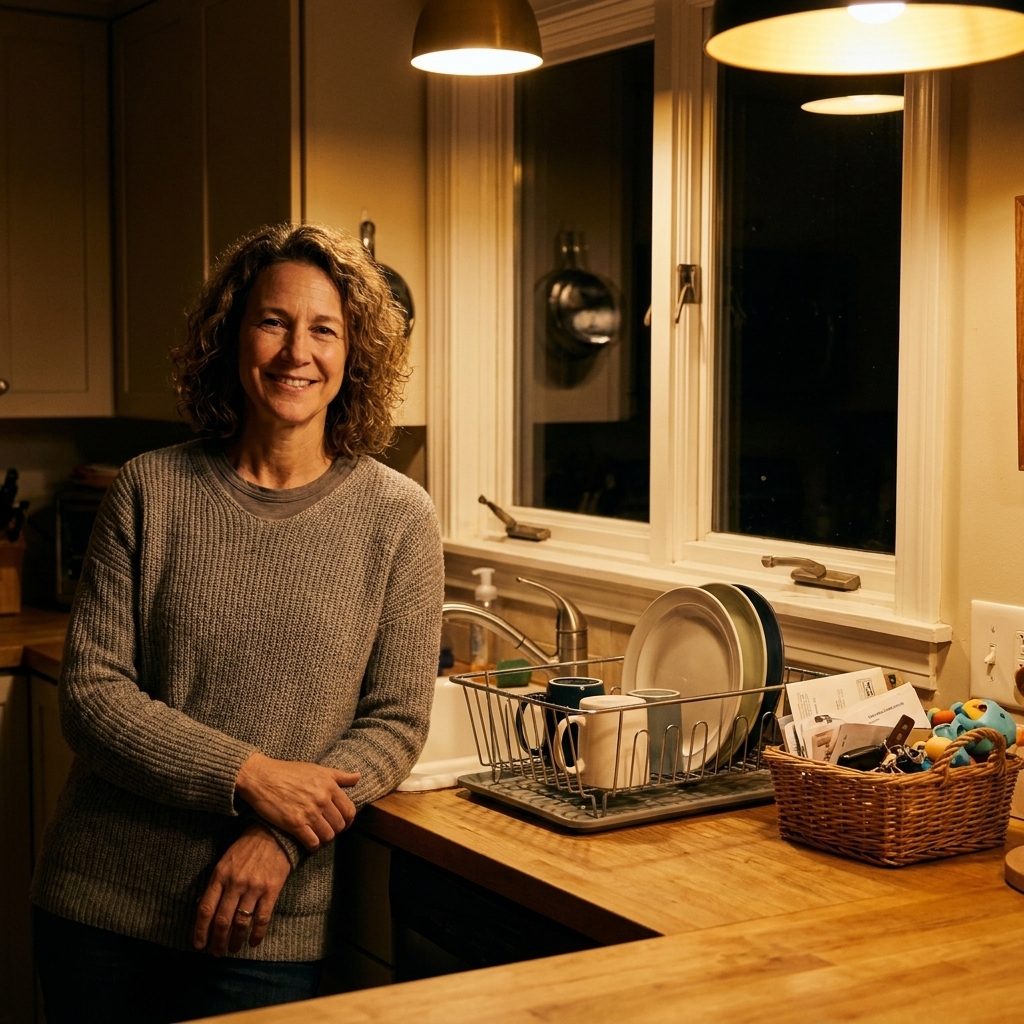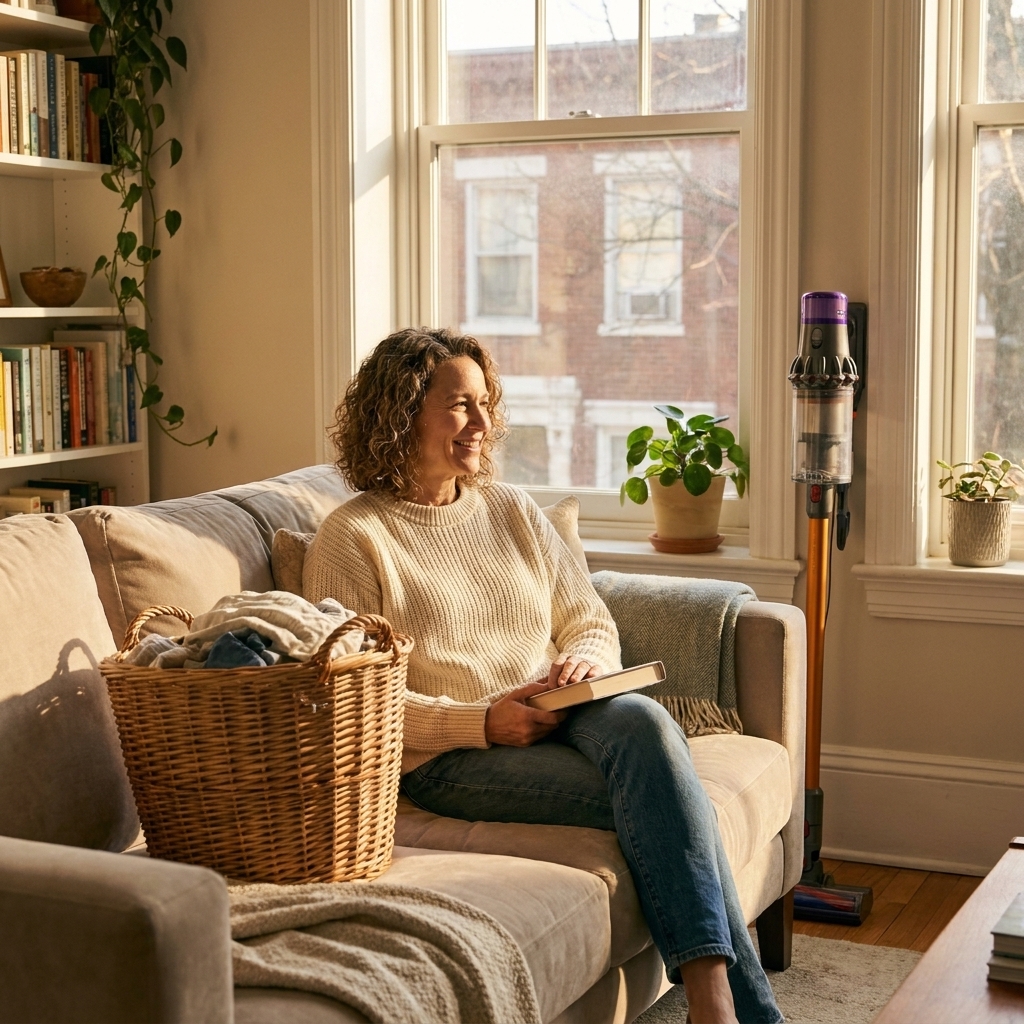
I am not a naturally tidy person. I am a person who learned to act tidy because I got tired of living in a constant state of “where is my other shoe?”
If you have ever tried a strict cleaning schedule, color-coded everything, kept it up for five days, and then watched your house slide right back into chaos, this is for you.
Micro-habits tend to work because they are small enough to do even when you are tired, distracted, or busy. They are less about motivation and more about reducing friction. Here are seven tiny daily tweaks that can keep a home organized without demanding a whole new personality.

Why micro-habits help
Traditional organizing advice often assumes you will maintain a system because it looks nice. A lot of us with messy brains do not work like that. We tend to maintain systems that are:
- Easy to start (takes under 2 minutes)
- Easy to finish (no extra steps)
- Easy to recover (when life happens)
Think of these habits as tiny guardrails. They stop clutter from becoming a landslide.
1) Close one loop
This is my go-to when I feel overwhelmed because it is almost comically small.
What it looks like
- Put one item back where it lives.
- Or, if it does not have a home, put it in a small “homeless bin.”
Why it works for messy people
Mess happens when we leave open loops everywhere: shoes mid-hallway, scissors on the counter, yesterday’s mail on the chair. Closing one loop builds momentum without requiring a full reset.
Make it stick
Pair it with something you already do: while you wait for the microwave, while coffee brews, while the bath fills, while your phone loads.
The homeless bin rule
Keep it small and give it a simple emptying trigger: either during your nightly drop-zone reset or during your Sunday reset. If the bin fills up before then, that is your cue to do a 2-minute “find homes” sprint.
2) 30-second surface sweep
If clutter breeds anywhere, it is on flat surfaces. Counters, coffee tables, bathroom vanities, nightstands. They are basically clutter magnets.
What it looks like
Once a day, pick one surface and do a 30-second sweep:
- Trash gets binned.
- Dishes go to the sink.
- Items that belong elsewhere get moved to a “return spot” (a small basket is perfect).
Messy-person tip
Do not leave the room during the sweep. Leaving the room is where the habit dies. You can redistribute later during another micro-habit.
When the return basket gets emptied
Empty it once a day (nightly drop-zone reset works great), or add it to your Sunday reset. No one needs a return basket that becomes a permanent exhibit.

3) One-load laundry
Laundry gets chaotic when we start multiple loads and finish none, or when clean clothes become “the chair.”
What it looks like
- Start one load.
- Commit to completing the chain: wash, dry, and put clean clothes in one designated spot.
Two realistic finish options
- Gold standard: put away immediately.
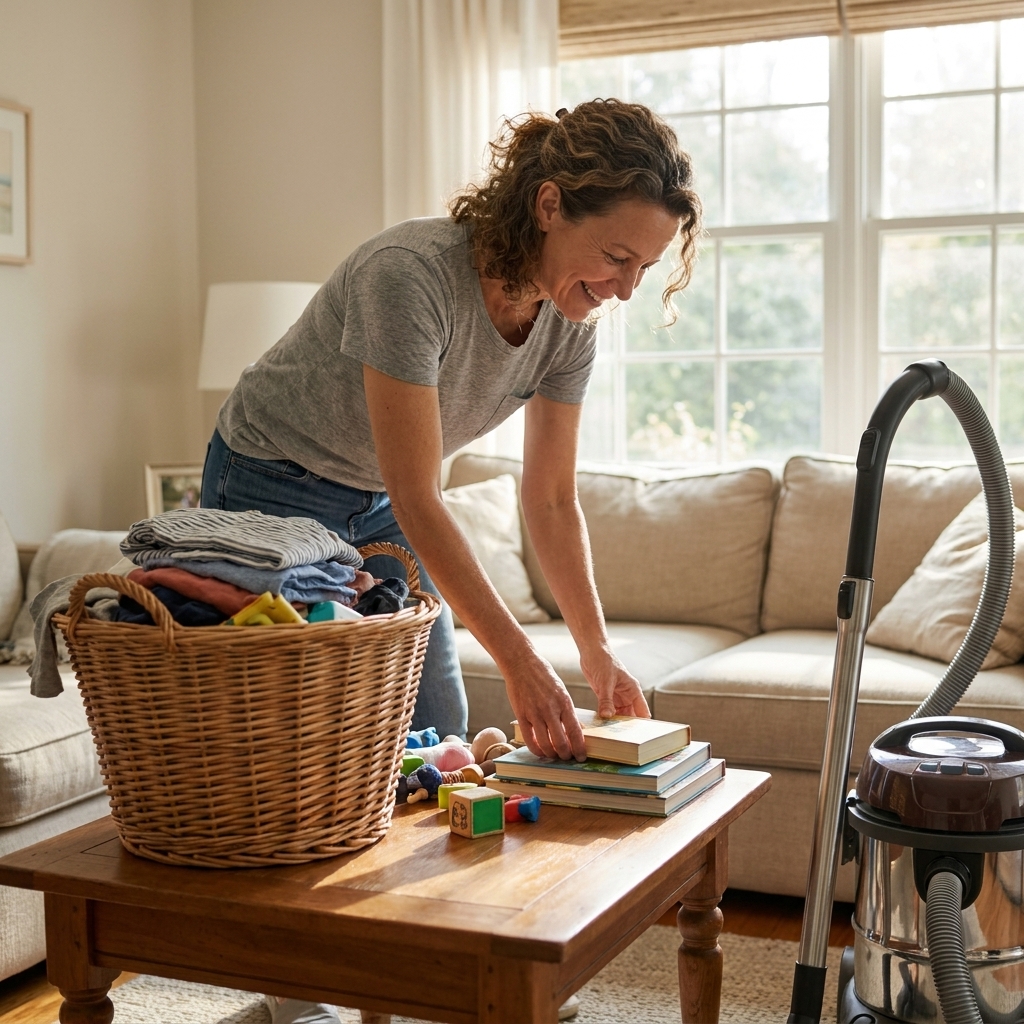
- Messy-friendly standard: sort into 3 piles in baskets: hang, fold, kid stuff. Put the baskets where you will naturally finish them (like near bedrooms).
This is still a win because it prevents the endless mound that makes you want to buy new socks instead of dealing with the pile.
4) Hands full rule
This one is so simple it feels like cheating.
What it looks like
Every time you leave a room, take something with you that belongs in the direction you are going. Just one thing. If your hands are free, they should not be empty.
Why it works
Mess builds when we make lots of empty trips. This habit piggybacks on movement you are already doing.
Common examples
- Leaving the living room: take a cup to the kitchen.
- Heading upstairs: bring the hoodie that belongs in the bedroom.
- Walking to the trash: grab junk mail on the way.
Safety note
Use common sense. If you are carrying hot liquids, a baby, or anything awkward, skip this one and prioritize not spilling, tripping, or juggling.
5) Daily paper pause
Paper clutter is sneaky because it feels important, so we keep it “for later” until later becomes never.
What it looks like
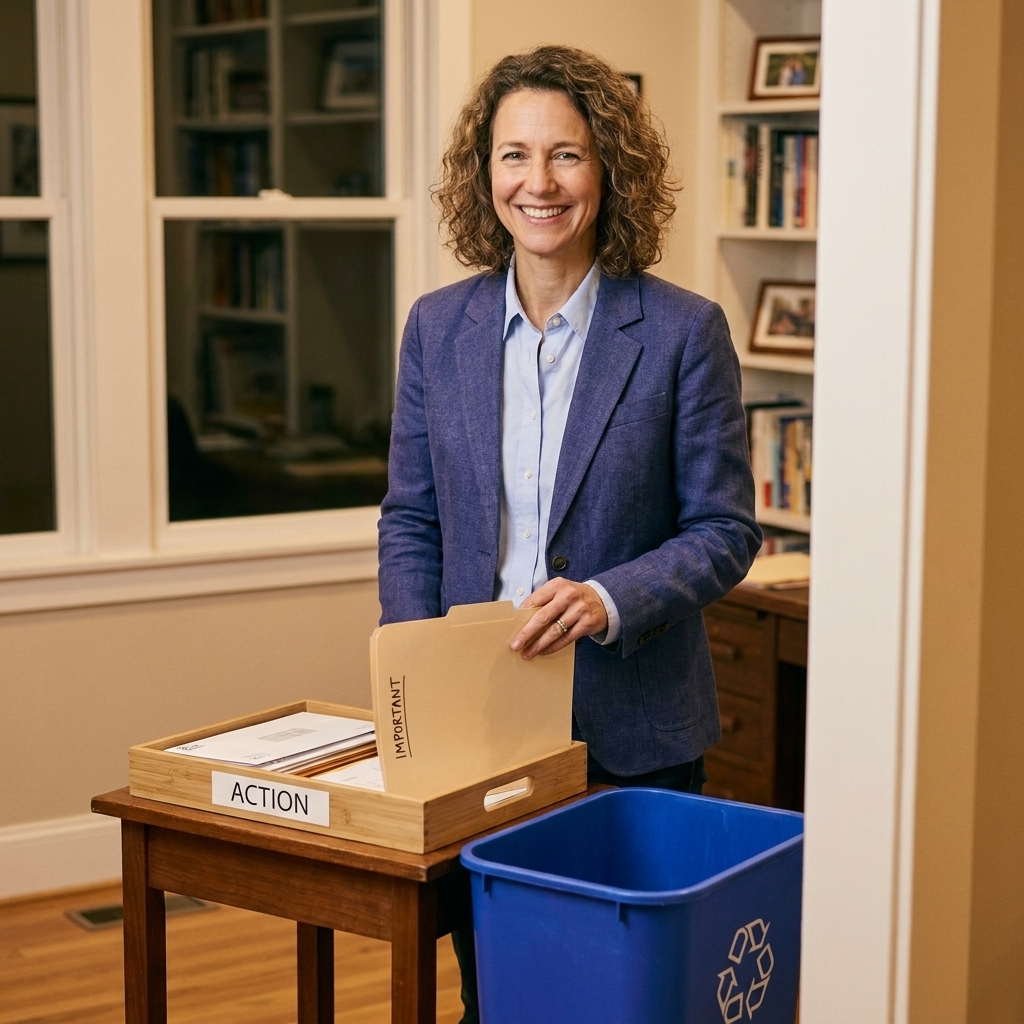
Once a day, do a 60-second paper pause at the same spot (ideally near where paper enters your home):
- Toss/Recycle: flyers, envelopes you do not need, anything that can go straight out.
- Action: anything with a deadline goes into one visible “Action” tray.
- File: one folder for true keepers (home, medical, school).
Messy-person boundaries
Do not create a complex filing system. If you have to think too hard, you will stop. One folder now is better than a binder you never use.
6) Nightly drop zone reset
Most clutter is not random. It is predictable. It lands in the same spots: entryway, kitchen counter, the chair, the corner of the dining table.
What it looks like
Pick one drop zone and reset it each night in under 2 minutes:
- Keys back in the bowl.
- Bags on the hook.
- Shoes in the bin.
- Mail into the tray.
Why it works
When you wake up to a clear landing spot, your day starts cleaner. When you wake up to yesterday’s piles, you start behind.
Quick setup if you do not have one
- A tray or bowl for keys and sunglasses
- A bin for shoes
- Two hooks for bags and jackets
- A small basket for “this goes upstairs” items
7) 2-minute future-me favor
This is the habit that quietly changes everything because it builds self-trust. You stop feeling like your house is constantly sabotaging you.
What it looks like
Do one tiny favor for tomorrow-you:
- Start the dishwasher.
- Wipe the bathroom sink.
- Set out tomorrow’s outfits.
- Restock toilet paper in the bathroom.
- Refill the hand soap.
Pick the favor that reduces friction
If mornings are your chaotic time, pick habits that make mornings smoother. If evenings are the mess-maker, focus there. The best micro-habit is the one that interrupts your personal pileup pattern.
Remember the Tiny 3
If seven habits feels like too much, do not do seven. Pick three and rotate later.
- One surface: 30-second sweep
- One zone: reset a drop zone
- One loop: put one thing away
That is it. That is a maintenance routine for real life.
Troubleshooting
If you miss a day
Nothing broke. Micro-habits are meant to be restartable. Come back with the smallest version: close one loop.
If you are too tired
Do the habit sitting down. Sort mail seated. Do a surface sweep with a basket from the couch. Put items in a return bin and call it a win.
If your family does not follow it
Make the system easier, not stricter. More hooks. Bigger bins. Fewer steps. The best home systems are the ones that work even when other people are being other people.
If clutter is beyond everyday messy
If you are dealing with hoarding-level clutter, unsafe pathways, pests, or significant distress, you deserve more support than a list of micro-habits. Consider reaching out to a qualified therapist, a professional organizer with hoarding training, or local community resources.
Sunday reset add-on
If you want one bigger habit that supports all the tiny ones, do a 20 to 30 minute Sunday reset:
- Empty return baskets
- Quick paper pause
- Clear one hot spot (kitchen counter, dining table, entryway)
- Start one load of laundry
Not because your house must be perfect, but because Monday feels lighter when you are not stepping over Saturday.
Final note
You do not need a strict schedule or a magazine-worthy pantry to have a calm home. You need a few tiny habits that happen often enough to interrupt the clutter cycle.
Pick one micro-habit from this list and try it for three days. If it feels easy, keep it. If it feels annoying, swap it. Organization that sticks is usually the kind that matches how you actually live.