
I am not the person who “just naturally” resets the house every night. I am the person who used to wake up, step on a rogue LEGO, and wonder why the kitchen counter looked like it hosted a small flea market after dinner.
Then I learned something freeing: you do not need a spotless home to feel peaceful. You need a reliable reset.
This is my 10-minute nightly shutdown. It is quick, forgiving, and built for real life. You are not deep-cleaning. You are simply putting your home back into “ready mode” so tomorrow starts calmer.
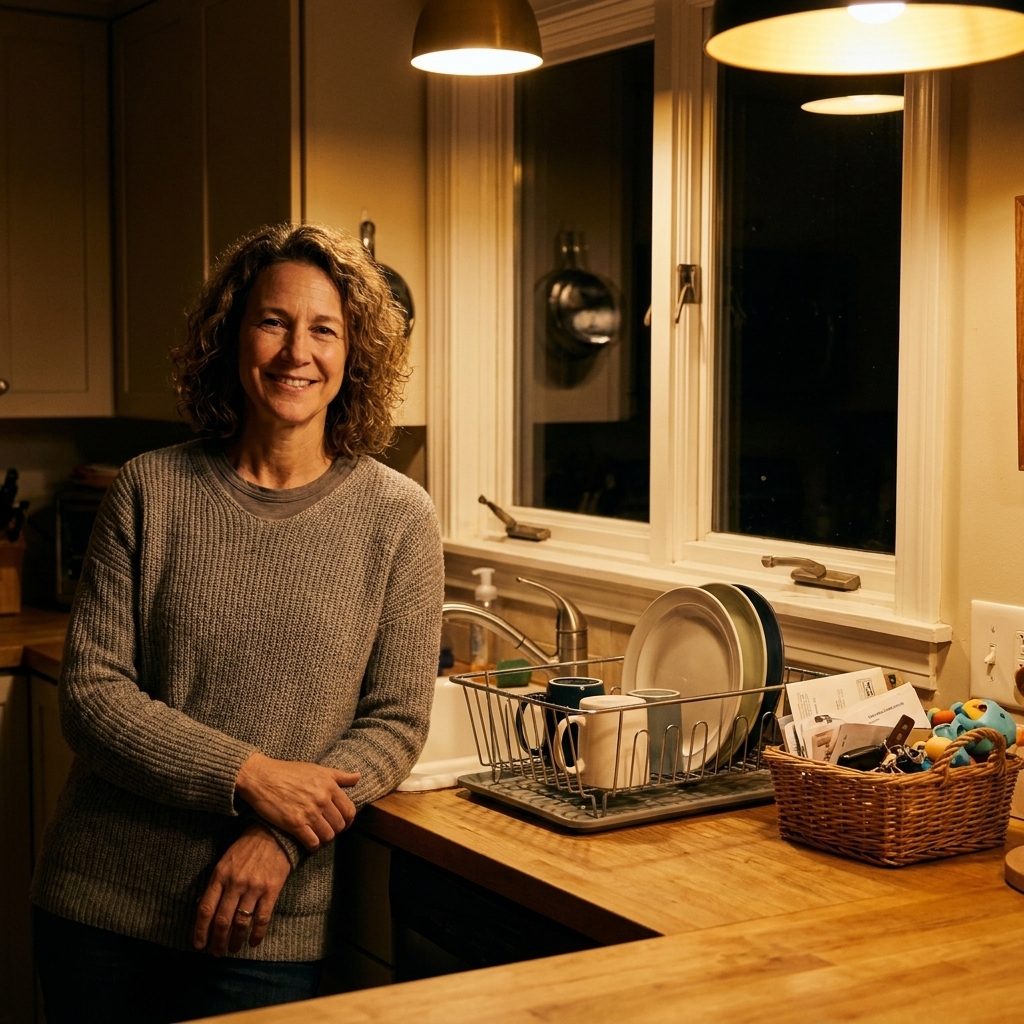
What a nightly shutdown does
Clutter is rarely one big event. It is tiny daily debris: cups, mail, backpacks, socks, scissors, chargers, and that one random toy that somehow travels through the entire house.
The nightly shutdown works because it:
- Stops pile-ups early before they become weekend projects.
- Protects high-traffic zones (kitchen, living room, entryway) from becoming storage units.
- Makes mornings easier because the basics are already handled.
- Creates a repeatable “end of day” cue for the household, including kids and partners.
Think of it like closing a store. You are not renovating the store at 9 p.m. You are resetting it so it can open smoothly tomorrow.
Your 10-minute routine
Yes, I mean an actual timer. Ten minutes keeps you from overthinking, perfection-spiraling, or randomly reorganizing the spice drawer. If you finish early, you are done early. That is the reward.
One quick boundary: if your home is large, do not try to cover every room. Stick to the main spaces you will see first in the morning.
Minute 1: Dishwasher or sink
In my house, the kitchen is the mood-setter. If the sink is a mess, everything feels harder.
- Load the dishwasher or run it.
- If you do not have one, stack dishes neatly and fill the sink with hot soapy water to soak.
- If running it overnight does not work for your noise level, utility rates, or timing, just load it and set it to run in the morning.
- Wipe one “landing strip” on the counter (even a 2-foot section counts).
Reformed-messy tip: If you only do one thing, do this one. Waking up to a clear-ish sink feels like a gift from Past You.
Minutes 2 to 4: Clear main surfaces
Pick the two surfaces that collect everything. Usually it is the kitchen counter and the coffee table, but your home might be different.
- Grab a small basket or tote and do a fast sweep.
- Do not put everything away one-by-one yet. Just gather.
- Toss obvious trash and recycling as you go.

Minutes 5 to 7: Reset the living area
This is the part that makes the home feel lighter without doing a full tidy.
- Fluff pillows and fold one blanket.
- Return cups and dishes to the kitchen.
- Put stray items into your basket (remotes, toys, chargers, hair clips).
- Quick floor scan: pick up the obvious stuff that would annoy you tomorrow.
Permission slip: You are not organizing toys. You are simply getting them off the floor and into a container. Contained clutter is still a win.
Minutes 8 to 9: Entryway reset
If your mornings start with “Where are my keys?” this is the fix.
- Hang coats, backpacks, and bags.
- Put shoes in your shoe zone (basket, rack, or even a simple line against the wall).
- Return keys and wallets to their home.
- Deal with paper fast: trash, recycle, or place in one inbox tray.

Minute 10: Future-you check
This is my favorite minute because it is less cleaning and more kindness.
- Set the coffee maker or kettle.
- Lay out one item you need tomorrow (lunch bag, gym shoes, permission slip).
- Take out the trash if it is full.
If you have kids, this is also a great time for a 30-second backpack check to make sure homework or sports gear is not missing.
Make it easier with 3 zones
The nightly shutdown sticks when your home has obvious homes for common clutter. You do not need fancy storage. You need clear defaults.
1) Drop zone
This is where daily carry-in items land on purpose.
- Hooks for backpacks and coats
- A tray for keys and sunglasses
- A bin for incoming paper
Keep the paper bin from becoming a second pile: process it once a week. Ten minutes, tops. Trash what you can, file what you must, and put action items where you will actually see them.
2) Toss basket
One basket, one job: collect out-of-place items fast. Mine lives under the console table, and it comes out every night.
- Use it to sweep surfaces quickly
- Empty it after the timer, or park it somewhere out of sight if you are wiped
3) Kitchen closing kit
This is just a tiny caddy under the sink or in a cabinet with your nightly essentials:
- All-purpose spray
- Microfiber cloth
- Dish brush or sponge
- Small handheld vacuum (optional, but life-changing for crumbs)
When supplies are easy to grab, you actually use them.
Share the duties
The nightly shutdown should not live or die on one person’s motivation. If you live with other humans, spread it out.
Simple roles that work
- Kitchen helper: brings dishes from around the house, wipes table.
- Floor helper: quick toy sweep into a bin.
- Entryway helper: shoes to the shoe zone, backpacks on hooks.
Realistic note: even toddlers can help with supervision and very simple tasks, like tossing stuffed animals into a bin. Teenagers absolutely can do the real work.
Keep it light. Put on one song. Race the timer. The goal is better than before, not perfection.
Common hang-ups
“Ten minutes is not enough.”
Perfect. That means you are exactly who this routine is for. Ten minutes is not meant to finish everything. It is meant to keep things from getting worse.
If it helps, do two rounds on weekends: one 10-minute shutdown after dinner and one 10-minute mini-declutter later. Still manageable, still contained.
“I always get distracted.”
Use the basket method. Do not put items away as you find them. Sweep first, put away second. Distraction usually happens when you wander room-to-room.
“I do it for a week, then fall off.”
Same. My fix: lower the bar on tired nights.
- Minimum shutdown (2 minutes): dishwasher or sink setup, clear sink, trash out.
- Standard shutdown (10 minutes): full routine.
- Bonus shutdown (15 minutes): add a quick vacuum of the main walkway.
Consistency comes from having a minimum you can do even when you are exhausted.
“I have limits or low-energy nights.”
You can do a seated version. Sit at the table with your toss basket and have people bring items to you, or do a one-room shutdown where you only reset the kitchen and the entryway. The point is a calmer start, not a perfect house.
Shutdown checklist
If you want a simple list to screenshot, here is the exact order I use:
- Dishwasher or sink setup
- Clear one counter landing strip
- Grab toss basket and sweep main surfaces
- Living room reset: cups, pillows, blanket, floor scan
- Entryway reset: shoes, bags, hooks, keys
- Future-you prep: coffee, one item for tomorrow, trash if needed
Do this a few nights in a row, and you will start moving through it without thinking. Behavioral researchers often call this “habit stacking,” meaning you attach a new routine to a cue you already have, like locking the door or brushing teeth.
FAQ
When should I do the nightly shutdown?
Right after dinner cleanup is ideal, but the best time is the time you will actually repeat. Many families do it right before bedtime, or right after kids are in bed. Attach it to an existing cue like brushing teeth or locking the door.
Should I do this if my house is already messy?
Yes. Especially then. A nightly shutdown is not a reward for being organized. It is the bridge that gets you there, one small reset at a time.
Does this replace weekly cleaning?
No, and that is a good thing. Think of it as maintenance that makes weekly cleaning faster because you are not constantly clearing clutter first.
What if I live in a small apartment?
This routine is even more helpful in small spaces because clutter shows up faster. Focus on the kitchen area, the main seating area, and your entry point. That is usually enough to make the whole place feel calmer.
Final note
You are not trying to wake up to a magazine house. You are trying to wake up to a home that feels friendly. Ten minutes is small enough to start, and powerful enough to change the trajectory of your week.
Set the timer tonight. Do what you can. Stop when it ends. Tomorrow morning you will feel it.