If you have kids, your living room is not just a living room. It is a LEGO landing zone, a stuffed animal lounge, a puzzle exchange program, and somehow also the place you want to drink coffee in peace.
I am a reformed messy person, which means I do not chase perfection. I chase systems that let the room look like a grown-up space again by dinner. The trick is choosing storage that blends in, closes, and lives where the toys naturally land.
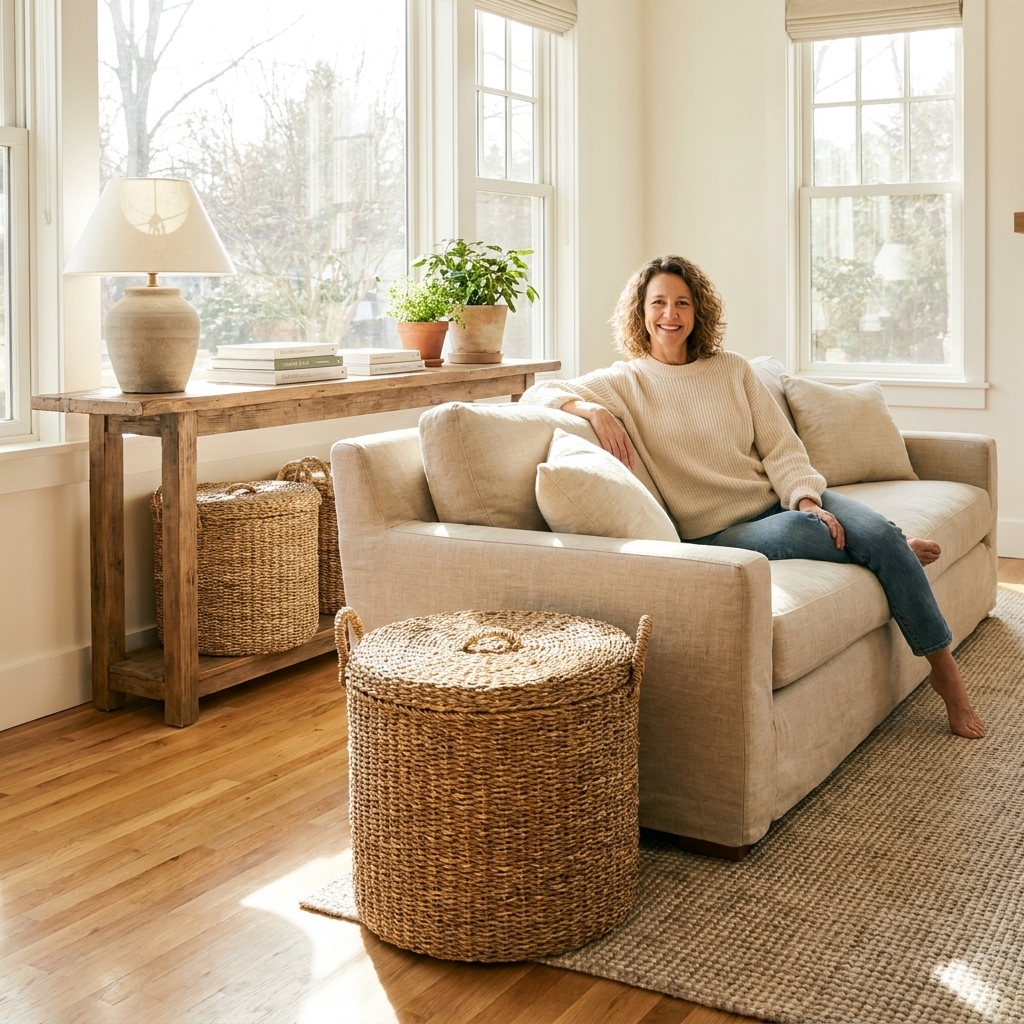
The rule that makes toy storage look stylish
If you remember only one thing, make it this: open storage can read like clutter, closed storage tends to read like decor. Open bins can work, but in a living room they often feel like visual noise unless everything is curated. Closed storage buys you time and sanity.
- Choose lids, doors, drawers, or a flap whenever possible.
- Pick one material family so it looks intentional: woven baskets, light wood, matte black, white lacquer, or clear acrylic inside cabinets.
- Repeat shapes (two matching baskets, three matching boxes) instead of a random assortment.
A quick language note so the room looks cohesive: I use baskets for out-in-the-open storage (they can pass as decor) and bins for inside cabinets and consoles (easy to pull, easy to label).
Stylish, multi-functional storage solutions that hide the mess
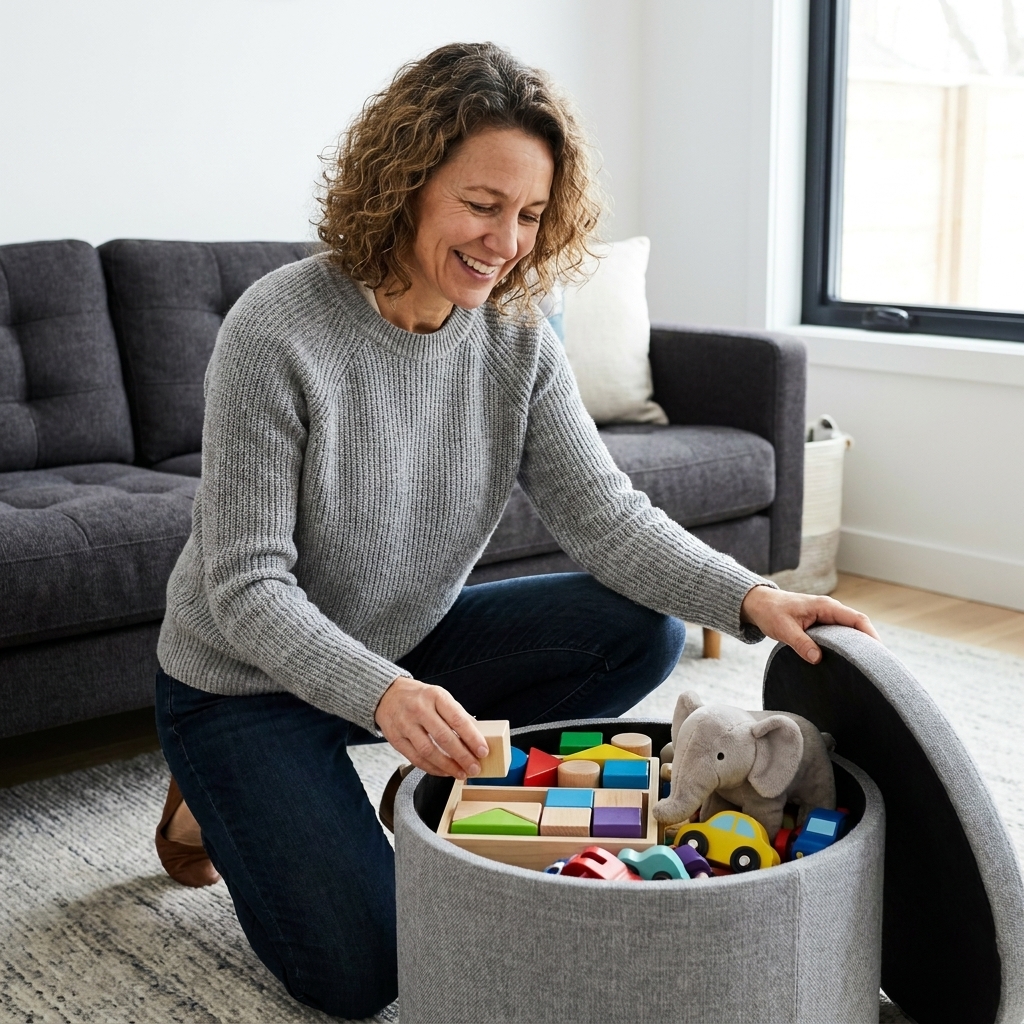
1) Storage ottoman or upholstered bench
This is my favorite “company-ready living room” hack because it looks like furniture first. Look for a hinged top (easy) or lift-off lid (cleaner lines). If it is going to be a daily toy drop, soft-close hinges are worth it.
- Best for: blocks, doll clothes, magnetic tiles, small vehicles, plushies
- Make it look intentional: keep a folded throw on top so it reads like styling, not storage
- My reformed-messy tip: add one big fabric cube inside as a liner so tiny pieces do not disappear into the corners
Safety note: watch little fingers with hinged lids. Soft-close helps, and toddlers should not be opening heavy tops unsupervised.
2) Coffee table with hidden storage
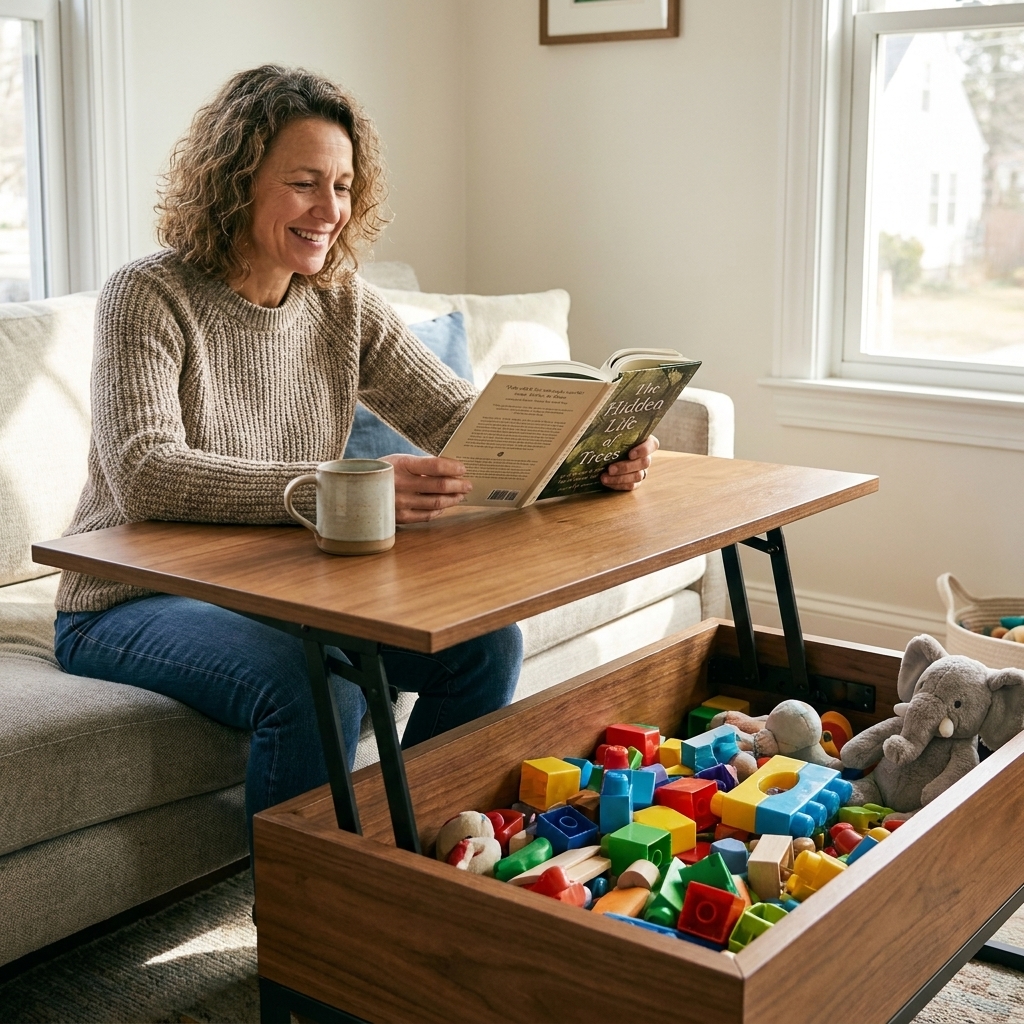
Think lift-top coffee tables, drawer coffee tables, or those beautiful trunk-style tables. This is storage that does not require extra square footage, which is critical in real homes.
- Best for: board games, art kits, puzzles, handheld toys
- What to avoid: fully open cubbies unless you plan to use matching bins in every slot
- Style win: a wood trunk table can look more grown-up than a typical toy box, while doing the exact same job
3) Closed media console that doubles as toy cabinet
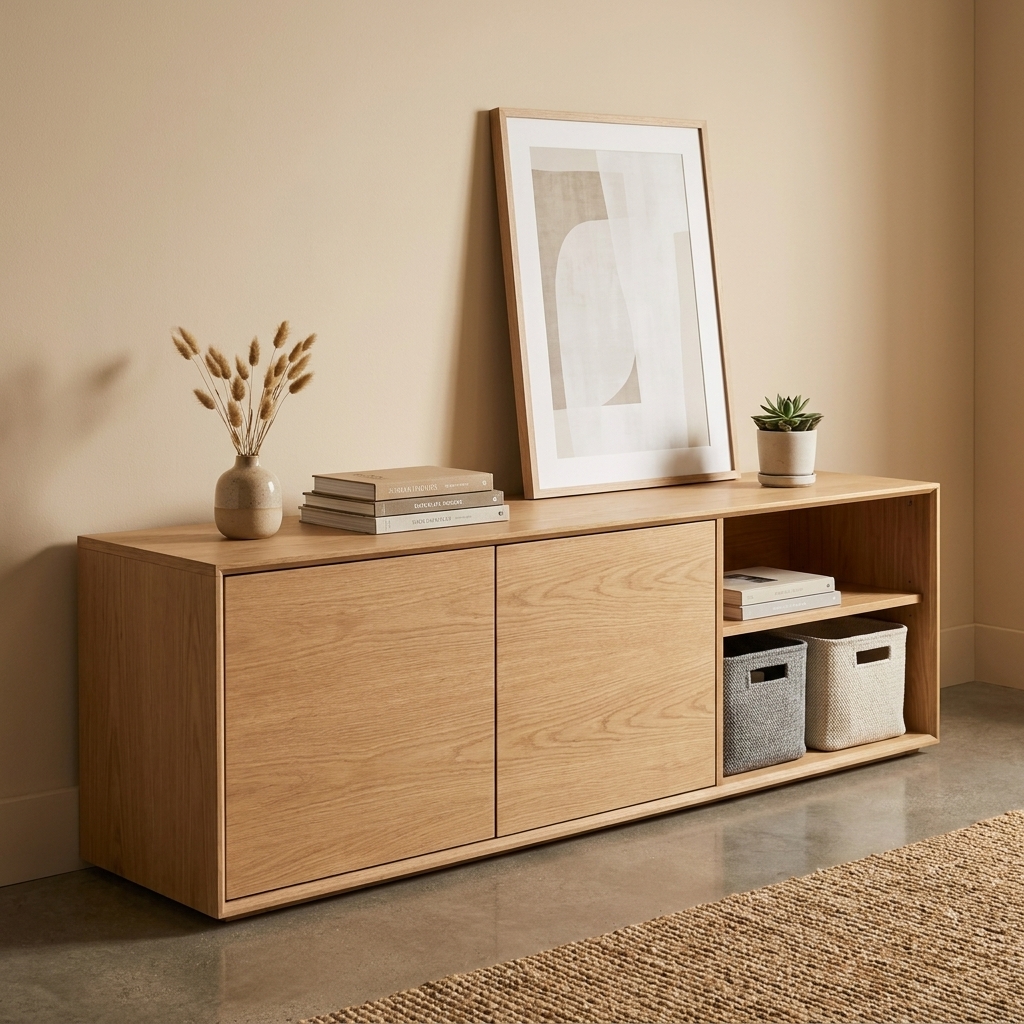
If you already have a media stand, you are halfway there. The goal is to reserve one or two sections for kid stuff and keep the rest for adult-looking items so the whole piece still reads as a media console.
- Best for: small sets, action figures, game controllers, craft supplies in bins
- Make it easy: use handled bins inside so kids can pull and return
- Bin ID tip: label the back of each bin with a simple word so you are not playing “which bin is this?” every time
4) Built-ins, bookcases, or modular units with doors
Open shelves can work if you treat them like “display plus a few hidden zones.” Add doors to the bottom half or use insert doors to turn part of the unit into closed storage.
- Best for: mixed toys, books, bigger kid collections that you want contained
- How to keep it pretty: put toys behind doors on the bottom, display books and a few baskets up top
- Containment rule: each category gets a bin, even inside the cabinet
Safety note: anchor tall bookcases to the wall, even if they feel sturdy. If a unit has doors or drawers kids can pull on, it is not optional.
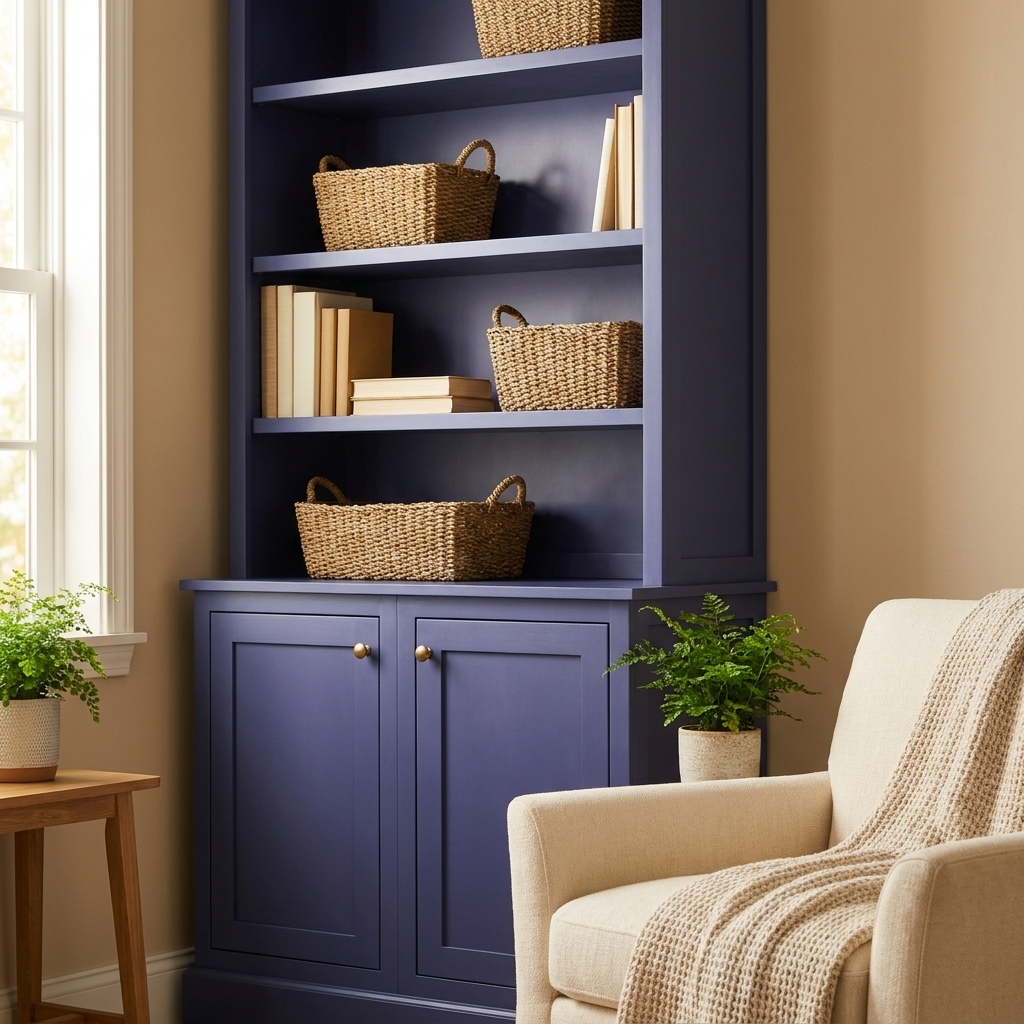
5) Lidded baskets that look like decor
If you only have energy for one upgrade, make it lidded baskets. They are forgiving, fast, and they read like homey decor instead of kid storage.
- Best for: plushies, dress-up accessories, larger loose toys
- Where they shine: beside the sofa, under a console, next to the fireplace, in a corner that needs “something”
- Reformed-messy rule: one basket per toy type works better than one basket for everything
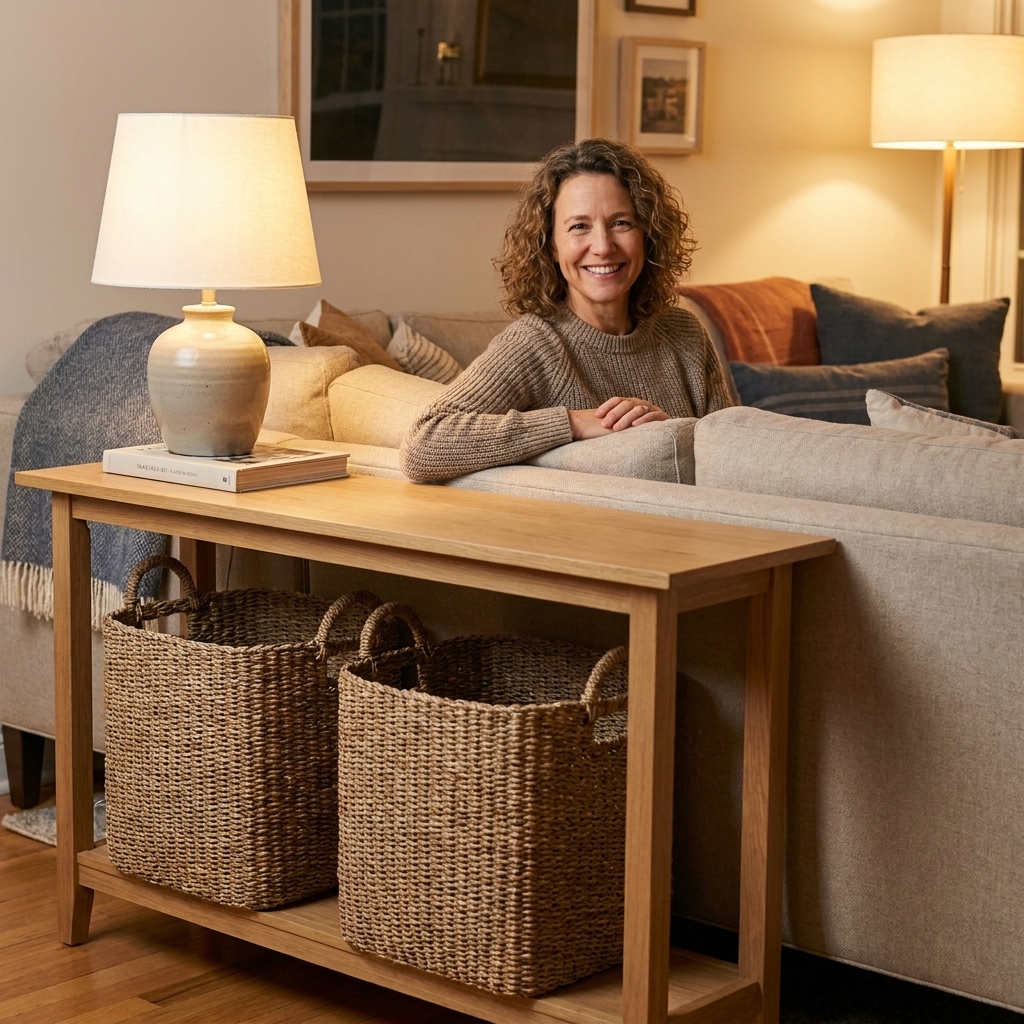
6) A slim console table with baskets underneath
This is a great choice if your living room lacks built-in storage. You get a surface for lamps and grown-up decor, and the baskets below quietly do the heavy lifting.
- Best for: daily grab-and-go toys
- Choose baskets: matching, structured (they keep their shape), and ideally with lids if the table is open
- Easy win: assign one basket to each kid so nobody argues about whose is whose
7) Wall-mounted cabinets or floating credenzas
When floor space is tight, go up. A wall-mounted cabinet can hide toys while keeping the room feeling open. This is also helpful if you have a toddler who loves dumping everything, because doors add a speed bump.
- Best for: small toys, art supplies, items you want slightly out of reach
- Safety first: mount into studs (or use the correct anchors for your wall type), follow the weight limit, and avoid storing heavy items over a child’s play zone
- Smart placement: keep kid-safe, lightweight items on the lowest shelf they can reach, and keep anything messy or hazardous (scissors, paint, batteries) higher up
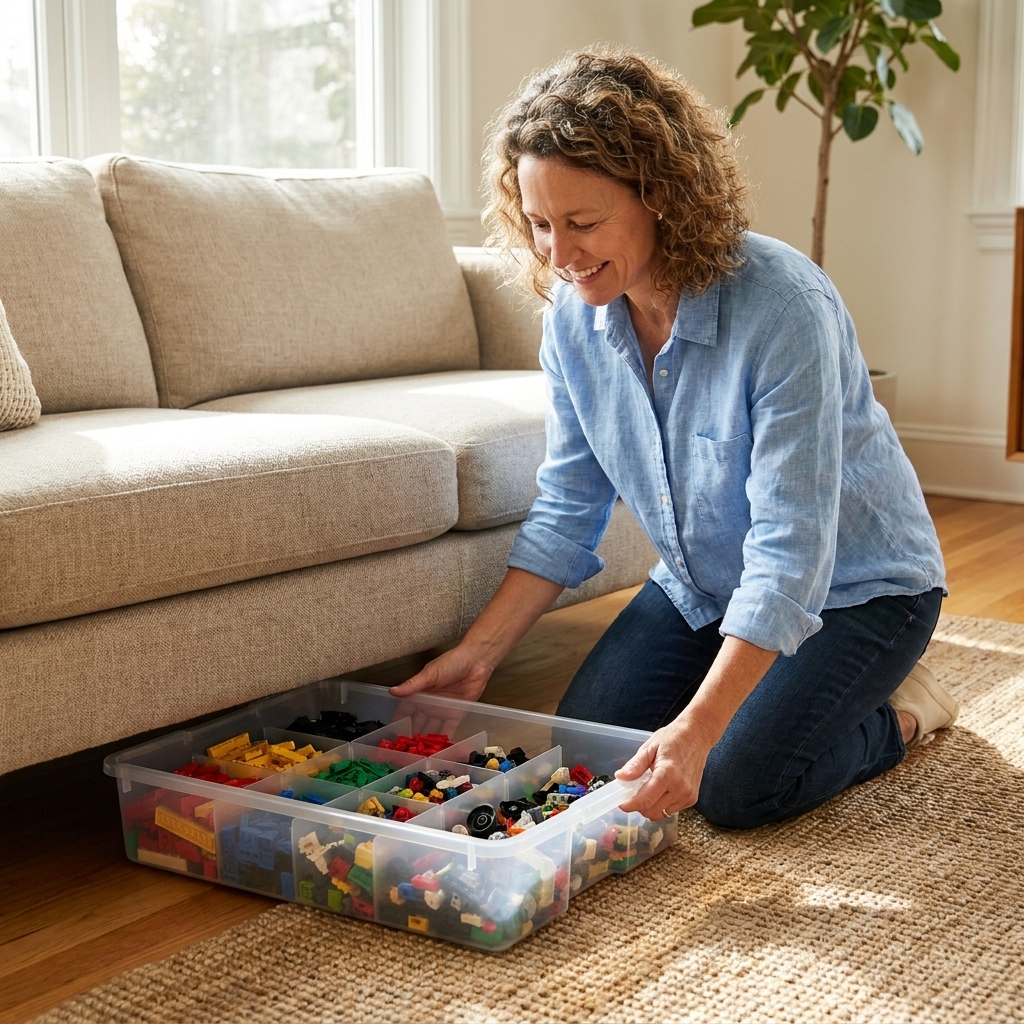
8) Under-sofa storage bins (the stealth option)
If your sofa has enough clearance, shallow bins can hold toys without changing the look of the room at all. This is an ideal solution for “I want it gone but I also want it close.”
- Best for: train tracks, figurines, small sets, puzzles
- What makes it work: pick bins with pull handles so kids can slide them out easily
- Keep it clean: use lidded bins if you have pets or a lot of dust
How to make any toy storage feel grown-up
Commit to a color palette
You do not need everything beige, but you do need a plan. If the toys are bright, let the storage be calm. Choose one of these:
- Warm neutrals: woven seagrass, tan canvas, light oak
- Modern minimal: matte black bins inside a cabinet, white doors
- Soft family home: gray felt bins, wood tones, a few baskets
Use the one visible zone method
Pick one spot where some toys can be seen and accessed, like a single basket of favorites. Everything else is closed storage. It keeps the room kid-friendly without making it toy-forward.
Try the two-step tidy
For daily life, make it easy: one “toss bin” for the quick pickup, then a once-a-week re-sort into the right bins. It is less perfect, but it actually happens.
Upgrade the labels without making it fussy
In a living room, I like hidden labels. Put them inside a cabinet door or on the back of bins. If you need visible labels, keep them simple and consistent.
Room-friendly toy categories
Not every toy belongs in the living room. If you want the space to feel like a shared room, curate what lives there.
- Living room toys: blocks, magnetic tiles, a few puzzles, a couple of small sets, books, one art kit if you have a wipeable surface nearby
- Bedroom or playroom toys: large dollhouses, big vehicle collections, anything with 45 tiny accessories, kinetic sand and slime unless you enjoy chaos
- Rotating bin: keep one lidded bin in a closet for “trade-out” toys to reduce volume without taking everything away
Choose the right container size
This is the part people skip, and it matters. A few larger containers usually look calmer than ten tiny ones.
- Big, fast baskets: plushies, dress-up, big chunky toys
- Medium bins with handles: magnetic tiles, vehicles, pretend play sets
- Small lidded boxes inside a bigger bin: tiny pieces, mini figures, accessories (and anything you do not want on the vacuum’s hit list)
My rule: if you cannot close the lid easily, the container is either too small or you are storing too much.
The 10-minute evening reset
This is the routine that made my living room feel livable even when my kids were in their peak “dump every bin” phase.
- Set a 10-minute timer. Short enough to actually do, long enough to make a dent.
- Do the fast sweep. Put all toys into one laundry basket or tote.
- Sort into homes. Each category goes into its bin, basket, or drawer. No perfect arranging.
- Reset the grown-up surfaces. Coffee table clear, throw blanket folded, remote in the same spot.
- Stop when the timer ends. Consistency beats a once-a-month marathon.
Quick troubleshooting
If your kids refuse to put toys away
- Make storage lower and closer to where they play.
- Switch from complicated sorting to bigger categories (Blocks, Cars, People, Art).
- Use open-and-drop containers for daily cleanup, then do detailed sorting weekly if you want.
If the bins always overflow
- Reduce categories in the living room. Fewer options means less mess.
- Increase container size or add a second matching bin so it still looks cohesive.
- Do a quick edit: if the lid does not close easily, something has to go.
If you hate how baskets look
- Try closed cabinets, a trunk coffee table, or an ottoman instead.
- Match finishes to what you already have. If your home leans modern, baskets can feel visually busy.
My favorite living room storage combo
If you want a simple, stylish setup without overthinking it, this trio works in almost any space:
- One storage ottoman for the daily dump
- One closed cabinet (media console or bookcase with doors) for sets and games
- One lidded basket for plushies or dress-up
It is enough to hide the clutter fast, but not so much storage that you end up keeping everything forever. Which, speaking as a former clutter champion, is always the danger.