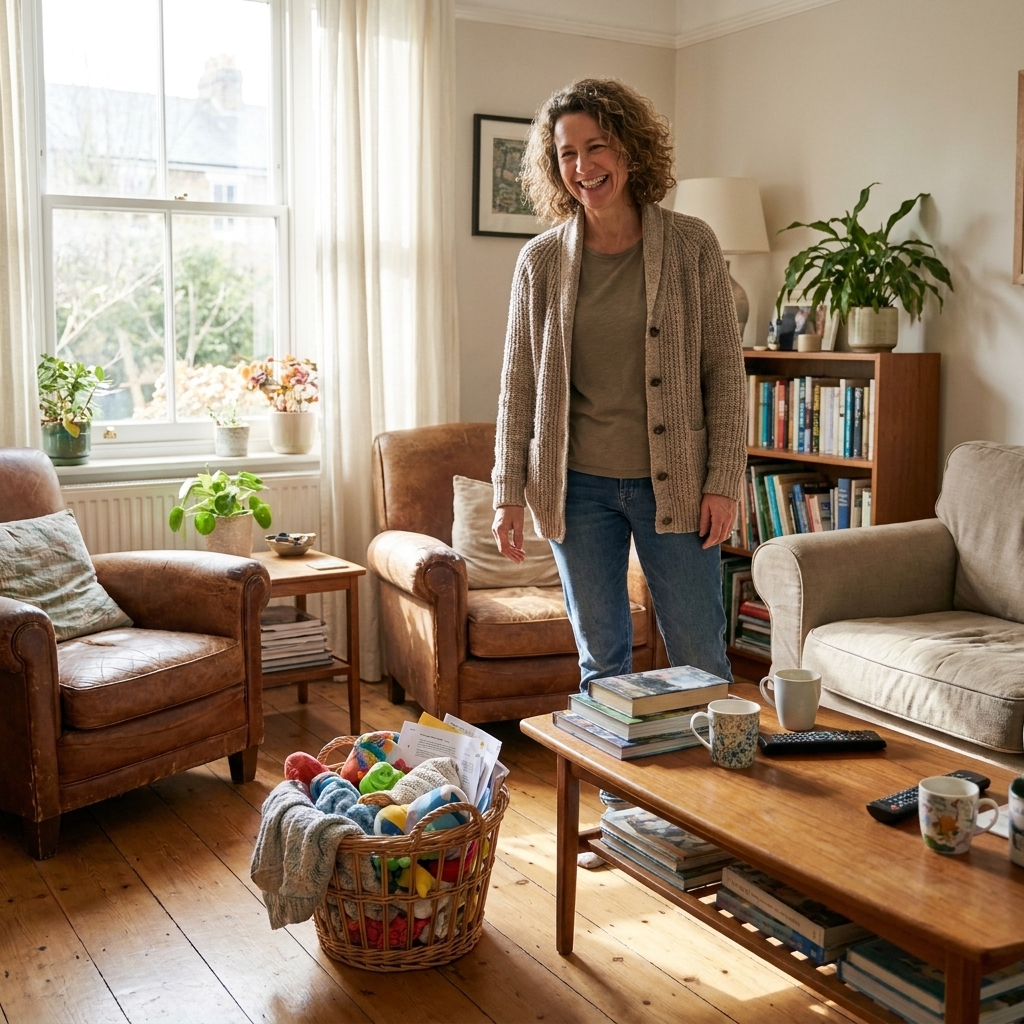
I used to think clutter “just happened.” Like dust. Like laundry. Like some kind of mysterious force that moved in when I wasn’t looking.
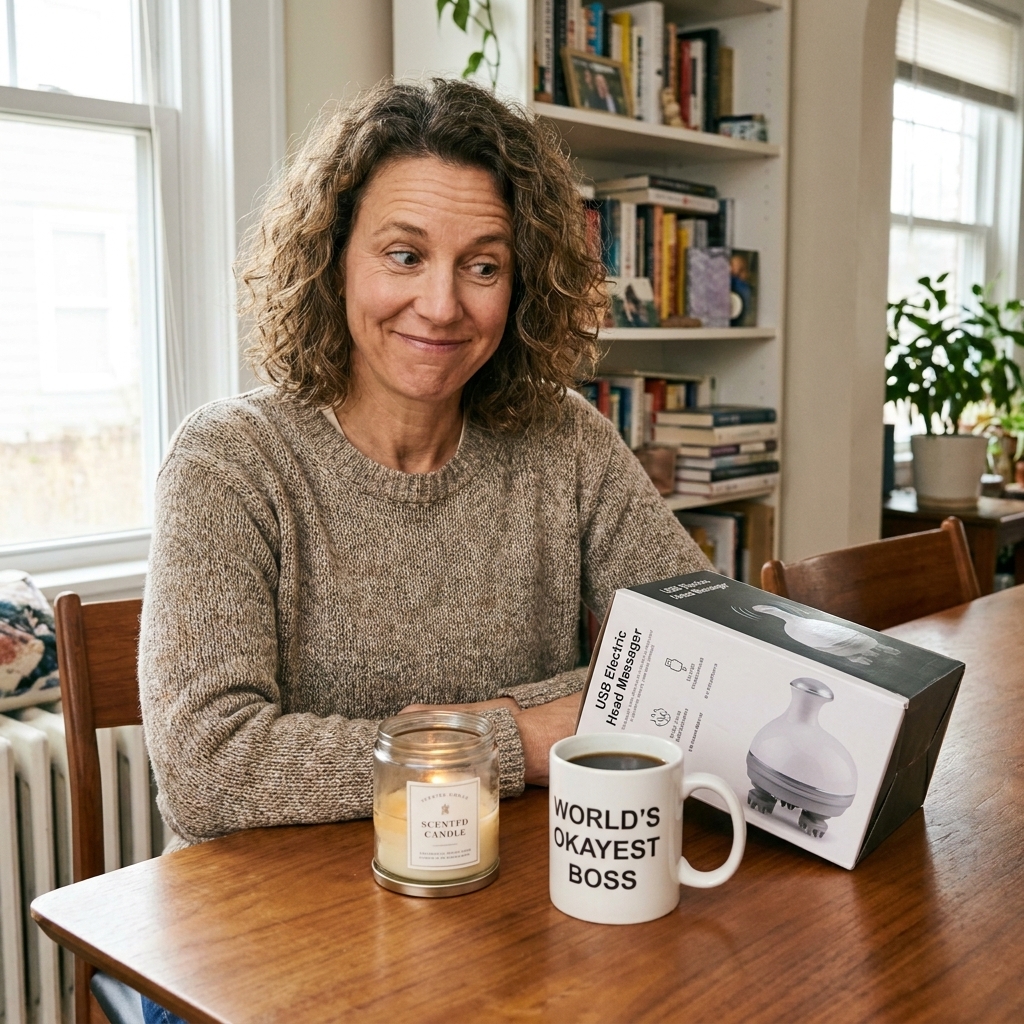
Then I realized something slightly annoying: a lot of clutter enters the house on purpose. It comes in through shopping bags, hand-me-down boxes, impulse buys, well-meaning gifts, and those “I might need this someday” deals.
The one-in, one-out method is the simplest way I know to slow the re-cluttering cycle. It is not fancy. It is not aesthetic. It is just a rule that helps your space stay steady after you worked so hard to clear it.
What one-in, one-out means
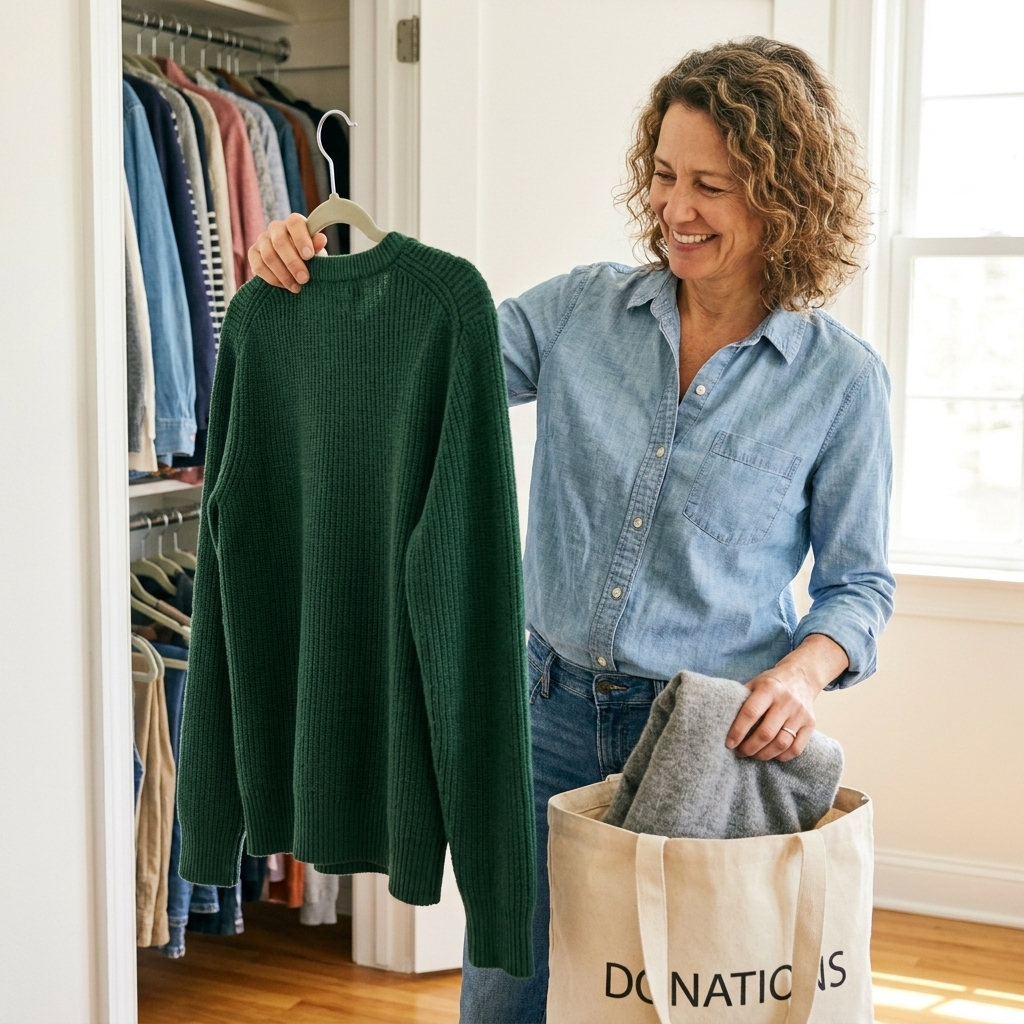
One-in, one-out means: whenever a new item comes into your home, one comparable item leaves.
Comparable is the key word. If you buy new jeans, you do not have to toss a spatula. You choose one pair of jeans to donate, sell, recycle, or trash. Your total number of jeans stays stable, which helps keep drawers and shelves from overflowing.
The promise
- Your storage stops being a moving target. You are not constantly “needing” more bins and shelves.
- Decluttering becomes maintenance. Small decisions prevent giant cleanouts.
- Organized spaces stay organized more often. The system is less likely to get crushed by new stuff.
Why it feels hard
It feels hard when you have not defined what “out” looks like for your home. That is what we are going to fix.
Set container limits first
One-in, one-out works best when each category has a clear home. I am a big believer in the container concept, popularized by organizer Dana K. White: your drawer, shelf, bin, or closet section is the limit.
If the sock drawer is full, then the drawer is telling you the truth. You are at capacity.
Start with leaky categories
Start with just 1 to 3 categories. These are the usual suspects:
- Clothes (especially tops, jeans, pajamas)
- Shoes
- Kids’ toys
- Mugs and water bottles
- Skincare and makeup
- Books
- Throw pillows and blankets
- Kitchen gadgets
Once you succeed with a few categories, you will naturally want to expand.
How to do it simply
Here is the simplest way to make the rule automatic.
Step 1: Pick the out before you buy
If you are shopping and thinking, “I’ll figure it out later,” later-you is going to lose. Ask yourself:
- What specific item is leaving when this comes in?
- Where is it right now?
- How will it leave: donate, sell, recycle, trash?
If you cannot answer those three questions, you are not buying yet. You are still browsing.
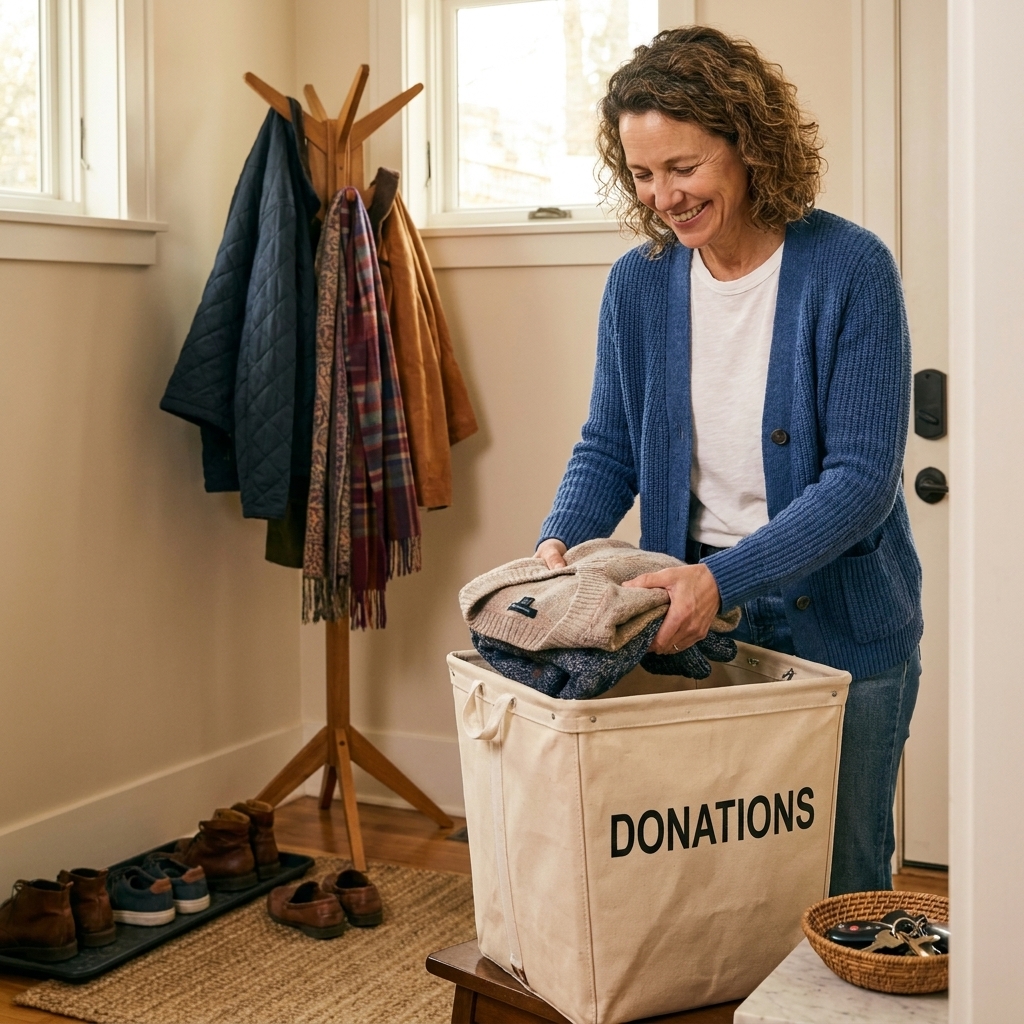
Step 2: Make an exit station
One reason clutter piles up is because “out” takes effort. Make it easy.
- Donation bag or bin: keep one in a coat closet or laundry room.
- Sell box: a small tote for higher-value items you will actually list.
- Recycle bag: for packaging and recyclables your program accepts.
- Textile or specialty drop-off bag: for worn-out clothes and items like batteries or small electronics, if your area offers drop-offs.
Quick reality check: many curbside programs do not take textiles or soft plastics. Check your local guidelines so “recycle” does not turn into wish-cycling.
When the “out” has a physical landing spot, decisions happen faster.
Room by room examples
Closet and dresser
- New top in, one top out.
- New workout set in, one workout set out.
- New coat in, one coat out (unless you truly needed a missing category, like a winter coat).
If you have a “maybe” pile, you are not done. Pick the actual out item and put it in the donation bag immediately so the decision does not linger on a chair for three weeks.
Shoes
Shoes are sneaky because they take up fixed space. They do not compress. If you buy new sneakers, choose the oldest pair of sneakers to go. If you buy heels for one event, consider renting or borrowing, or be honest about what will leave.
Kitchen (mugs, bottles, gadgets)
- New water bottle in, one water bottle out.
- New mug in, one mug out.
- New gadget in, one gadget out (or prove you have an empty, assigned spot).
If you are short on cabinet space, one-in, one-out might not be strict enough. You may need one-in, two-out for mugs and bottles. These categories multiply like rabbits.
Bathroom (makeup, skincare, hair tools)
- New shampoo in, old shampoo gets finished first. No “backups” unless you truly use them.
- New lipstick in, one lipstick out.
- New hair tool in, one hair tool out (and be ruthless about duplicates).
This is a great place to use a small acrylic bin as your container limit. If it does not fit in the bin, something has to go.
Kids’ toys
This is the category where parents roll their eyes at me, and I get it. Kids receive stuff from everywhere.
Try this version:
- One-in, one-out per toy type: new stuffed animal in, one stuffed animal out.
- Weekly toy sweep: every Sunday reset, grab 5 to 10 items your child has outgrown.
- Birthday and holiday rule: before the event, pick a donate bag together so there is room for incoming gifts.

What counts as in
Freebies, samples, and hand-me-downs
Yes, those count as “in.” Your home does not care if something was free.
- Samples: allow one small pouch or bin for samples. When it is full, you use them up or toss them before accepting more.
- Hand-me-downs: accept only what you have space for and what your family will use in the next season.
- Swag and giveaways: if you would not pay for it, it is probably clutter wearing a lanyard.
Upgrades and replacements
These are one-in, one-out by default.
- New toaster because the old one broke? The old one leaves immediately.
- New bath towels? Choose the exact towels leaving and move them out that day.
The only time you keep both is if the “old” item is actually being reassigned with a clear job and a clear home, like old towels becoming garage rags.
Sentimental items
You can still use one-in, one-out with sentimental stuff, but you need a container limit.
Try a single memory box per person. If something new comes in, something else must come out or be photographed and released. This is one of the kindest boundaries you can give yourself.
Make it strict enough
Some people try one-in, one-out and feel like it “didn’t stick.” Usually it failed for one of these reasons:
- You let items linger in bags for days.
- You chose outs that were too hard to execute (selling everything, for example).
- You made exceptions for “small” items that added up fast.
Rules for real life
- No new item gets put away until the old item is in the exit station.
- If selling it will realistically take more than 5 minutes of effort, donate it. Between photos, measuring, messages, and pickup, selling adds up fast. Your time is part of the cost.
- Keep one exception list, not endless exceptions. Example: kids’ next-size-up clothing bin, one per child.
Strict is not about punishment. Strict is about protecting the calm you worked for.
If you are overwhelmed
If your drawers barely close right now, one-in, one-out might only keep you stuck at “too full.” In that case, temporarily use:
- One-in, two-out for your messiest category (mugs, toys, leggings, random pantry snacks).
- No-in, ten-out for one weekend reset session. “Out” means it leaves your home: donate, trash, recycle (correctly), or take to a specialty drop-off.
Once you are back to a comfortable baseline, return to one-in, one-out for maintenance.
Get your household on board
If you share space with other humans, you need shared rules. The method works best when it is simple and fair.
Scripts to borrow
- For a partner: “I’m not trying to control what you buy. I just want each category to stay at the space we agreed on. If something comes in, help me pick what leaves.”
- For kids: “When a new toy comes home, we choose one toy to donate so your room stays easy to play in.”
- For gift-givers: “We’re keeping our home simpler right now. Experiences are amazing, and if you want to do a gift, we love consumables like art supplies or a book.”
You are not asking for perfection. You are asking for a home that functions.
A simple weekly rhythm
One-in, one-out becomes almost automatic when you pair it with a tiny weekly routine.
Sunday reset
- Empty the donation bin into your trunk.
- Do a 5-minute sweep of “new stuff” that landed on counters.
- Return the exit station to zero so it is ready for the week.
I love the peaceful feeling of a Sunday reset. It is like giving Monday a running start.

Digital one-in, one-out
Clutter is not just physical. If your phone feels like a junk drawer, try this:
- New app in, one app deleted.
- New subscription in, one canceled.
- New batch of photos backed up, one batch deleted (screenshots are a great place to start).
Same principle, different container.
Dispose the right way
One-in, one-out works best when “out” is responsible. Donate items that are clean and usable. Recycle only what your program accepts. For electronics, batteries, and anything questionable, use an e-waste or hazardous drop-off site so you are not passing a problem to someone else.
Quick FAQ
Do I have to get rid of something every time I buy groceries?
No. One-in, one-out is most helpful for non-consumables and clutter-prone categories. Food is already a “use it up” category, although pantry overflow is real. If snacks pile up, set a container limit for treats and stick to it.
What if the new item fills a real gap?
Then you may not need an immediate out. But I recommend you still do a quick scan of that category. If the category is already bursting, you still need an out, gap or not.
What if I love everything I own?
That usually means you are shopping in a category that is already “complete.” The method helps you pause and ask, “Do I love this new item more than something I already have?” If the answer is no, the most organized option is not buying it.
What if I cannot decide what goes?
Make the decision easier with a rule:
- Oldest goes.
- Most uncomfortable goes.
- Most annoying to clean goes.
- The duplicate goes.
Decision fatigue is real. Rules are your friend.
The bottom line
One-in, one-out is not a trend. It is a boundary.
If you are a reformed messy person like me, this method is the difference between “I organized my house once” and “My house stays livable without constant emergency declutters.”
Pick one category this week. Decide your container limit. Set up an exit station. And the next time something comes in, let something else leave on purpose.