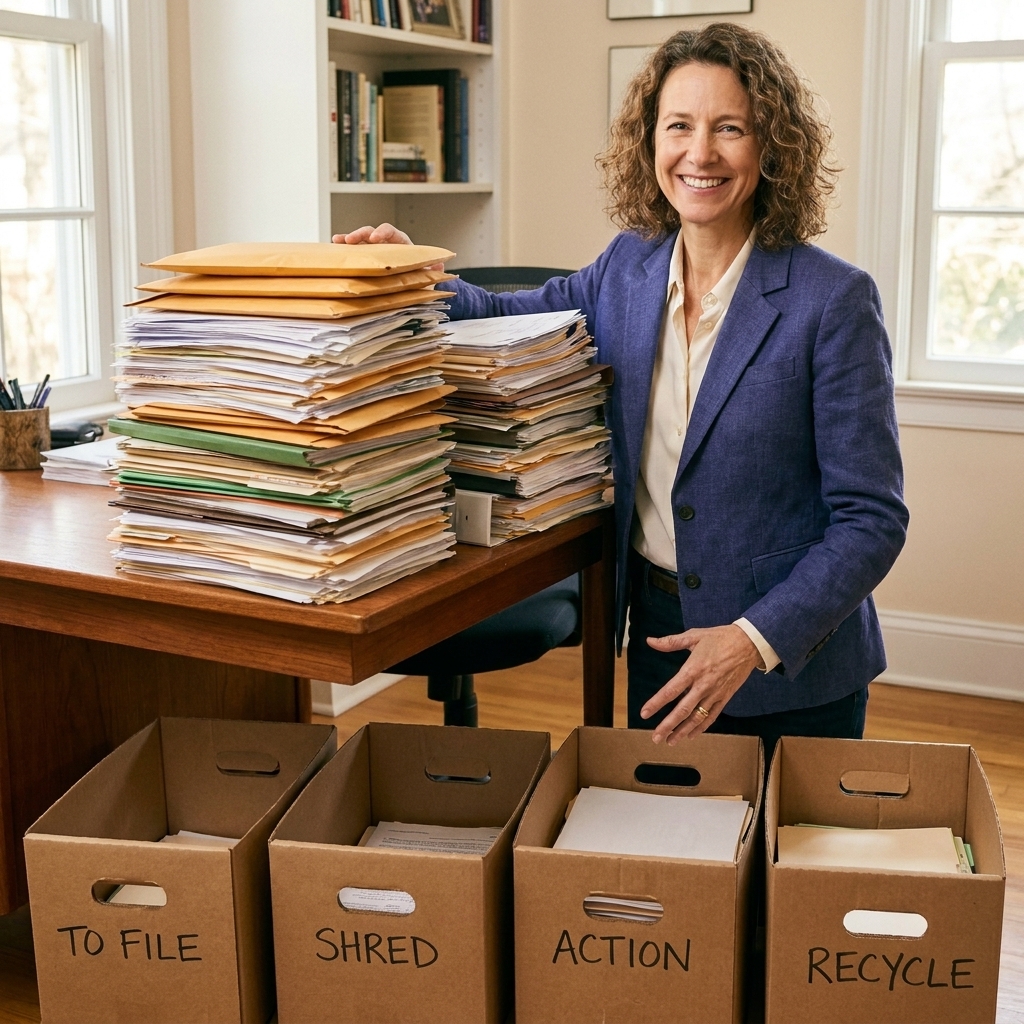
If you have ever stood in front of a doom room (that one catch-all space where everything goes to die), a bursting closet, or a kitchen counter that somehow attracts every random object in the house and thought, “I literally do not know where to start,” welcome. That is not laziness. That is your brain hitting overload and pulling the emergency brake.
I am not a naturally tidy person. I am a reformed messy who learned organization out of pure necessity. So when I say decluttering paralysis is real, I mean it in the most lived-in, tripped-over-a-backpack way.
Below are mindset shifts that can calm the overwhelm, plus practical first moves that make starting feel safe and doable. Not perfect. Doable.
What it is
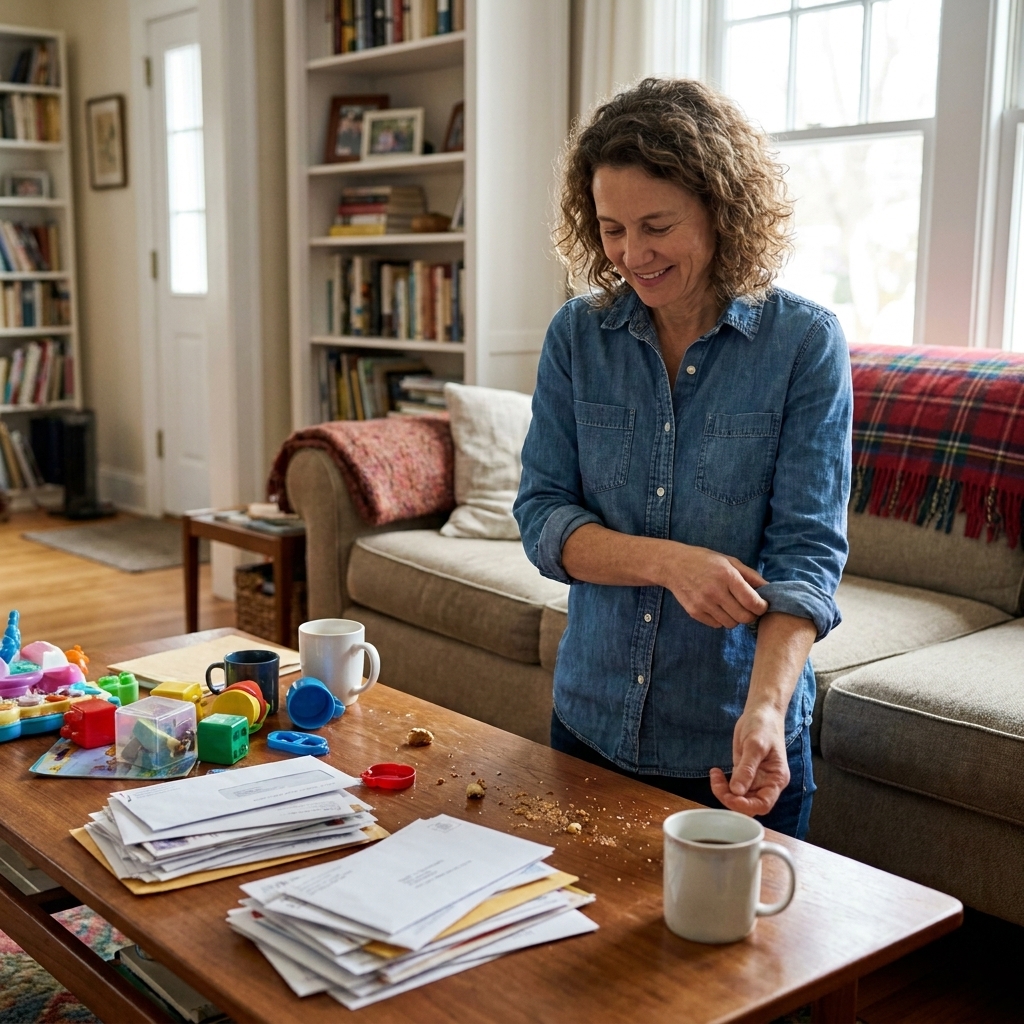
Decluttering paralysis is what happens when your brain sees a big, undefined project and you feel flooded instead of focused. For a lot of people, it can register as stress or even threat-level discomfort, which makes avoidance feel oddly protective.
The loop often looks like this:
- Too many decisions (keep, toss, donate, where does this go)
- No clear finish line (when is “done,” done)
- High emotional load (guilt, nostalgia, shame, money anxiety)
- Fear of making the wrong choice (especially with sentimental items or expensive purchases)
When you are stressed, your brain often chooses avoidance. Not because you do not care, but because it is trying to keep you from feeling worse.
Shift 1: Start well
The fastest way to freeze is to demand a massive transformation in one session. Your nervous system can hear “whole house purge” and respond with “absolutely not.”
Instead, pick a goal that is smaller and more concrete:
- “I will fill one bag of trash.”
- “I will clear one surface.”
- “I will do 10 minutes and then I am allowed to stop.”
Starting well means you end the session feeling capable, not defeated. That is what makes you come back tomorrow.
Shift 2: Fewer decisions
Decision fatigue can pour gasoline on the paralysis fire. So we lower the number of choices you have to make in the moment.
Use the 4-box setup
Grab four containers. Laundry baskets work. Cardboard boxes work. Big reusable bags work.
- Trash
- Donate
- Relocate (belongs in another room)
- Keep (stays in this space)
The trick: you are not organizing yet. You are only sorting. Organizing comes after the volume is lower.
Quick safety note: keep trash and donations separate so you do not accidentally donate anything smelly, buggy, or stained.

Shift 3: Tiny wins
When you are overwhelmed, your brain needs proof that effort leads to results. Small wins can help build that momentum.
Try a right-now starter
- Trash-first sprint: Walk the room with a bag and collect only obvious trash for 3 minutes. (Skip anything you are unsure about.)
- Dishes-and-laundry sweep: Remove only cups, plates, food, and laundry from the room. Instant visual relief.
- Floor path rule: Clear a single walking path. Not the whole floor. Just a path.
- One container rule: Choose one drawer, one basket, or one shelf. When it is done, you are done.
These are not cheating. They are training wheels. And training wheels are how you learn to ride.
One more safety note: during a trash sprint, keep an eye out for important papers, medications, batteries, and small valuables that can blend into piles.
Shift 4: Drop the shame
If your inner voice is mean, the project will feel dangerous. Shame tends to kill motivation, not create it.
Try swapping these thoughts:
- Instead of “How did I let it get this bad?” try “This space has been working hard for my life. Now I am going to support it.”
- Instead of “I should have done this sooner,” try “I am doing it now, and that counts.”
- Instead of “I’m so messy,” try “I did not have a system. I can build one.”
Decluttering is a skill. Skills can be learned. They do not require you to become a different person.
Shift 5: Add constraints
Big spaces are mentally loud. Constraints make the job quieter.
Three constraints that work
- Time: Set a timer for 10 or 15 minutes. Stop when it ends, even if you want to continue.
- Space: Declutter only what fits on a towel spread on the floor. When the towel is cleared, you are done.
- Quantity: Remove 10 items. Or fill one donation bag. Or toss 20 pieces of trash.
Constraints keep you from spiraling into “Well if I am doing this, I should also reorganize the linen closet and repaint the walls.”
Where to start
If you are staring at a room and your brain is blank, use this order. It is designed to give maximum relief fast, which can lower anxiety and make the next decision easier.
- Trash (obvious only)
- Food (return to the kitchen, toss anything questionable)
- Dishes (out to the sink or dishwasher)
- Laundry (into a hamper or one pile)
- Items that have an actual home (put them back)
- Everything left (these are the true decluttering decisions)
By the time you reach the last step, the room is already lighter. That is the point.
Letting go is hard
1) The “cost is already paid” reminder
If you are holding onto something because it was expensive, try this mindset tool: the money is gone whether you keep it or not. Keeping it can add a second cost, the space and stress it takes up.
2) The “future me deserves room” question
Ask: What would make my daily life easier next week? Not “What would impress a minimalist.” Easier.
3) The “container is the limit” rule
Pick a container for a category, like one bin for cables or one shelf for mugs. Keep your favorites that fit. Let the rest go. It turns an emotional decision into a practical one.

Stuck zones
The kitchen counter
- Remove only items that belong in other rooms into a “relocate” basket.
- Recycle or toss junk mail, flyers, and packaging you do not need.
- Choose one small “landing zone” tray for today’s papers only.
The overflowing closet
- Start with a single category: shoes, jeans, or bags.
- Pull out everything in that category only.
- Keep the best, donate the rest, and stop. Do not keep going if you are fading.
The doom room
- Clear a path to the window or doorway first.
- Set up the 4-box system.
- Do 15 minutes a day for a week instead of a “whole Saturday” fantasy plan.
A 30-minute reset
If you want a script, here is one that works even when your motivation is low.
- 2 minutes: Put on shoes and set a timer. For many people, shoes help signal “work mode.”
- 8 minutes: Trash sprint.
- 10 minutes: Collect food, dishes, and laundry and remove them from the room.
- 8 minutes: Put away items that already have homes.
- 2 minutes: Choose one micro-spot to finish, like the top of a side table.
Stop. Drink water. Take a photo if you need proof you made progress. Progress counts even when the room is not done.
Handle the relocate box
The relocate basket is where good intentions go to stagnate, unless you give it a simple rule.
- Same-day rule (best): Before you quit, take 3 minutes to drop relocate items into the correct rooms. No organizing. Just drop-offs.
- One-room rule (easiest): Pick one destination room and return only the items that belong there. Anything else waits until tomorrow.
- Timer rule (most realistic): Set a 10-minute timer later (or tomorrow) and empty as much of the relocate basket as you can. Stop when the timer ends.
If you consistently end with a relocate pile, that is data. It often means a few categories do not have clear homes yet.
Keep it from coming back
You do not need a perfect system. You need a couple of small habits that keep clutter from re-growing.
- Nightly 5-minute reset: Set a timer and clear one surface or one floor path before bed.
- One-in, one-out (targeted): Use it for your biggest clutter categories (kids papers, mugs, skincare, hobby supplies), not necessarily everything.
- Make “easy homes”: Open bins, hooks, and a small catch-all tray beat complicated systems you avoid using.
FAQ
What if I start and make a bigger mess?
That is normal, especially if you dump everything out. If you are prone to paralysis, avoid full dump-outs at first. Work in small containers or small zones so you can reach “done” quickly and restore order before you stop.
How do I declutter when I am exhausted or stressed?
Use the lowest-energy wins: trash, food, dishes, laundry, and clearing one surface. These give big visual relief with the fewest emotional decisions.
What if my partner or family disagrees about what to keep?
Declutter your own categories first. For shared items, agree on a container limit and let the container be the referee. If it does not fit, you decide together what earns the space.
How do I handle sentimental items?
Do not start with sentimental items. Build confidence on easy categories first. When you are ready, set a small container limit for keepsakes and choose the items that tell the story best. One meaningful object can represent a whole season of life.
When to get help
If clutter is tied to grief, trauma, depression, ADHD, or severe anxiety, starting can feel genuinely impossible. That does not mean you are broken. It can mean you need more support than a checklist can provide.
Consider asking a trusted friend to sit with you while you sort, hiring a professional organizer for a jump-start, or working with a mental health professional if decision-making and avoidance are affecting your daily life.
You deserve a home that feels supportive, not stressful. And you can build that home one tiny, calm decision at a time.