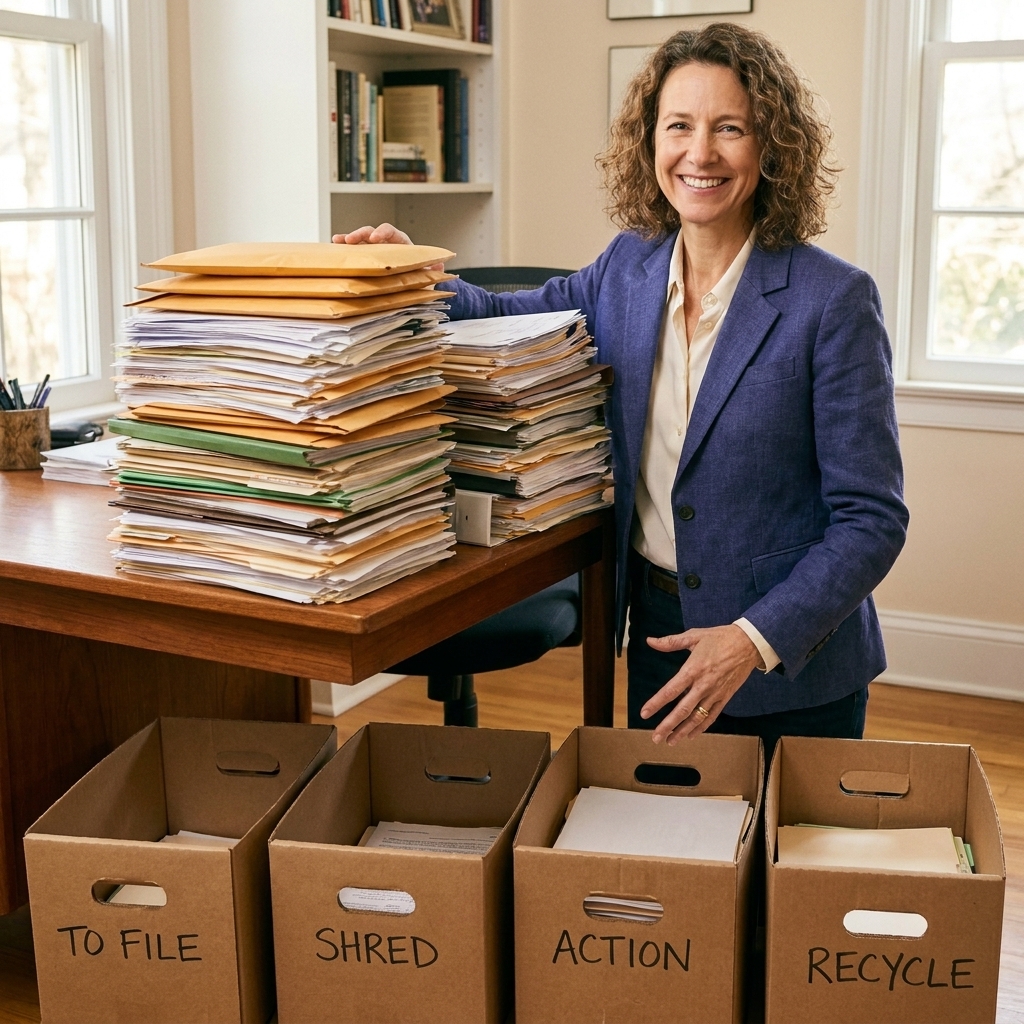
If you have ever picked up an item, stared at it, and then put it right back because you could not prove you don’t need it, meet my favorite no-nonsense decision tool: the 90/90 rule.
It is simple enough to use mid-declutter when your motivation is fragile, and objective enough to stop the sentimental spiral. As a reformed messy person, I love any method that makes decisions faster without demanding a magazine-perfect lifestyle.

What the 90/90 rule is
The 90/90 rule is a minimalist decluttering guideline (popularized by The Minimalists) that asks you two questions about any item:
- Have I used this in the last 90 days?
- Will I use this in the next 90 days?
If the answer to both questions is “no,” the item is a strong candidate to declutter.
Why 90 days? It is long enough to cover everyday life patterns, but short enough to cut through “someday” thinking. It keeps you focused on what supports your current life, not an imaginary version of you who makes sourdough every weekend and always remembers where the extra phone charger is.
Why it works
The hardest part of decluttering is not the hauling bags to the car. It is decision fatigue. The 90/90 rule works because it:
- Creates an objective filter. Instead of asking “Do I like it?” you ask “Do I use it?”
- Reduces emotional bargaining. The timeline keeps your brain from negotiating with a fictional future.
- Matches real life. It allows for practical duplicates and seasonal items when used thoughtfully.
- Speeds up decluttering. You can move through a drawer, shelf, or cabinet quickly with fewer “maybe” piles.
It is also gentle. You are not declaring that an item was a mistake. You are simply noticing it is not doing a job in your home right now.
How to use it
1) Start small
Pick a single, contained area where decisions are straightforward, like a bathroom drawer, a mug cabinet, or the entryway catch-all bowl. Small wins build momentum.
2) Touch each item once
Hold the item and ask the two questions out loud if you need to. If it helps, picture the last 90 days of your life as a highlight reel. Did this show up?
3) Sort into three piles
- Keep: used in the last 90 days or genuinely needed in the next 90
- Go: not used and not planned
- Unsure: you cannot answer quickly
Try to keep the “unsure” pile small. If half the pile is “unsure,” the rule is working, but you are avoiding the questions.
4) Quarantine the unsure pile
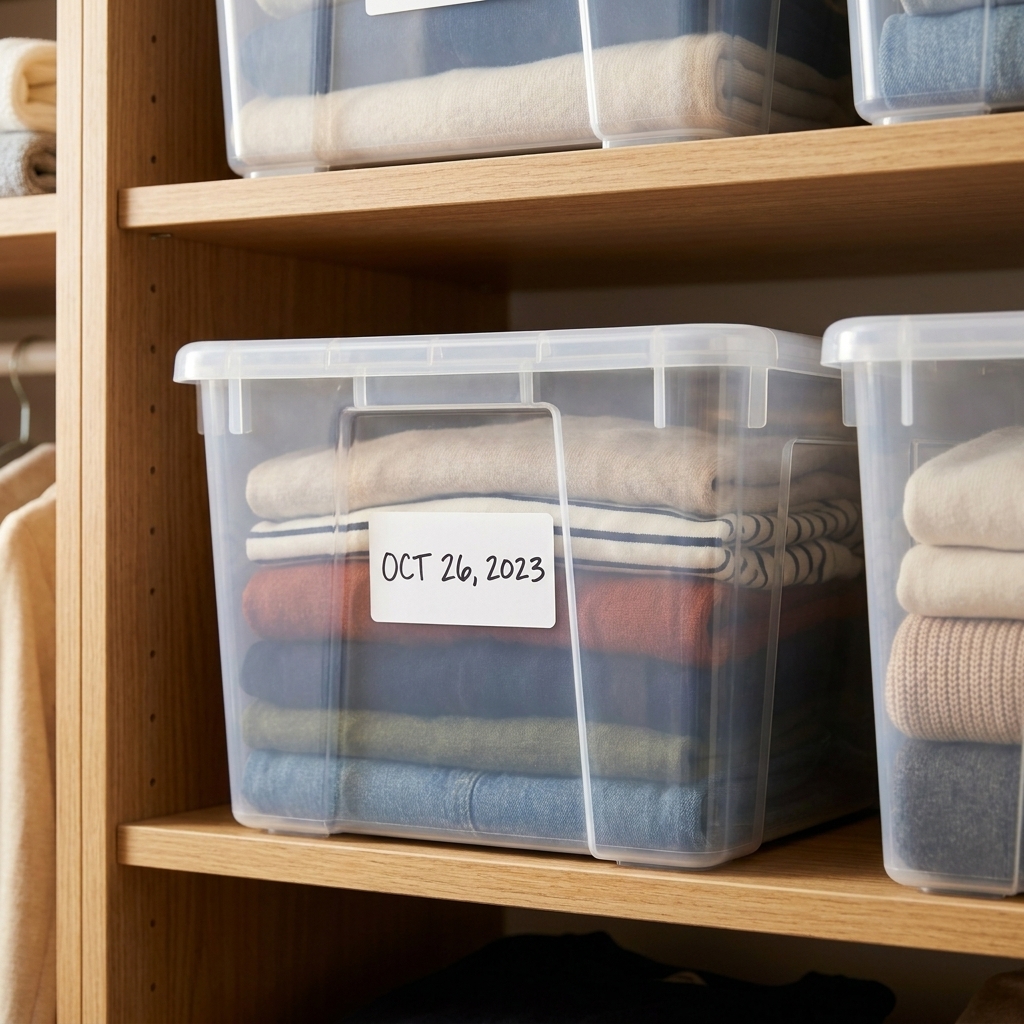
Put unsure items in a labeled box and set a date 30 days out. If you do not open the box in that time, you have your answer. This is my favorite way to declutter without panic.
Room examples
Kitchen
- Single-use gadgets: If you have not used the avocado slicer or the cake pop kit in 90 days and you do not have a specific plan in the next 90, let it go.
- Mismatched containers: If it does not have a lid that fits and you have not missed it, it is a “go.”
- Duplicate tools: Keep the best one. If you reach for the same spatula every time, the others are just taking up drawer rent.
Bathroom
- Products you tried once: If it has been sitting there since spring and you do not like it, release it.
- Backups: One backup is reasonable. Six backups is a small store you did not mean to open.
Closet
- “Almost fits” clothes: If you have not worn it in 90 days and you do not see yourself wearing it in the next 90 days as-is, it is likely clutter. Your closet is not a waiting room.
- Special occasion items: If there is an event on the calendar in the next 90 days, keep what you will actually wear. If not, consider a smaller, curated formalwear capsule.
Kids’ stuff
- Toys with missing pieces: If nobody has played with it in 90 days, it is usually safe to donate.
- Craft kits: If you plan a craft day in the next 90 days, keep it. If not, pass it to someone who will use it while it is still complete.
Paper and misc drawers
- Instruction manuals: If you can easily find a copy online and you do not need it for a warranty, returns, complex installation, or a hard-to-identify model, recycle the paper copy.
- Mystery cords: If you cannot name what it belongs to and you have not needed it in 90 days, take it to an e-waste recycler.
Items to skip
Some things are too important (or too annoying to replace) to run through a quick 90/90 decision in the moment. Set these aside and handle them as their own category.
- Legal and ID documents: passports, birth certificates, Social Security cards, immigration papers, marriage certificates, wills
- Home and car records: titles, deeds, insurance policies, loan paperwork
- Tax and finance: recent tax returns and supporting documents, key receipts you may need for deductions or warranties
- Medical: critical records you actually reference, current prescriptions information
If you share a home, this is also the moment to pause before you declutter anything that affects someone else. When in doubt, ask. Decluttering is faster than re-buying the one tool your partner uses every Saturday.
When to tweak it
Like any good tool, it works best when you apply it with common sense. Here are the big exceptions where a straight “90 days” check might be unfair.
Seasonal items
If you are decluttering in July, you might not have used your snow shovel in 90 days, but you will absolutely use it again. For seasonal categories, swap the question to:
- Did I use this in the last season it applies?
- Will I use it in the next season it applies?
Sentimental items
Sentimental clutter does not respond well to speed. If the item is purely emotional, the 90/90 rule can be a first pass, but you may need a different approach:
- Choose a memory container with a firm size limit.
- Keep the best representative, not every version.
- Take a photo of items you do not have space to keep.
Emergency and safety supplies
First aid kits, flashlights, fire extinguishers, and basic tools are not daily-use items. Instead of the 90/90 rule, use:
- Is it functional?
- Is it complete?
- Is it expired?
Hobby gear in an off season of life
If you just had a baby, started a new job, or are caregiving, you might not have touched hobby supplies in months. Ask a more honest version of the second question:
- Will I realistically make time for this in the next 90 days?
Not “Do I wish I would?” Realistically.
What to do with the go pile
Decision made, now get it out. The longer it sits in a bag by the door, the higher the chance it sneaks back into your home.
- Donate: usable clothing, housewares, toys, books
- Sell: higher-value items you are willing to list within 7 days
- Recycle: paper and packaging, when accepted locally
- E-waste: cords, electronics, batteries, old phones, small appliances (use an e-waste drop-off)
- Trash: broken, expired, stained, or incomplete items with no practical second life
My rule of thumb: if you would not feel comfortable giving it to a friend, do not donate it.
Guilt-free scripts
If you get stuck, try one of these phrases. They sound cheesy, but they help your brain move forward.
- “I am allowed to outgrow things.”
- “Keeping this does not change the money I already spent.”
- “My home is not a storage unit for unused stuff.”
- “If I need it later, I can borrow, rent, or replace it.”
Decluttering is not about proving you never make imperfect purchases. It is about giving your space back to the life you are actually living.
90/90 checklist
- Choose one small zone
- Set a 20 to 30 minute timer
- Ask: used in the last 90 days?
- Ask: will I use it in the next 90 days?
- If both are no, it goes
- Quarantine “unsure” items for 30 days
- Remove donations the same day if possible

FAQ
Is the 90/90 rule too extreme?
It can feel strict at first, but it is not asking you to live with nothing. It is asking you to make room for what you actually use. If your household has unique needs, adjust the timeframe. The point is a clear, consistent rule that prevents “maybe” piles from taking over.
What if I used it once, but I still do not like it?
You can declutter items you technically used. The 90/90 rule is a filter, not a contract. If it annoys you, does not work well, or you dread storing it, let someone else enjoy it.
What about tools or appliances I use a few times a year?
For occasional-use items, ask: Is it earning its storage space? If it is bulky, consider borrowing, renting, or choosing a smaller multi-purpose alternative. If it is small and genuinely useful, keep it with a clear home.
How do I handle gifts?
If you have not used it in the last 90 days and will not use it in the next 90 days, it is okay to let it go. The gift already did its job: it showed care at the moment it was given. You do not have to store it forever to prove you appreciated it.
Should I declutter by room or by category?
Room-by-room is easier when you are starting and want quick wins. Category decluttering is helpful when clutter is scattered, like cords, books, or skincare. If you keep finding duplicates in different rooms, that is your sign to switch to a category round.
My takeaway
The 90/90 rule is one of the fastest ways to cut through clutter because it keeps you grounded in reality. Not your fantasy self, not your guilt, not your “just in case” voice. Reality.
Pick one drawer today. Ask the two questions. Keep what supports your next 90 days, and let the rest go do something more useful somewhere else.