If your bedroom feels more like a storage unit with a bed in it, you are not alone. I am a reformed messy person, and for years my primary bedroom was basically a laundry holding facility with mood lighting. The problem is not just aesthetics. Bedroom clutter creates visual noise, and visual noise can make it harder to wind down at night.
This weekend plan is built for real life. No perfection. No buying a whole new bedroom set. Just a focused reset that clears what is stealing your calm and sets up a few simple systems so the mess does not boomerang back on Tuesday.
What you will need
Before you start, grab a few basics so you are not wandering the house mid-declutter.
- Three bags or bins: Trash, Donate, Elsewhere (items that belong in another room)
- A laundry basket or hamper (or two if your life is currently laundry-heavy)
- A microfiber cloth and all-purpose cleaner
- One small box for “I am not sure” items
- Optional but helpful: a timer, lint roller, and a couple of simple bins or inexpensive drawer dividers
My rule: if you do not have the perfect storage container, do not stop. Declutter first. Containers come after the problem is smaller.
Your weekend overview
This plan is designed to work even if you have kids, work shifts, or just do not want to spend 14 straight hours making decisions. Aim for focused bursts.
- Friday night (15 minutes): set the stage
- Saturday (2 to 4 hours total): clear the visible clutter and remove distractions
- Sunday (1 to 3 hours total): set up easy systems and do a “sleep-ready” reset
Friday night: 15-minute setup
This is the tiny step that makes Saturday feel doable.
- Clear the bed. You need a surface to fold, sort, and stack.
- Put the three bags or bins in the room. Trash, Donate, Elsewhere.
- Do a fast floor sweep. Pick up anything obvious: cups, clothes, packaging, random cables.
- Set a “no new piles” rule. If you touch it, it goes in a bag, a drawer, the hamper, or the trash.
Then stop. You are not trying to finish. You are making tomorrow easier.
Saturday: Declutter in order
When people get stuck decluttering a bedroom, it is usually because they start with the hardest category first, like sentimental items, old journals, or mystery cords. We are going to start with what creates the biggest immediate calm.
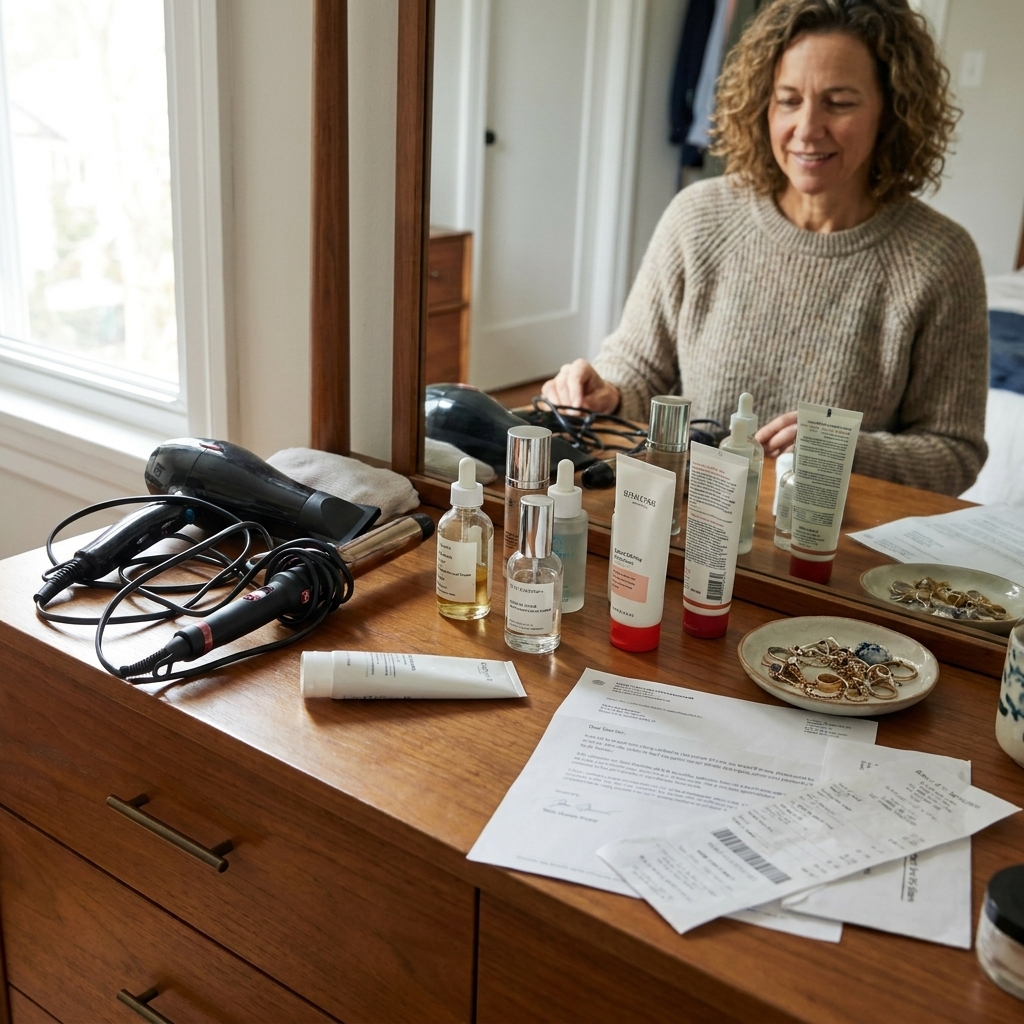
Step 1: Floor and surfaces (45 to 60 minutes)
Bedrooms feel messy mainly because of what you can see at eye level and below. Clear those first for a quick win.
- Floor: shoes, bags, laundry, boxes, “I will deal with it later” stacks
- Dresser top: perfumes, hair tools, coins, papers, extra products
- Chair pile: you know the one
Quick decisions that keep you moving:
- If it is dirty laundry, it goes straight into the hamper.
- If it is clean but not put away, give it one of two homes: closet or dresser. If it has no home, that is your clue you have too much.
- If it belongs elsewhere, put it in the Elsewhere bin and do not leave the room yet.
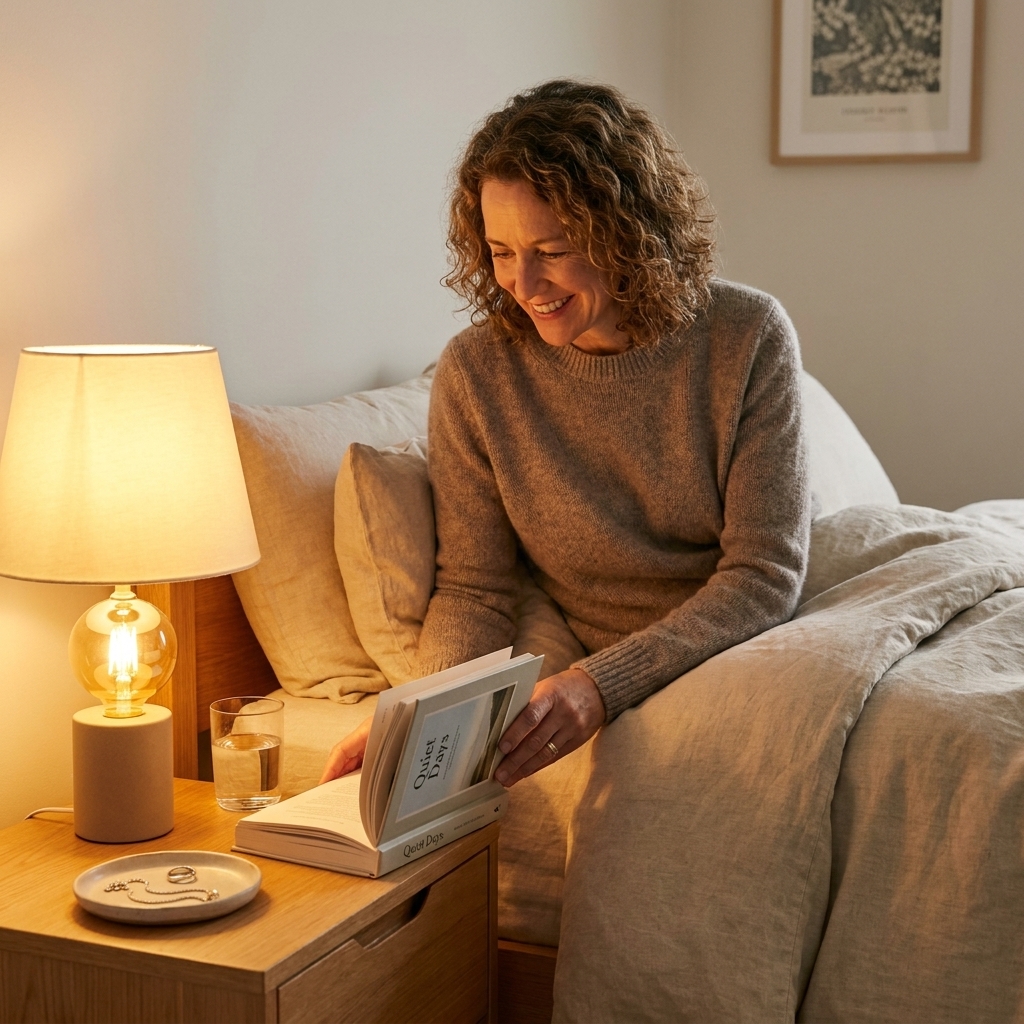
Step 2: Nightstands and sleep zone (30 to 45 minutes)
If you do nothing else, declutter what you see when you climb into bed. This is where better sleep can start.
Keep on each nightstand:
- A lamp or wall light
- One small catchall tray (for rings or lip balm)
- A book or Kindle if you read before bed
- Water, if you actually use it
Remove from the sleep zone:
- Work papers, mail, and to-do lists
- Chargers and cables you do not use nightly
- Extra lotions and half-used products
- Anything that makes you think “I should…”
Messy-person hack: Put a small lidded box in the nightstand drawer for tiny items. You can be organized and still keep visual clutter from taking over.
Step 3: Laundry and linens (30 minutes)
Laundry is often the bedroom’s main character, unfortunately. Let’s take back the room.
- Start one load. Even if you cannot finish all laundry today, starting breaks the backlog.
- Reset your hamper situation. If clothes regularly land on the floor, you need a hamper that is closer, bigger, or easier to use. This is not a moral failing. It is logistics.
- Do a quick linen edit. Two sets per bed is plenty for most people. Donate extras you never reach for, scratchy sheets, and mystery pillowcases with no matching set.
If your closet is stuffed with spare bedding, it can feel like unfinished business every time you open the door.
Donation note: Only donate clean, usable textiles. If something is stained or torn, look for a local textile recycling option if you have one.
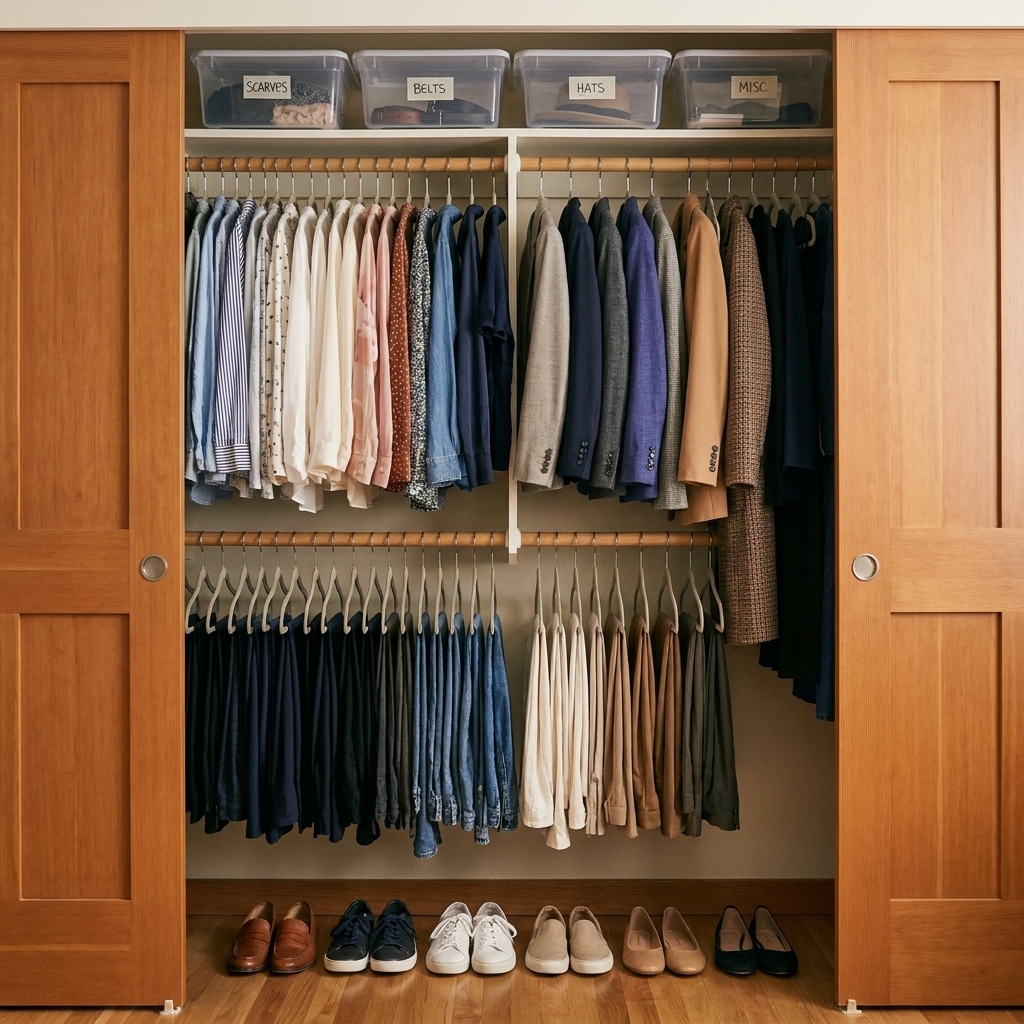
Step 4: Closet pass one (60 to 90 minutes)
This is not an all-day closet makeover. This is a targeted edit so your bedroom stops feeling crowded.
Do these four mini-rounds:
- Trash: broken hangers, empty boxes, random packaging
- Donate: anything that is itchy, never chosen, or makes you feel like you are dressing as someone else
- Duplicates: keep your favorites, release the rest
- Out of season: move to a bin or higher shelf
My decision shortcut: if you would not choose it for a typical errand, it does not deserve prime closet real estate.

Step 5: Cut sleep distractions (20 minutes)
This part is small but powerful. A calm bedroom is not just clutter-free. It is distraction-light.
- Work zone: If you work in your bedroom, contain it. Put the laptop, notebook, and cords into a lidded basket, then store it out of sight when you are done.
- TV: If you keep it, reduce the visual noise around it. Hide remotes in a small tray or drawer and clear piles underneath.
- Charging spot: Keep one simple place to charge, not cables snaking across the room.
You are building a room that tells your brain one message: we rest here.
Saturday wrap-up: 10-minute reset
Before you quit for the day:
- Take out trash.
- Put the donation bag in the car (or by the door if you do not drive).
- Carry the Elsewhere bin to the correct rooms and drop items in their actual homes.
- Make the bed. Always. It visually seals the progress.
Sunday: Set up simple systems
Sunday is about making the tidy version of your bedroom the easiest version. If a system is annoying, you will not use it. Ask me how I know.
Step 1: Add a drop zone (20 to 30 minutes)
This is for the stuff that sneaks in every day: clothes, jewelry, receipts, hair ties, random parenting artifacts.
Pick one landing spot:
- A small tray on the dresser
- A hook behind the door for tomorrow’s outfit or robe
- A slim basket for “I need to put this away later” items
Important: one basket, not seven. A drop zone should contain clutter, not host it long-term.
Step 2: Dresser and drawers (45 to 75 minutes)
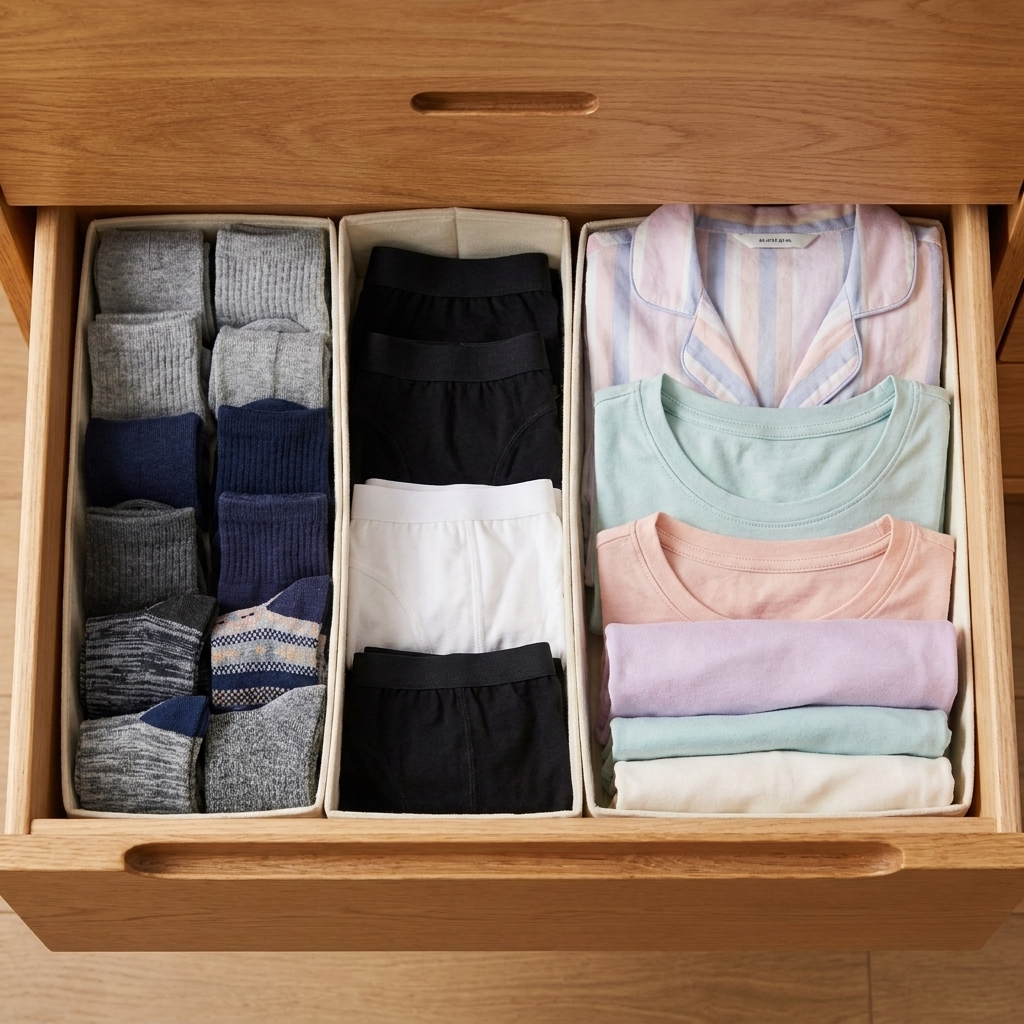
Drawers get chaotic when items slide around and you overstuff them. You do not need fancy organizers. You need boundaries.
- Use inexpensive drawer dividers or small bins to separate: underwear, socks, sleepwear, workout gear.
- Fold in a way that lets you see everything at a glance. If you have to dig, the drawer will become a pile.
- Leave 10 to 20 percent empty space in each drawer. That breathing room is what keeps it from exploding.
Reformed messy confession: I used to treat drawers like suitcases. The day I stopped cramming them shut was the day my room started staying calm.
Step 3: Under-bed and hidden clutter (20 to 40 minutes)
Hidden clutter still counts. Even if you cannot see it, it can feel like the room is not quite finished.
- Pull everything out from under the bed.
- Trash obvious junk and donate what you do not use.
- If you store items under the bed, use low bins and keep it to: off-season clothing, extra bedding, or sentimental bins you actually want to keep.
Sleep-friendly rule: avoid storing active to-dos under the bed (papers to file, projects, stuff you need to return). It tends to sit in the back of your mind while you are trying to rest.
Step 4: Make it feel quieter (30 minutes)
This is the part that makes your bedroom feel like a retreat, even if it is small.
- Clear the visual lines: leave a little empty space on the dresser and nightstands.
- Limit decor clusters: one framed photo is calming, seven small items reads as clutter.
- Soften the lighting: swap harsh bulbs for warm light if you can.
- Freshen the air: wash bedding, open a window, or run a fan for a bit.
Minimal does not have to mean sterile. It means nothing is yelling for your attention.
If you have time: quick deep clean
Optional, not required, but satisfying:
- Vacuum under the bed
- Wipe baseboards and door handles
- Dust ceiling fan blades
- Clean mirrors
Small space tweaks
If you are working with a tiny bedroom, no closet, or a shared room, the same plan still works. You just adjust the containers.
- No closet: prioritize a tight dresser setup and use under-bed bins for off-season clothing only.
- Shared room: give each person one defined zone (one drawer, one shelf, one basket). It is not about fairness. It is about clarity.
- Limited storage: reduce volume first, then use vertical space like hooks and a single over-the-door organizer.
Better sleep checklist
If you want a simple standard to maintain, aim for these daily and weekly baselines.
Every day (5 minutes)
- Clothes go in hamper or back in closet, not on the chair.
- Nightstand cleared to the essentials.
- Floor clear enough to walk without stepping around stuff.
Every Sunday (20 to 30 minutes)
- Empty the drop zone basket.
- Put away laundry that migrated back into the room.
- Quick dust and wipe of nightstands and dresser.
- Reset the bed and swap sheets if needed.
Common sticking points
“I keep moving clutter from one surface to another.”
That means the item has no real home. Pick a home, or let it go. If you cannot name where it lives in one sentence, it is a nomad.
“My partner’s stuff is everywhere.”
Give each person a defined zone. One drawer, one nightstand, one basket. Shared space stays calmer when ownership is clear.
“I do not have enough storage.”
Before buying anything, reduce volume. Then use what works best in bedrooms: vertical space (hooks), closed storage (drawers), and simple bins (especially clear ones so you can see what you have).
“I get tired and quit halfway through.”
Stop at a clean stopping point: trash out, donations bagged, bed made. A half-finished room feels worse than a slow-and-steady reset.
FAQ
How do I declutter my bedroom fast?
Start with the floor and nightstands first. Bag trash, start a laundry load, and move all “belongs elsewhere” items into one bin to relocate later. Clearing visible surfaces gives the biggest impact the fastest.
What should not be in a bedroom for better sleep?
Sleep hygiene experts often recommend keeping work materials, paperwork, active to-dos, and piles of laundry out of sight. If you cannot remove them completely, contain them in a lidded basket or a drawer so they are not visually loud at bedtime.
How minimal should a primary bedroom be?
Minimal is personal. A good target is “easy to reset in five minutes.” Clear floors, clear nightstands, and storage that can handle daily life without overflowing.
Close the weekend
When you are done, do a final two-minute sweep: dim the lights, clear the nightstand, and smooth the bedding. It sounds small, but it teaches your brain that this room is for rest, not for catching up on everything you did not do.
You do not need a flawless bedroom to sleep better. You need fewer distractions and a few systems that forgive you for being human.