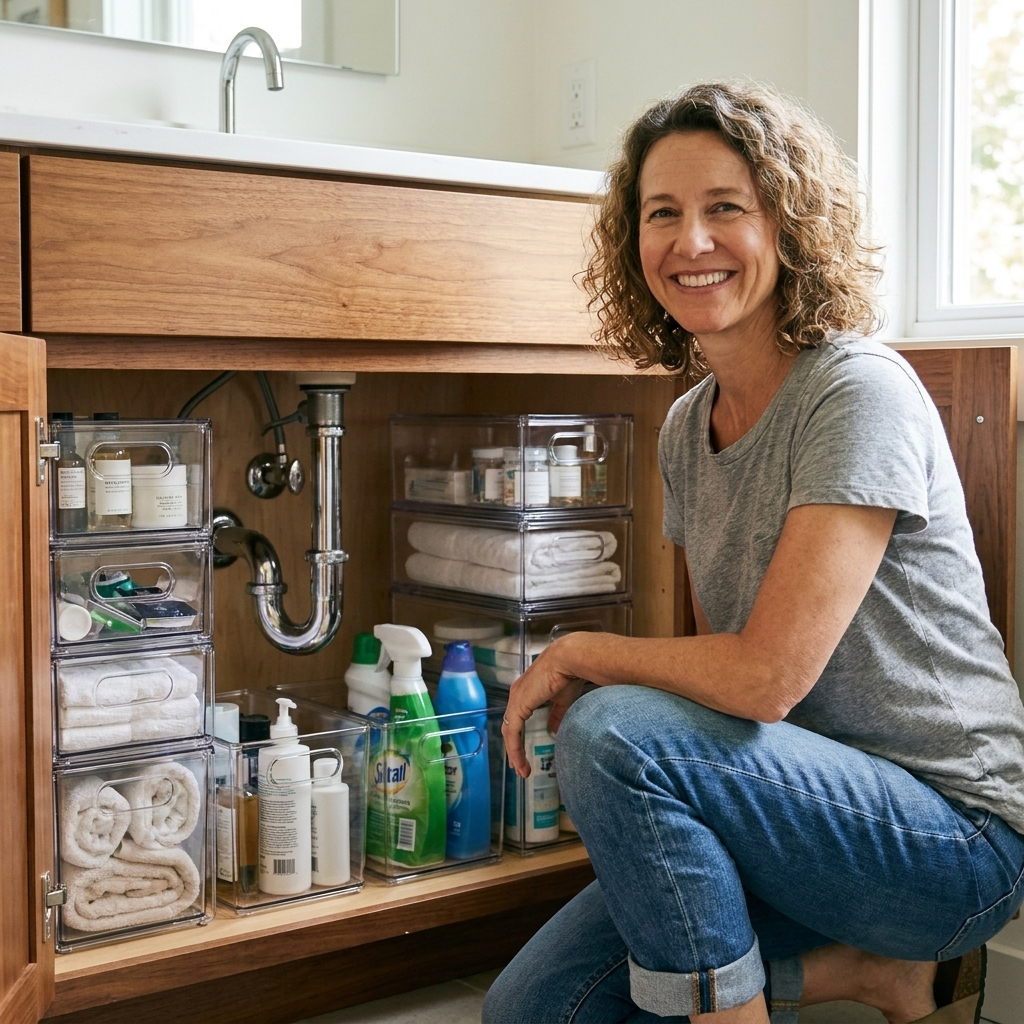
Deep bathroom vanity drawers look like they should be a dream. In real life, they are where lip balms go to retire, hair ties form a new civilization, and skincare bottles do that annoying thing where they slide to the back and vanish.
I am not naturally tidy. I learned to organize because I was tired of buying a “replacement” mascara that was literally already in the drawer. The good news is deep drawers can absolutely work if you set them up like a tiny inventory system, not a junk pit.

Why deep drawers get messy
Most deep drawers fail for three predictable reasons:
- Everything is stored flat, so you get layers and piles. Piles hide duplicates and expire in peace.
- No boundaries, so categories bleed together. A nail file drifts into skincare. A sample packet drifts into everything.
- Too much “backup” in the prime real estate zone. You end up digging past three unopened shampoos to find the one you are using.
The fix is not “be more disciplined.” The fix is giving your drawer a shape inside the shape.
Quick prep
Step 1: Empty the drawer
Put a towel on the counter or the floor and empty the entire drawer onto it. This is the fastest way to stop reorganizing around the mess.
Step 2: Wipe and de-gunk
Bathrooms are humid, and product residue happens. A warm damp cloth plus a drop of dish soap is plenty. Let the drawer dry before bins go back in.
Step 3: Measure for real
Measure the inside width, inside depth, and inside height of the drawer. Also check the usable clearance with the drawer fully closed, especially if there is an interior lip, hardware, or anything else that reduces usable height.
- Pro tip: Measure in inches or centimeters, just be consistent. If you are using acrylic bins, plan a small buffer so nothing scrapes when you open and close the drawer.
Declutter first
I know decluttering bathroom items can feel weirdly personal. Here is the no-drama approach I use.
Make five quick piles
- Daily use: the products you actually reach for every day or every week.
- Occasional use: special-occasion makeup, travel-only items, hair tools you use sometimes.
- Backups: unopened replacements and refills.
- Samples and minis: anything tiny, free, or half-forgotten.
- Trash or recycle: empties, crusty applicators, dried-up gels, mystery products with no label.
Use a simple decision rule
- If you have not used it in 6 months and it is not a true special-occasion item, that is a common rule of thumb for “this can probably go.” If it still makes your routine better, keep it. If it just takes up space, release it.
- If it is open and you cannot remember when you opened it, let it go. (Especially eye products.)
- If you own more than one backup of the same item, keep one backup and move the rest out of the vanity if you have space.
Keep decluttering focused on what this drawer needs to do: help you get ready without digging.
One quick hygiene note: if something smells off, looks separated in a bad way, or irritates your skin, it is done. For cosmetics, the little open-jar PAO symbol (like 6M or 12M) is a better guide than wishful thinking.
Pick a drawer map
Before you buy bins, decide what this drawer is for. Deep vanity drawers work best when each drawer has a job.
Common deep-drawer jobs
- Makeup drawer: face, eyes, lips, tools.
- Skincare drawer: AM, PM, treatments, sunscreen.
- Hair and body drawer: styling products, brushes, deodorant, lotion.
- Backup drawer: refills and extras only (ideally not your top drawer).
If you have only one deep drawer, split it into zones: front for daily use, back for occasional use, and one tight bin for backups. Think “storefront” in front, “stockroom” in back.
Acrylic bins
I love clear acrylic bins in bathroom drawers for two reasons: you can see what you have, and they create instant boundaries. The key is choosing modular sizes so you can adjust as your routine changes.
Bin sizes that work well
- Narrow bins: for mascara, brow products, eyeliners, tweezers, nail tools.
- Medium bins: for compacts, blushes, small palettes, travel sizes.
- Large bins: for tall skincare bottles, sprays, hair products.
My bin rules
- Keep similar heights together. A row of bottles stands better when they are grouped by height.
- One category per bin. If a bin becomes “misc,” it is already drifting.
- Leave 10% empty space. That little bit of breathing room is what makes the system maintainable.
Acrylic is easy to wipe clean, but it can scratch or get cloudy if you attack it with abrasive cleaners. Mild soap and a soft cloth keep it looking good.
If acrylic is not your thing, look for polypropylene plastic, silicone, or bamboo organizers. The best organizer is the one you will actually maintain.
Modular dividers
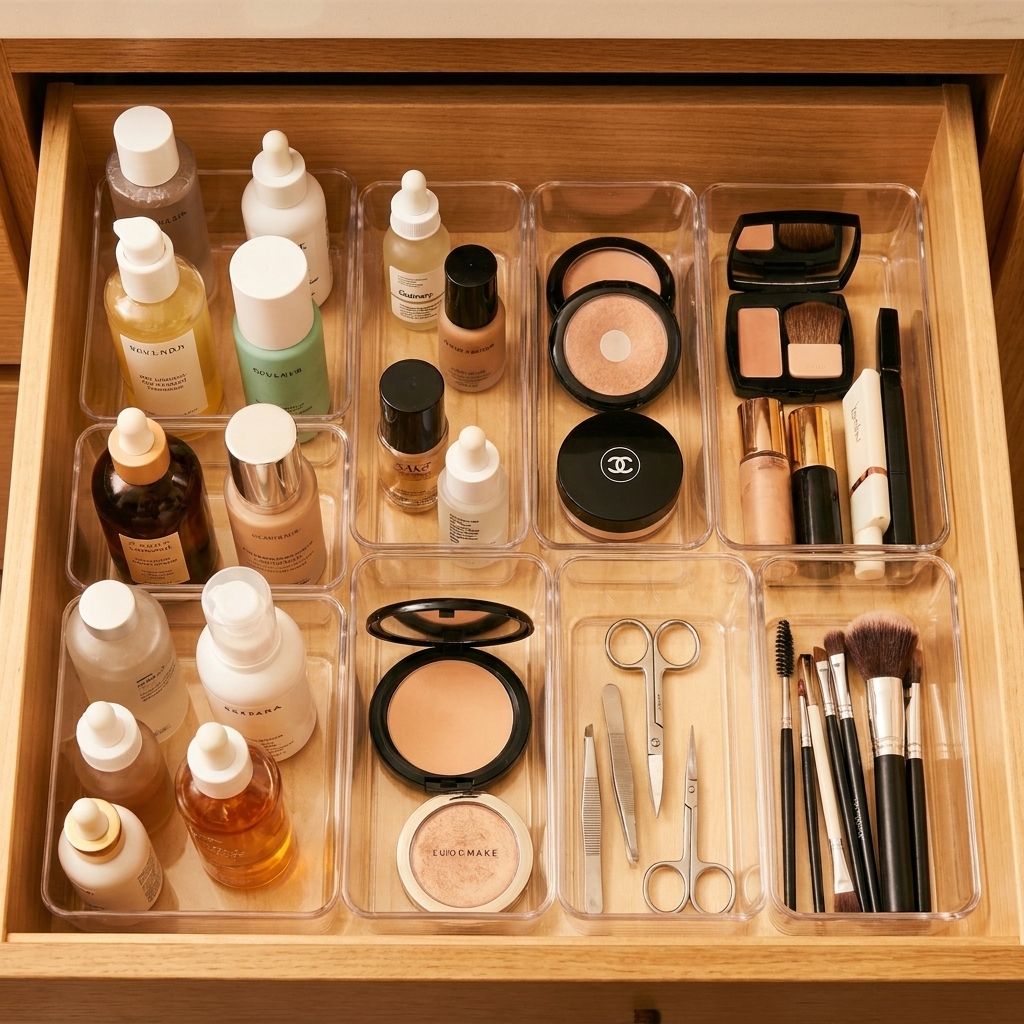
If your drawer is wide and you want a cleaner grid, modular dividers are your best friend. I like dividers for items that are annoying in bins, like compacts that tip, small jars, or products you want to line up by routine.
How to keep dividers simple
- Create three lanes: daily, weekly, occasional. Keep it broad.
- Use one “tiny stuff” lane: lip balms, sharpeners, spare razors, bobby pins, contact cases.
- Give tools a home: one slot for tweezers, scissors, nail clippers, lash curler. Tools roaming free is how drawers get chaotic.
Dividers work best when you are committed to returning items to their exact slot. If you are not, choose bins instead. Bins are more forgiving for real life.
Vertical stacking
Deep drawers are begging you to stack. The trick is stacking in a way that still lets you see and grab what you need.
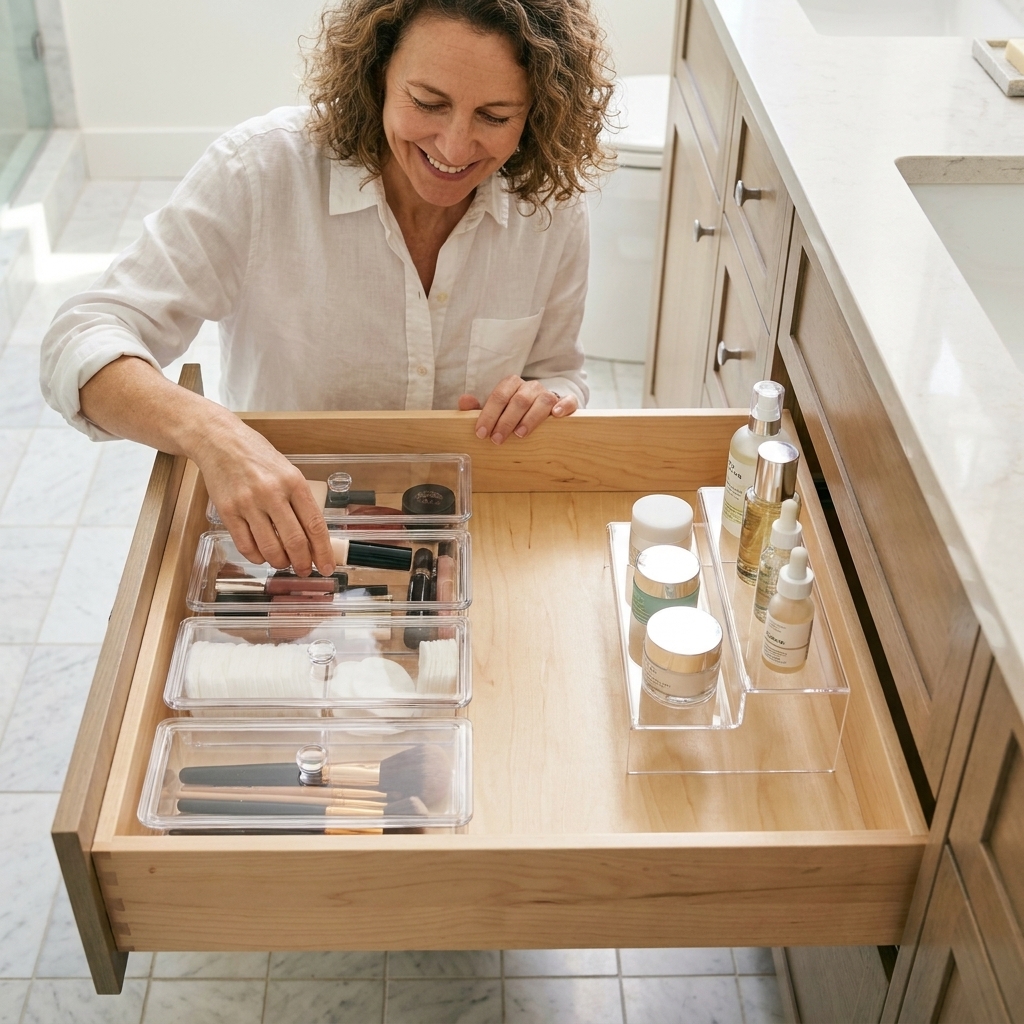
Use risers and stackable drawers
- Low risers create a back row that is visible, like stadium seating for products.
- Stackable acrylic drawers are great for cotton rounds, sheet masks, and small backups that otherwise avalanche.
- A simple two-level layout: put a low riser across the back third of the drawer for your “back row,” then keep shorter bins in the front so everything stays visible.
Stand items upright
- Store palettes and slim compacts on their side in a file-style bin.
- Use a narrow bin to keep tubes upright so caps are visible.
- For tall skincare, corral bottles in a bin so they move as one unit.
If you cannot see it, you will not use it. Your goal is “one layer” visibility as much as possible.
Suggested zones
Makeup zones
- Front left: daily face (concealer, powder, blush, bronzer).
- Front right: daily eyes and brows (mascara, brow gel, eyeliner).
- Middle: brushes and tools in a long narrow bin.
- Back: palettes, special-event products, lashes, whatever you do not want daily.
Skincare zones
- Front: AM routine in order (vitamin C, moisturizer, sunscreen).
- Middle: PM routine (treatment, retinoid, moisturizer).
- Back: masks, backups, and “sometimes” products.
The magic here is not perfection. It is reducing decisions. Your hand should know where to go next.
Backups without chaos
Backups are not the enemy, but they cannot live in the same space as the things you use daily unless you have a very large vanity.
My favorite backup system
- One small bin as “next up.” This holds one backup of your essentials: deodorant, toothpaste, moisturizer, your go-to foundation if you truly repurchase it.
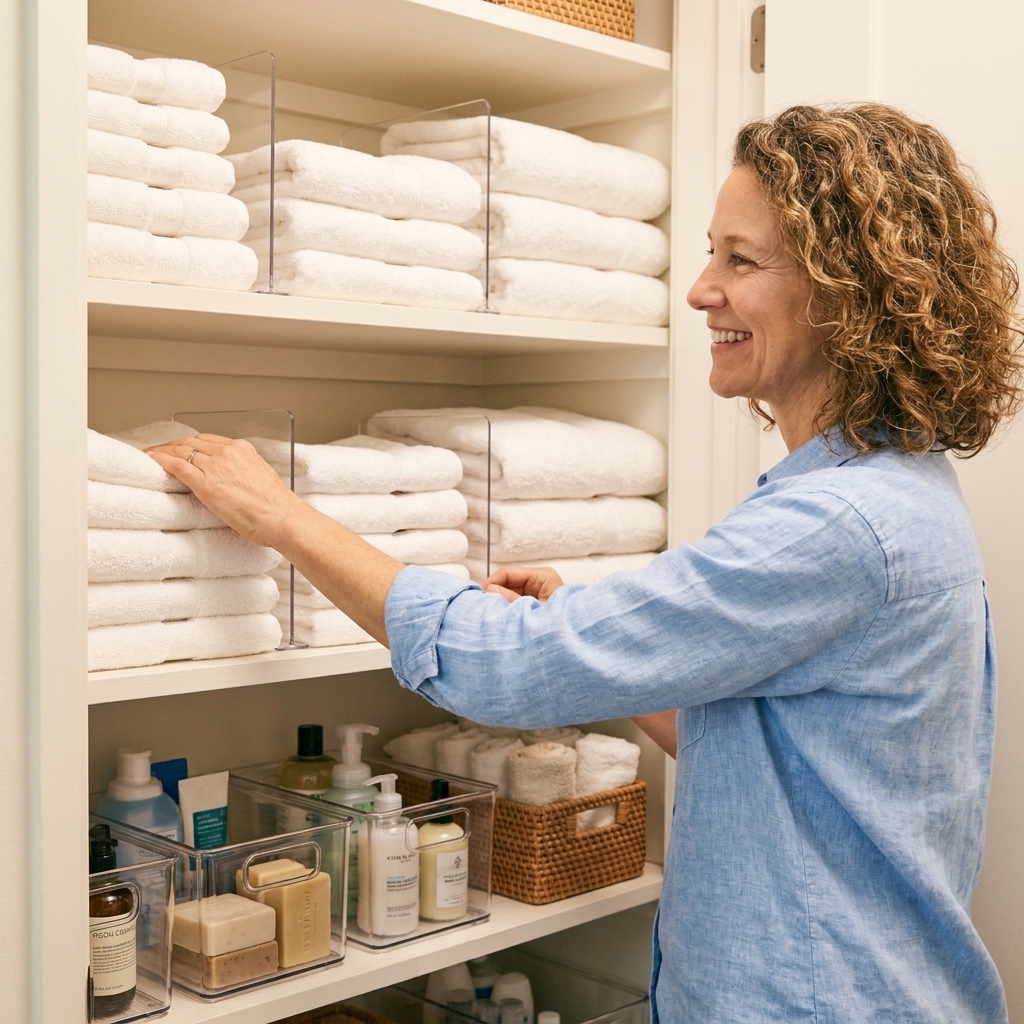
- Everything else goes elsewhere. A linen closet shelf, under-sink bin, or a basket in a hall closet.
If you must keep backups in the same drawer, keep them in one contained bin at the very back. The rule is: you should not have to touch the backup bin during a normal weekday morning.
If you are donating unopened extras, check local guidelines first. Many shelters and donation centers do not accept cosmetics at all, and most will not take anything opened. Unopened, sealed toiletries are usually your best bet.
Keep it clean
This is where most systems fall apart. Not because you failed. Because the system asks too much of you.
Do a weekly reset
- Put any wanderers back in their bin.
- Toss obvious trash and empty packaging.
- Do a 30-second wipe if there is powder fallout or sticky residue.
- Check the tiny-stuff bin for duplicates and throw out dried-up minis.
Add two tiny habits
- One-in, one-out for samples. If a new sample comes in, one old one leaves.
- Finish the open one first. Keep only one active body lotion, one active shampoo, one active cleanser per person when possible.
Organization that survives real life is always a little boring. That is a compliment.
Troubleshooting
“My bins slide around.”
Choose bins that fit more snugly, or use a thin non-slip drawer liner underneath. Even a small amount of friction makes a huge difference.
“Everything is too tall.”
Measure the usable height again and move tall items to a different drawer or the cabinet area. For tall bottles you want to keep, corral them in one bin so you are not playing bottle bowling.
“I still lose small tools.”
Give tiny tools a dedicated narrow bin, or add a small lidded container inside a bin. Tiny things need hard boundaries. If you have kids in the house, this is also where you put sharp tools and razors, contained and closed.
“My family ignores the system.”
Make the front zone as easy as possible: one open bin for daily items each person uses. The more steps a system requires, the less likely it is to happen on a rushed morning.
Shopping list
- Clear bins in 2 to 3 sizes (acrylic or another wipeable material)
- Modular drawer dividers (optional)
- One file-style bin for palettes or slim items
- Non-slip drawer liner (optional but helpful)
- A small lidded container for hair ties, bobby pins, or sharp tools
- A low riser or stackable drawers for vertical storage
If you already have bins from another area of the house, try shopping your home first. This system is about function, not matching sets.
FAQ
How do I organize a very deep drawer with lots of empty space on top?
Use vertical stacking: a low riser for a visible back row, or stackable drawers for light items like cotton pads, sheet masks, and sample packets. Avoid stacking heavy bottles on top of other items.
Are acrylic organizers worth it in the bathroom?
In my experience, yes, especially in drawers. Acrylic wipes clean easily and creates boundaries that stop the “everything becomes one pile” problem. Just use mild soap and a soft cloth so it stays clear instead of scratched.
What is the best way to store makeup palettes in a drawer?
Store palettes on their side in a file-style bin so you can flip through them like folders. Stacking palettes flat turns into a slippery tower fast.
What do I do with products I rarely use but do not want to get rid of?
Create an “occasional” bin at the back of the drawer. If that bin gets too full, it is a gentle sign to declutter again or move some items to a separate storage spot.
One last reminder
Your deep drawer does not need to look like a showroom. It needs to open smoothly, let you find what you need quickly, and close without a tiny avalanche. Start with one drawer, use bins to create boundaries, and let the system be practical enough that you will actually keep it up.