If there is one place clutter multiplies overnight, it is the pots and pans cabinet. Lids avalanche. Handles hook onto everything. And somehow the one skillet you use daily always ends up buried at the bottom.
I am a reformed messy cook, which means I do not need my cookware storage to be pretty. I need it to work on a Tuesday night when I am hungry and slightly impatient. The good news is you have two main approaches that hold up: stacking (inside a cabinet or drawer) and hanging (on a rack, rail, or wall). The best choice depends less on aesthetics and more on your kitchen layout, cabinet size, and how often you cook.
The quick verdict
- Stacking is usually best if you have standard upper or lower cabinets, want a cleaner look, and do not want to drill into walls or ceilings.
- Hanging is usually best if you cook often, have limited cabinet space, and want grab-and-go access without unstacking.
- Hybrid systems win in many busy homes: hang one or two most-used pans, and stack the rest with a lid system that prevents chaos.
Stacking pots and pans
Stacking is the default for most kitchens for a reason. It hides visual clutter, protects cookware from grease and dust, and it is renter-friendly. The problem is not stacking itself. The problem is stacking without a plan for lids, handles, and your most-used pans.
When stacking works best
- You have deep drawers or a wide base cabinet. Stacking needs footprint more than height.
- You own a mix of shapes. Dutch ovens, stockpots, saucepans, and nonstick skillets all nest differently.
- You want a calm-looking kitchen. Everything closes behind a door.
- You have kids or pets. Hot or heavy items are safer stored down low and enclosed.
Pros of stacking
- No installation. You can improve your system in one afternoon.
- Less visual noise. Closed storage looks tidier even when life is not.
- More protection. Less exposure to dust and cooking residue.
- Flexible. Works with almost any cabinet layout.
Cons of stacking
- The unstack tax. You often have to move three items to get one.
- Lid chaos. Lids are what turn decent stacking into a daily annoyance.
- Scratch and chip risk. Unprotected stacks can scuff nonstick and stainless, and they can chip enamel if you are rough with a Dutch oven.
How to stack without the daily mess
Here is the simple rule I use: make the “most used” the easiest to grab. Everything else can be slightly less convenient.
Step 1: Choose your zone
- Best: a wide, lower cabinet near the stove, or a deep drawer under the cooktop.
- Okay: a corner cabinet with a lazy Susan or pull-out tray.
- Avoid if possible: high upper cabinets for heavy pots.
Step 2: Create two stacks, not one tower
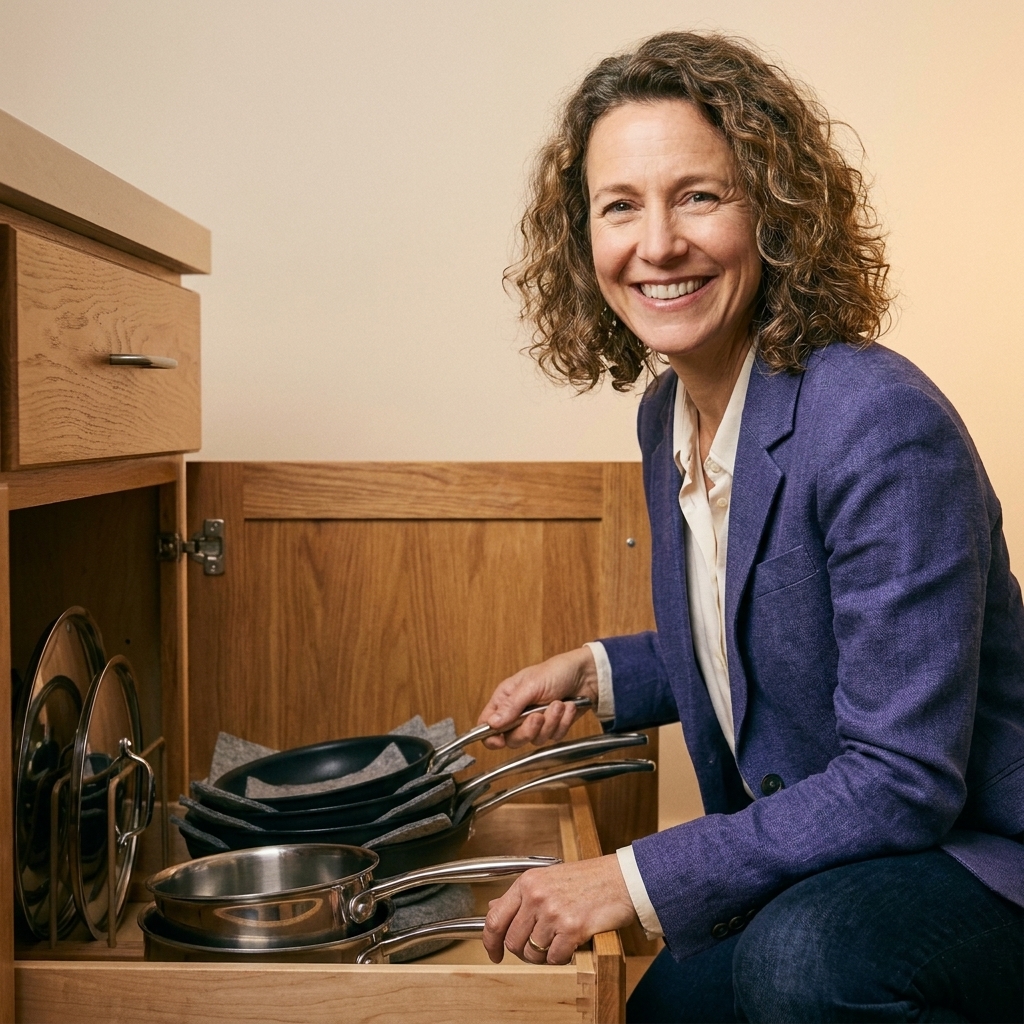
One tall tower guarantees clanging and scraping. Instead, make two short stacks side by side: skillets in one, saucepans in the other. If your cabinet is narrow, make front-to-back stacks with the most-used pan in front.
Step 3: Treat lids like their own category
Lids are not “part of the pot” in storage terms. They need a home.
- Vertical lid organizer inside the cabinet, like a file sorter for lids.
- Door-mounted rack if your cabinet doors are solid and you have clearance.
- Deep drawer: stand lids on edge using adjustable dividers.
Step 4: Add quick protection
If you stack nonstick, use pan protectors or even clean, thin dish towels between pieces. It is one extra motion that saves your coating. For enamel and stainless, a thin felt or cloth separator can also prevent scuffs and little edge dings.
Step 5: Keep moisture out of the stack
Whatever your cookware is made of, make sure it is fully dry before you stack it away. This matters most for cast iron and carbon steel, which can rust if they sit damp.
Hanging pots and pans
Hanging is amazing for access. It is also one of the easiest ways to free up a cabinet, which can be life-changing in a small kitchen. But it only works when you are realistic about weight, reach, and grease.
When hanging works best
- You cook frequently. If you use the same pans daily, hanging feels effortless.
- Your cabinets are tiny. Hanging buys you storage space for food and appliances.
- You have sturdy mounting options. Studs, solid ceiling joists, or a well-anchored wall rail.
- You do not mind some visual presence. Cookware becomes part of the room.
Pros of hanging
- Fast access. No unstacking, no banging.
- More cabinet room. Especially helpful if you have a small pantry situation.
- Easy inventory. You can see what you have, which helps prevent duplicate purchases.
Cons of hanging
- Installation and weight. A loaded rack is heavy, and it must be mounted correctly.
- Grease and dust. Cookware near the stove can collect residue and needs occasional wiping.
- Visual clutter risk. If you hang everything, it can look busy fast.
- Safety and reach. Heavy pots above head height are not for everyone.
Hanging options that work in everyday kitchens
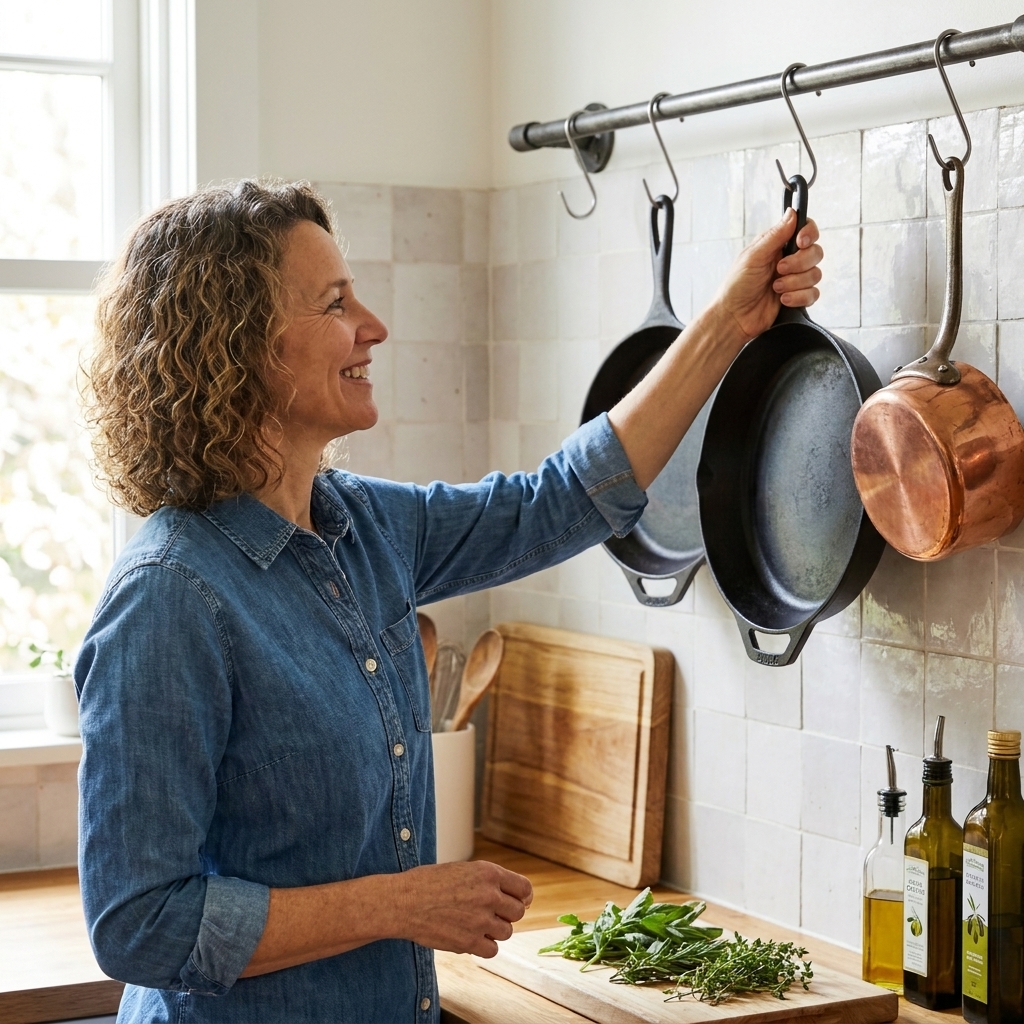
Wall-mounted rail with hooks
My favorite for most homes. It holds everyday pieces, keeps weight lower than ceiling racks, and can tuck into dead wall space near the stove.
Inside-cabinet hanging
If you love the idea of hanging but want it hidden, add a short rail or hooks inside a wide base cabinet. It is great for lids, strainers, and lightweight pans.
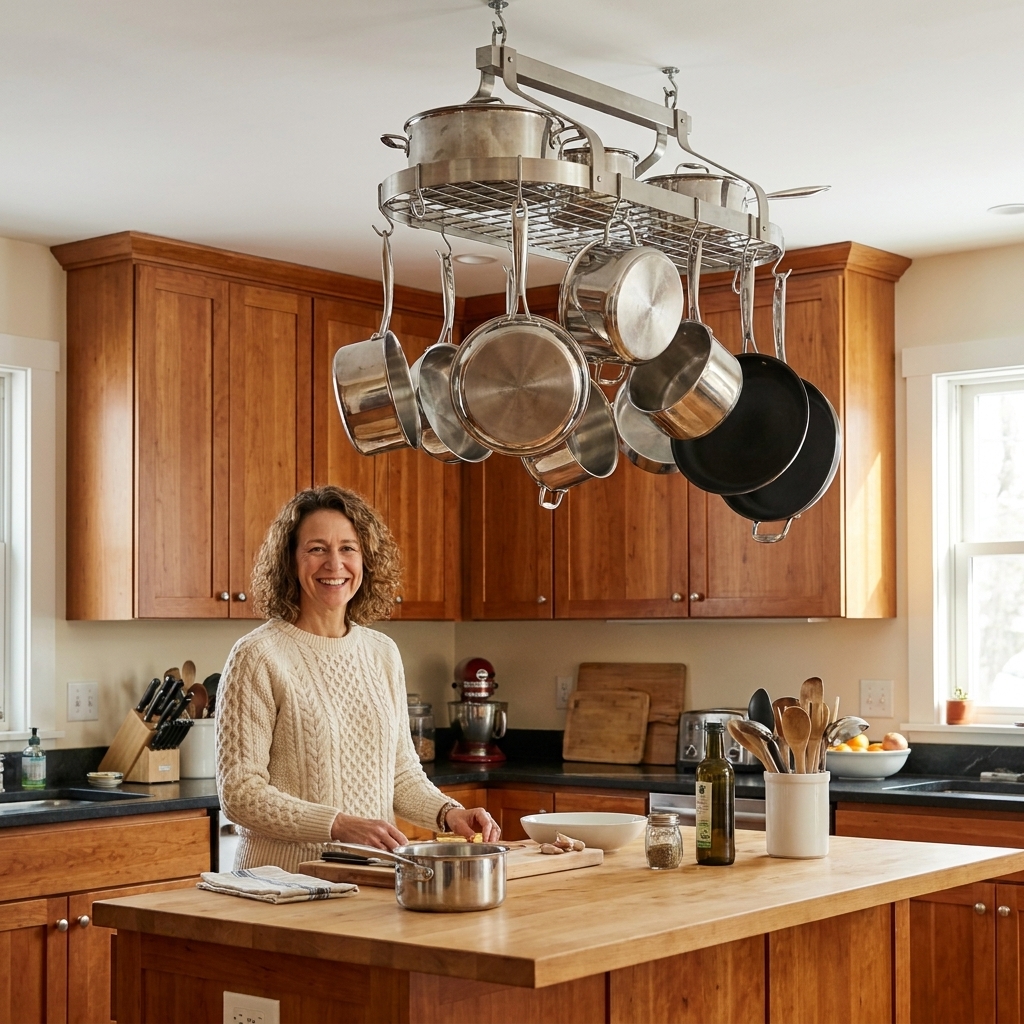
Ceiling pot rack
Best in kitchens with an island or a clear zone. If you rent, this is often not worth the hassle unless your landlord is on board.
Pegboard wall
Surprisingly flexible if you like to rearrange. Just remember that pegboard needs secure wall anchoring.
Two safety rules I actually follow
- Mount to structure and follow the manufacturer rating. Use studs or joists (or hardware designed for your wall type), and do not guess on load limits.
- Keep heavy pieces below shoulder height when you can. Cast iron and big stockpots are much nicer to lift from a low rail than from overhead.
Which is best for your layout?
If you have deep drawers
Stacking wins most of the time. Deep drawers with dividers can be one of the easiest and quietest setups. Store pans flat with protectors, and stand lids on edge in the same drawer if space allows.
If you have narrow lower cabinets
Hanging or hybrid often wins. Narrow cabinets create tall, awkward stacks. Hanging one to three most-used pans plus stacking the rest can make a cramped cabinet feel manageable.
If you have a tiny apartment kitchen
Hybrid usually wins. Use a wall rail for your most-used skillet and saucepan, then stack the occasional pieces in one assigned cabinet. The goal is fewer items to move around, not a perfect display.
If you have lots of uppers but limited lowers
Hanging can help because heavy cookware in upper cabinets is a pain and can be unsafe. Consider hanging heavier pieces at a reachable height or storing them in the lowest cabinet you have and moving lighter items up top.
If you have a corner cabinet
Stacking can work if you add a lazy Susan or pull-out tray. Without that, corner cabinets turn into cookware black holes.
The third option: vertical storage
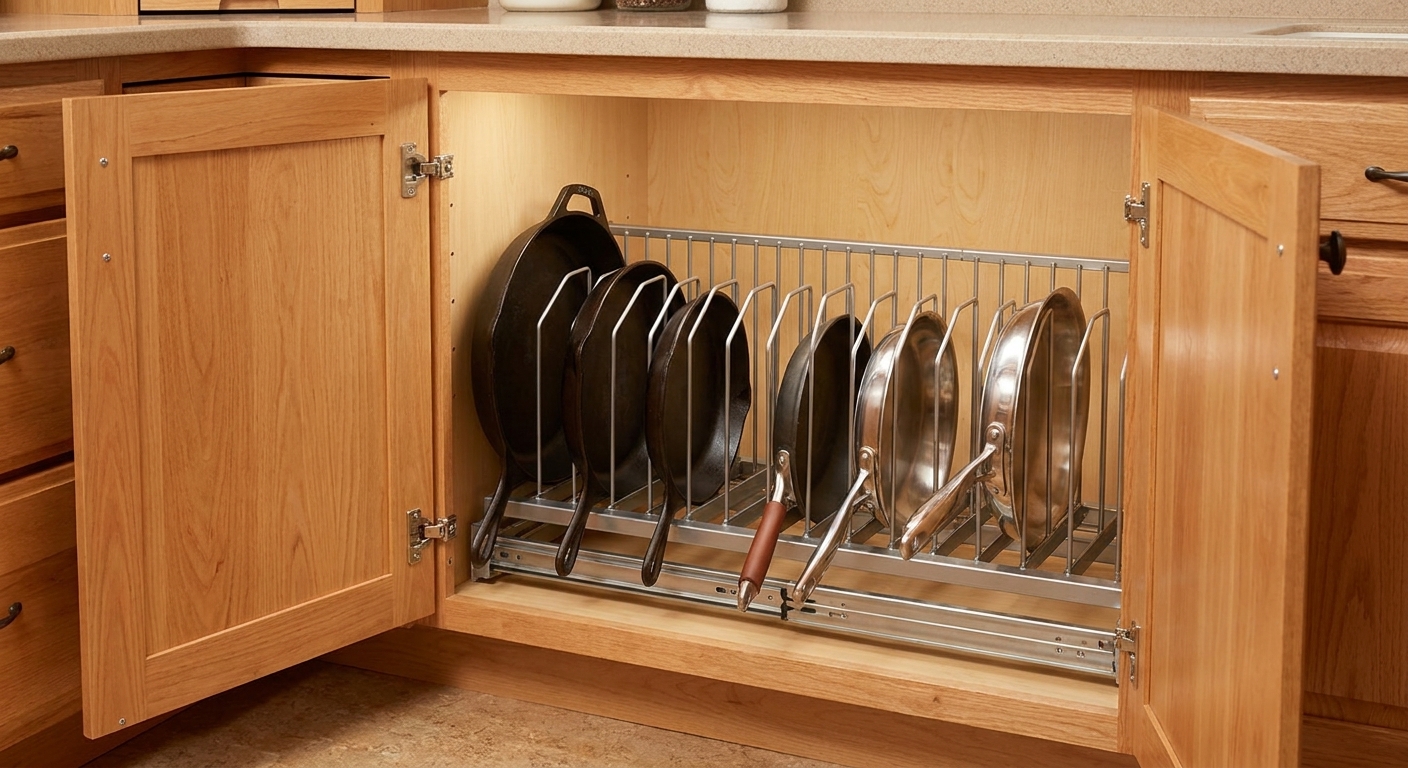
If stacking makes you angry and hanging feels like too much, vertical storage is your middle path. Instead of piling, you store pans on edge like files.
- In a cabinet: use an adjustable rack so skillets stand upright.
- In a deep drawer: use sturdy drawer dividers to create “slots.”
This setup is especially great for nonstick pans because nothing rubs against the cooking surface. It also makes it harder to chip enamel cookware because you are not dragging pieces out of a pile.
My favorite setups
The “daily driver” hybrid
- Hang 1 skillet and 1 saucepan on a wall rail near the stove.
- Stack the rest in a lower cabinet with pan protectors.
- Store all lids vertically in a lid organizer.
This is the system I recommend most because it keeps the most-used pieces easy without turning your kitchen into a cookware showroom.
The drawer-only system
- Put pans in one deep drawer with protectors.
- Use adjustable dividers to keep stacks from sliding.
- Stand lids on edge at the back or in a second drawer.
If you have deep drawers, this is hard to beat. If you do not, do not force it. A well-set-up cabinet can be just as functional.
The small-cabinet survival system
- Store one stack of pans front-to-back with the most used in front.
- Mount a door rack or small vertical organizer for lids.
- Declutter duplicates and specialty pieces you never reach for.
How to choose in 5 minutes
- Count what you actually use weekly. Those pieces deserve the easiest access.
- Measure your best storage spot. Width and depth matter more than height for stacking.
- Check your walls and studs. If you cannot mount securely, choose stacking or inside-cabinet solutions.
- Decide your tolerance for visual clutter. Be honest. If seeing stuff stresses you out, hide it.
- Pick the simplest system you will maintain. The best organizing method is the one you can keep up on your busiest week.
Common questions
Is it bad to stack nonstick pans?
It is not automatically bad, but unprotected stacking can scratch the coating over time. Use pan protectors or thin towels between pieces, or store nonstick vertically.
Should I hang cast iron?
You can if the mounting is truly secure and the hook is rated for the weight. Follow the rack or rail manufacturer’s weight rating, and mount into studs or joists. Cast iron is heavy and awkward, so I often prefer storing it in a lower cabinet or on a sturdy, low wall rail where it is easy to lift safely.
What is the best way to store pot lids?
Vertical storage is the best path to sanity for most people. A lid organizer inside the cabinet, a door-mounted rack, or drawer dividers all work. Pick the one that keeps lids from sliding into the stack.
How do I stop the loud clanging?
Shorter stacks, pan protectors, and separating lids from pots solve most noise. If you hang cookware, use sturdy hooks that do not swing excessively and avoid overcrowding the rail.
Anything I should not do?
Two big ones: do not overload a rack “because it seems fine,” and do not hang your heaviest pot directly over a busy burner zone where you are constantly reaching and stirring. Make access safe first, then make it look nice.
The bottom line
Stacking is great when you have a decent cabinet or drawer and you give lids a real home. Hanging is great when you need access and cabinet space, and you can mount safely. If you are stuck in the middle, go hybrid: hang the pieces you use constantly and stack the rest with a simple lid system.
A peaceful kitchen is not a perfect kitchen. It is one where you can grab the pan you need without starting a metal percussion concert.