If your spice situation looks like mine used to, a chaotic pile of half-used jars playing hide-and-seek behind the peanut butter, you are not alone. Small cabinets turn spices into clutter fast because they are tiny, numerous, and easy to shove “just for now.”
The good news: you do not need a bigger kitchen. You need a system that matches real life: quick to put away, easy to see, and forgiving when you are cooking on a Tuesday at 6:12 pm.
Pick one or two of these hacks to start. The best spice setup is the one you will actually maintain.
Before you reorganize: 5-minute spice reset
Do this first so whichever hack you choose actually works.
- Pull every spice out. Yes, all of them. Hidden duplicates are often one of the biggest space killers.
- Toss the truly unloved. If you cannot remember what “poultry seasoning” is for, you can let it go. If you are unsure, set it aside for a two-week trial.
- Check freshness realistically. Ground spices lose punch faster than whole spices. If it smells like dust, it will usually taste like dust. As a rough guide, ground spices are best within about 1 to 3 years, and whole spices often last 3 to 4 years when stored well.
- Group by use. Everyday (salt, pepper, garlic powder), baking, grilling, global flavors, and “specialty.”
- Measure your cabinet. Shelf depth and height matter more than you think. A rack that is 1 inch too tall becomes instant clutter.
One more quick rule that makes everything last longer: keep spices away from heat, light, and humidity. Storing them right above the stove or next to a kettle is convenient, but it is rough on flavor. And for dried spices, the fridge is usually unnecessary.
15 spice rack storage hacks that actually save cabinet space
1) Add a tiered shelf riser inside the cabinet
This is the quickest win for visibility. A simple 2 or 3-tier riser lets you see labels at a glance instead of stacking jars in a spice avalanche.
- Best for: standard grocery store spice jars
- Reformed-messy tip: Put everyday spices on the front row so you do not have to reach over anything when you are hungry and impatient.
2) Use a pull-out spice rack cabinet insert
If you have a narrow cabinet (or a filler pull-out), a pull-out rack turns wasted inches into prime real estate. Everything slides out to you, which means nothing gets lost in the back.
- Best for: narrow base cabinets near the stove
- Look for: smooth-glide rails and adjustable shelves
3) Try a door-mounted spice organizer
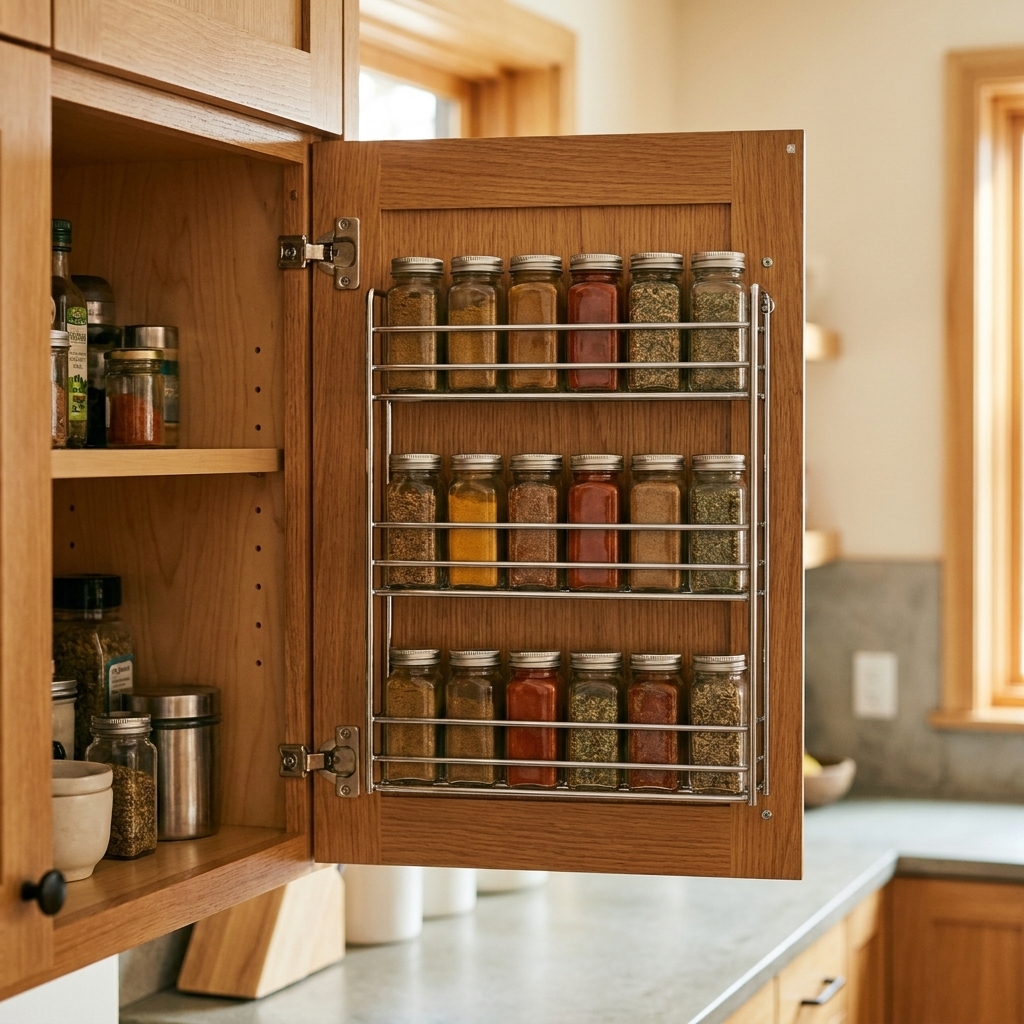
The inside of cabinet doors is often empty space. A slim rack adds storage without stealing shelf space. Just make sure the door can still close with your shelf contents.
- Best for: shallow jars, spice bottles, small packets
- Install tip: Measure door clearance first and check the hinge side for interference. Use screws when possible. Adhesive strips can fail in warm, steamy kitchens.
4) Mount magnetic spice jars under a cabinet
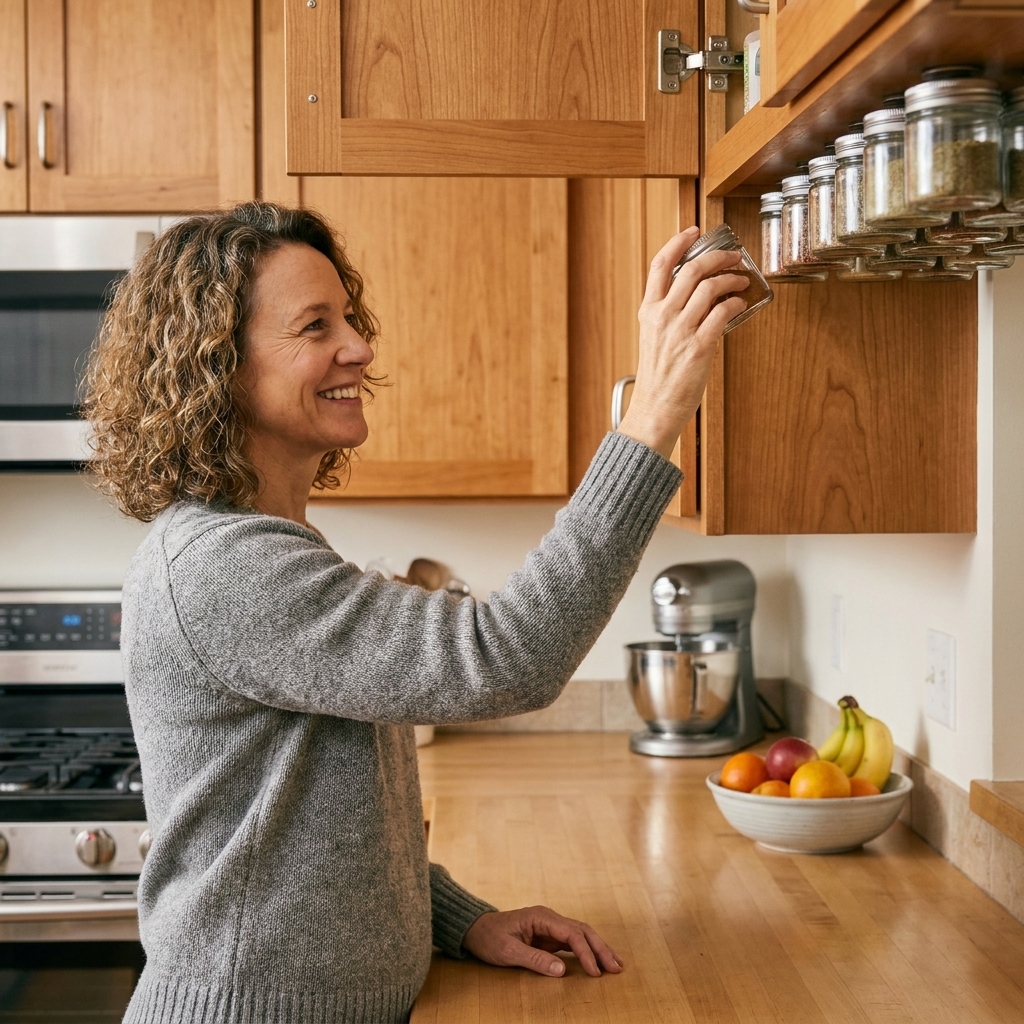
This one feels fancy but can be surprisingly budget-friendly. Magnetic jars need a mounted metal strip or metal plate to stick to, since most cabinet undersides are wood. It keeps spices visible and frees up shelf space.
- Best for: small kitchens with limited cabinet shelves
- Reality check: Keep them away from the hottest steam zones so jars do not get greasy. Plan to give the bottoms a quick wipe now and then.
5) Stick spices to the side wall with a magnetic board
No cabinet room at all? Add a slim magnetic board on the side of a cabinet bank or fridge side panel. It is storage that does not touch your already-crowded shelves.
- Best for: renters or anyone avoiding cabinet drilling
- Make it stick: Use a strong board and quality magnets. Weak magnets create daily annoyance.
6) Use clear acrylic bins as “spice drawers” on a shelf
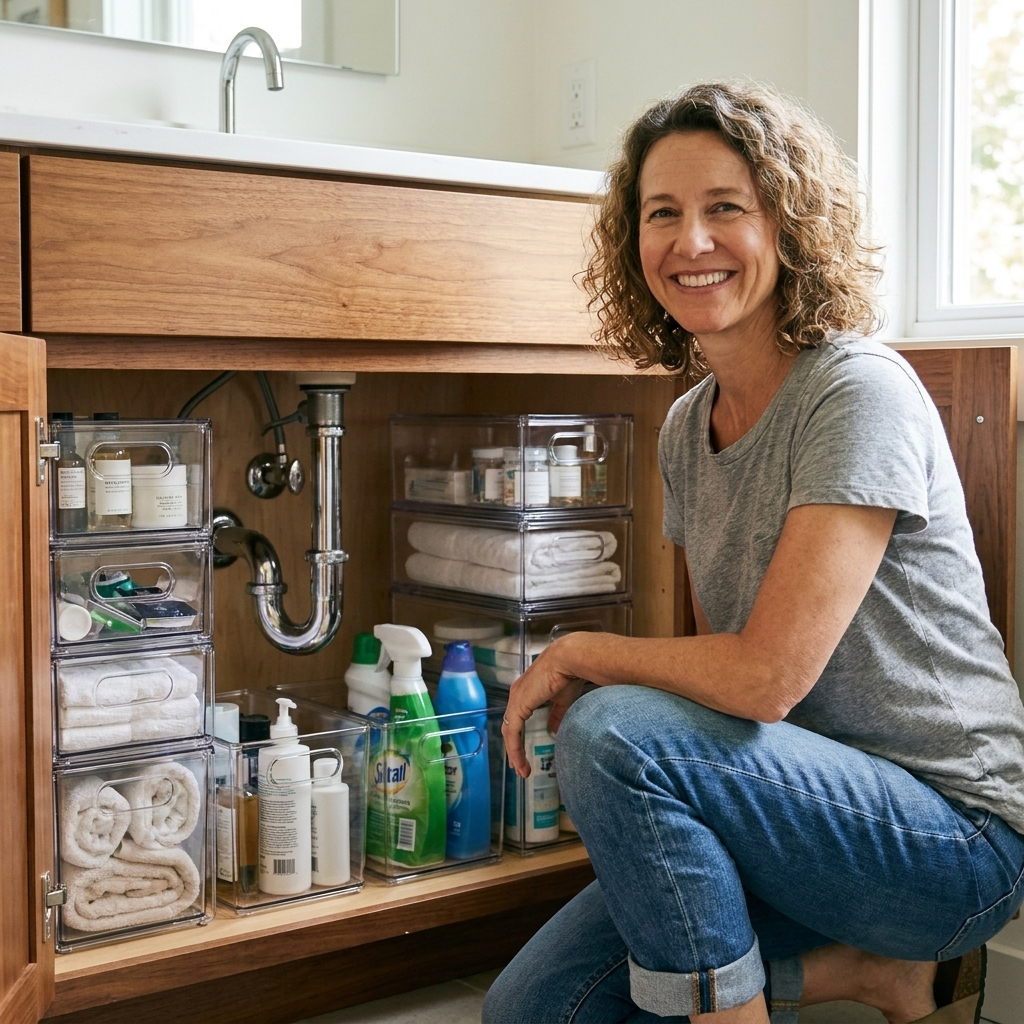
If your cabinet shelves are deep, spices disappear. Slide them into clear bins so you can pull the whole category forward, pick what you need, then push it back.
- Best for: deep upper cabinets
- Labels that help: “Everyday,” “Baking,” “Heat,” “Blends”
7) Add a lazy Susan turntable for bottles and tall grinders
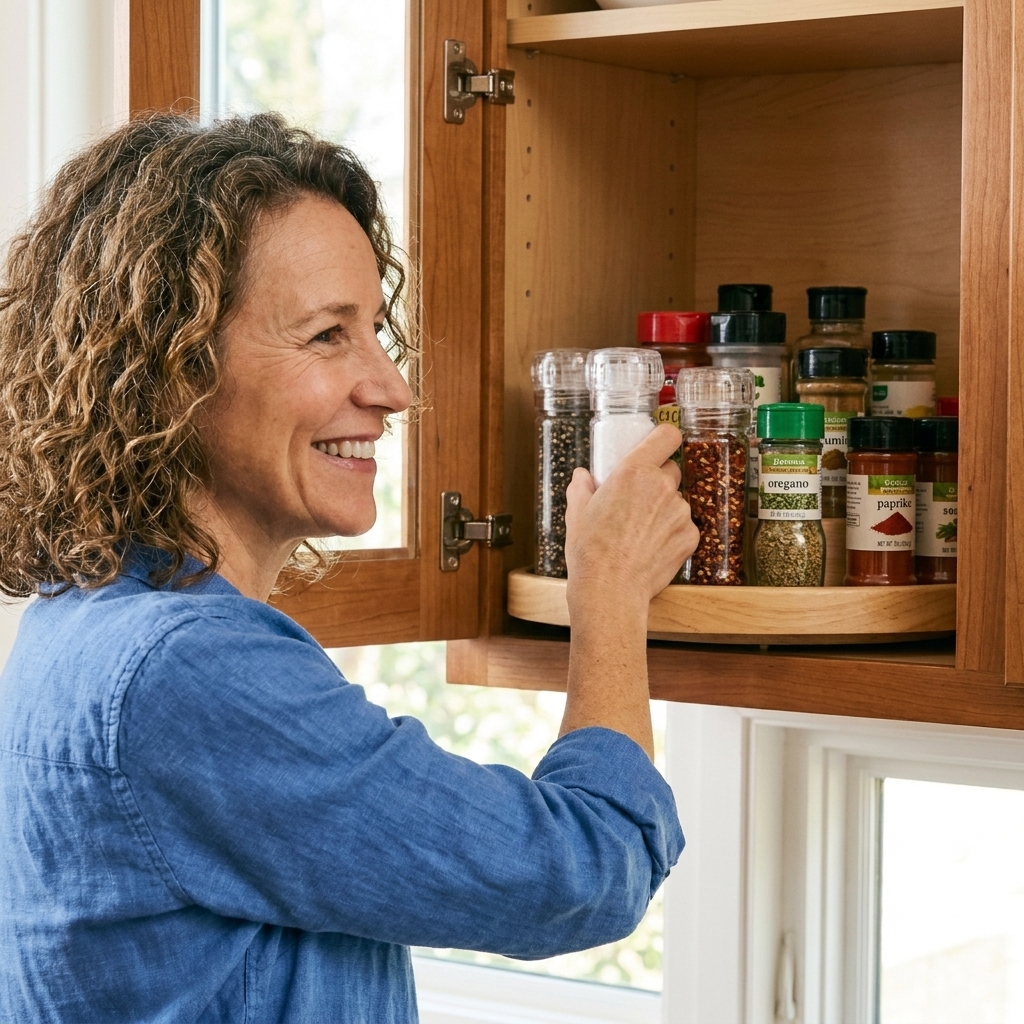
Turntables are perfect for bulky spice grinders, oils, and seasoning blends that do not fit in typical racks. Spin, grab, done.
- Best for: tall items and awkward bottles
- Tip: Choose one with a grippy surface so bottles do not tip when you spin it fast.
8) Install an under-shelf hanging basket for packets
Those little seasoning packets multiply like rabbits. A small under-shelf basket creates a tidy home without taking up the shelf itself.
- Best for: taco seasoning, gravy mix, ranch packets, yeast packets
- Keep it usable: Store packets in a small bin within the basket so they do not sag and slump.
9) Use a slim file organizer for spice packets and flat items
A vertical file sorter works beautifully for flat spice bags, sauce mixes, and even small recipe cards. It is like a tiny filing cabinet for flavor.
- Best for: pouches and packets
- Bonus: You can stand it in a cabinet or pantry shelf with zero installation.
10) Convert a drawer with angled spice drawer inserts
If you have one drawer you can dedicate, this is my favorite “why did I not do this sooner?” upgrade. Angled inserts let you lay jars down label-up, so you can find cinnamon without excavating.
- Best for: people who cook often
- Reality tip: Keep the drawer near prep space, not across the kitchen.
11) Use inexpensive drawer dividers to create DIY spice rows
No fancy insert needed. Add simple dividers and line spices up in tidy rows. It works best when your jars are similar in size.
- Best for: tight budgets and quick fixes
- Reformed-messy tip: Leave one “overflow” row so you are not forced into perfection.
12) Store backstock and bulk refills separately
One sneaky reason spice cabinets get overstuffed is backstock. If you keep refills with the daily spices, everything feels cramped. Put backstock in a labeled bin in a pantry or a higher cabinet.
- Best for: warehouse-sized spices and refill bags
- System that sticks: One bin labeled “Spice Refills” and nothing else.
13) Standardize containers (just a little) to stop the pile-ups
I am not saying you need a matching, influencer-level spice wall. But having some consistency helps racks and drawers work better. Consider moving frequently used spices into a set of uniform jars so they sit neatly and stop toppling.
- Best for: drawer storage and tiered risers
- Keep it realistic: Standardize your top 10 to 15 spices first.
14) Use a narrow tension rod to create a mini spice shelf
In some cabinets, a small tension rod can create a barrier to keep spices from falling forward, or it can help you create a split level by holding a lightweight shelf piece in place. It is a weird little hack, but it can solve an annoying cabinet layout.
- Best for: cabinets where jars tip or slide
- Safety note: Keep it to lightweight setups. If it feels unstable, skip it.
15) Create a cooking zone caddy you can grab and go
If your cabinets are truly tiny, consider pulling your most-used spices into a small handled bin or caddy. Store it in the cabinet, then set it on the counter while you cook and put it back afterward.
- Best for: busy families and small apartments
- What goes in: your top 8 to 12 spices and nothing else
How to choose the right hack
If you are stuck deciding, here is the quick match-making list:
- If you lose spices in the back: pull-out rack, clear bins, or a lazy Susan
- If your shelves are full: door rack, magnetic jars, or a magnetic board
- If you hate digging: tiered riser or a drawer insert
- If packets drive you nuts: hanging basket or file organizer
- If you buy in bulk: separate backstock bin plus one of the visibility options above
My low-maintenance reset routine
I do not deep clean my spice area every week. I do a tiny reset that keeps it from sliding into chaos:
- Once a week (30 seconds): shove the strays back into their bin or row
- Once a month (3 minutes): check for duplicates and move refills to backstock
- Twice a year (10 minutes): wipe the shelf or rack (and any magnetic jars or strips) and toss anything that smells like cardboard
That is it. The goal is functional, not flawless.
Spice storage FAQ
Is it okay to store spices above the stove?
It is convenient, but heat and steam can shorten spice life and make containers greasy. If you can, store spices near the stove but not directly above it, like in a nearby cabinet, drawer, or pull-out.
Should I alphabetize my spices?
Only if it feels natural to you. I prefer grouping by use because my brain thinks “taco night” before it thinks “cumin.” If you love alphabetizing, go for it, but do not force it if you will not maintain it.
What if I have spices in all different sizes?
Use bins or a lazy Susan for the mismatched crowd, and standardize only your most-used spices. A little consistency goes a long way without turning this into a whole weekend project.
Should I refrigerate spices?
For dried spices, usually no. Refrigerators add moisture and can encourage clumping. A cool, dry cabinet away from heat and sunlight is typically the sweet spot.