
If you have ever tried to clear the coffee table and felt like you were negotiating an international treaty, welcome. Shared-space decluttering is not really about stuff. It is about comfort, control, identity, and what “home” is supposed to feel like.
I am a reformed messy person who had to learn systems the hard way. One of the biggest lessons was this: if two people live in a home (partners, roommates, co-parents, or family), the goal is not winning decluttering. The goal is building a home that functions for everyone who shares the space.

Start with the real issue
When one person loves decluttering and the other person hates letting go, it is easy to label each other.
- “You are a hoarder.”
- “You are controlling.”
- “You do not respect my things.”
Those labels can blow up trust fast. A better framing is: we have different clutter thresholds. One person feels calm with more visual simplicity. The other feels safe with backups, memorabilia, or “I might need that” items.
So instead of trying to convert someone into a minimalist, focus on what you can usually agree on: shared spaces need shared agreements.
A 10-minute talk
This is the part most of us skip. We grab a trash bag, start moving things, and then wonder why it turns into conflict.
Try this simple script at a calm time, not mid-cleanup:
“I am feeling stressed in our shared spaces because there is not enough room for daily life. I do not need you to be a minimalist. I just want us to agree on a few boundaries so the living room and kitchen are easy to use. Can we pick one area to fix together this weekend?”
Three ground rules
- Use “I feel” language, not “you always.”
- Talk about function: sitting, cooking, finding keys, paying bills.
- Define the win before touching anything: “clear counters,” “empty sofa,” “table usable every night.”
Fair compromise
Compromise is not you silently resenting a pile of stuff forever. Real compromise has clear lines.
Use “yours, mine, ours”
- Mine: You each get personal zones where the other does not micromanage.
- Yours: Same for them.
- Ours: Shared spaces follow shared agreements, and you both help protect them.
Shared space usually means: living room, kitchen counters, dining table, entryway, bathroom surfaces, and any hallway that turns into a drop zone.
Set simple standards
This is the clearest way I know to keep emotions out of it. Pick measurable standards like:
- Kitchen counters: only coffee maker and one fruit bowl.
- Dining table: clear by bedtime.
- Living room floor: nothing stored on the floor overnight.
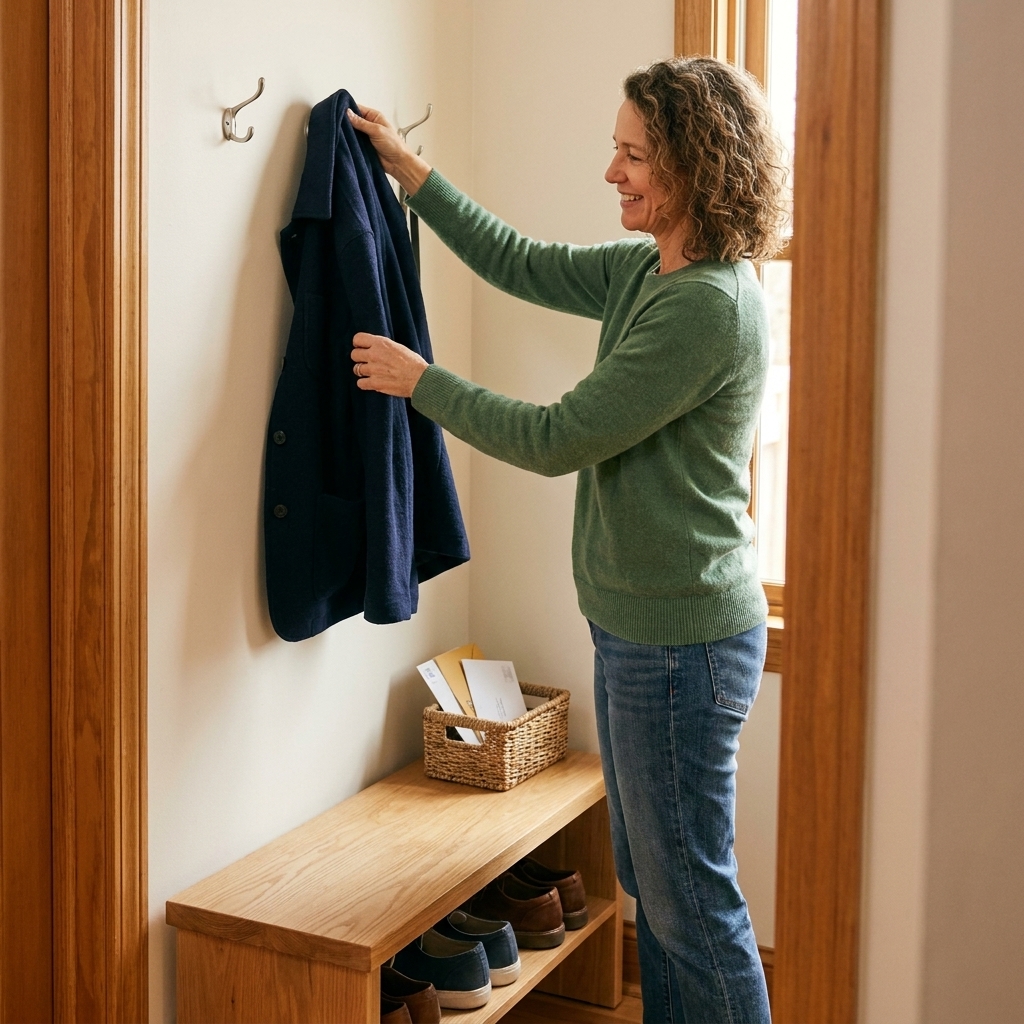
- Entryway: shoes only in the shoe bin, not lined up in a “shoe parade.”
Boundaries that keep peace
If someone hates letting go, boundaries protect the relationship and the room.
The shared surface rule
“I am not asking you to get rid of your things. I am asking that shared surfaces stay clear so we can use them. If something lands on the dining table, it needs to be put away by tonight.”
The container limit
“You can keep as much as fits in this bin. If it does not fit, we choose together what stays in the bin.”
No surprise purges
“I will not throw away or donate your items without asking. In return, I need you to respect the shared-space limits we agreed on.”
This last one matters. If your partner worries you will declutter behind their back, they will often cling harder.
Systems that cut conflict
When decluttering styles clash, I lean hard on systems that reduce decision-making. Less debating, more default routines.
1) The one-touch basket
Put a basket where clutter naturally lands: entryway, kitchen corner, or near the sofa.
- Anything left out goes in the basket.
- Basket gets emptied during a weekly reset, not all day long.
- If it does not get claimed within a set time, it gets revisited together.
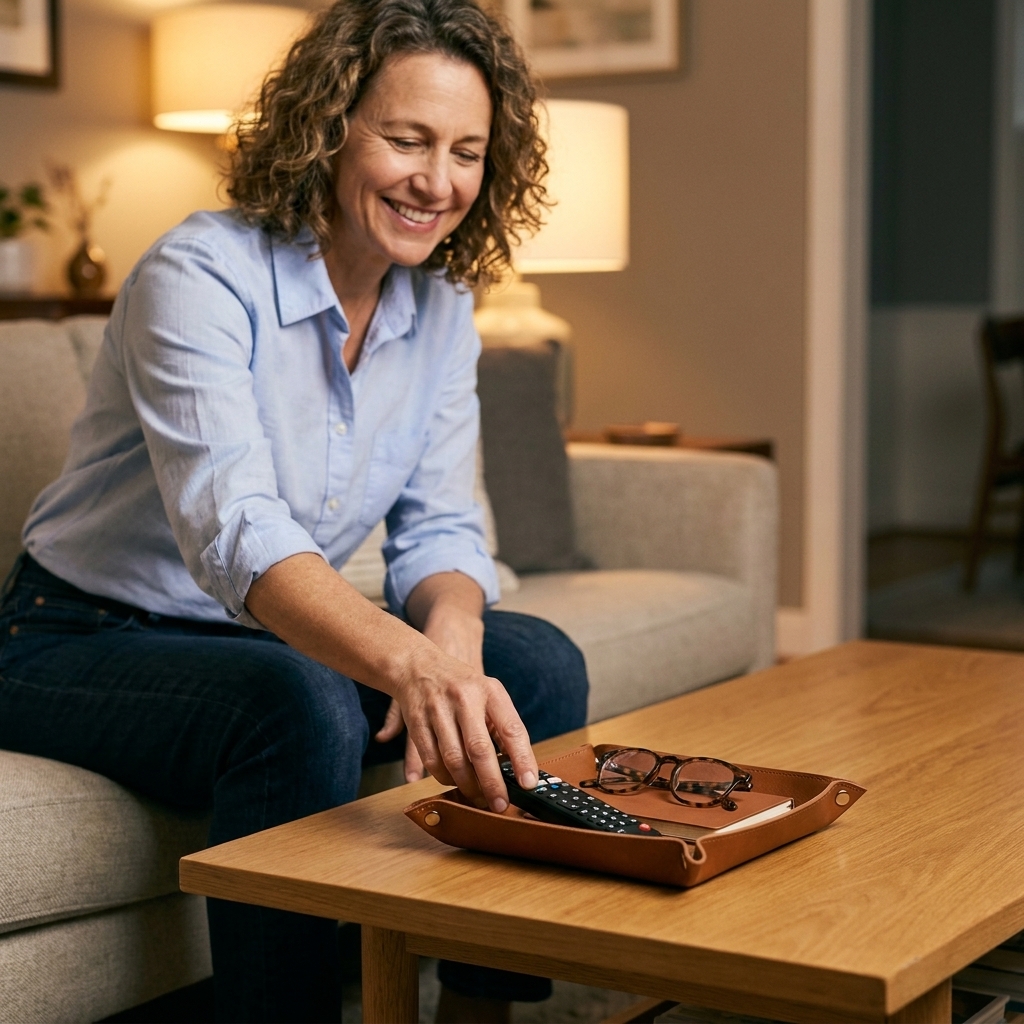
2) The active projects tray
Some clutter is not clutter. It is life in progress. Give it a home that is contained.
- One tray or shallow bin for active paperwork.
- One tray for the current hobby or build.
- When the tray is full, something must be finished or filed before more comes in.
When they cannot decide
Some people freeze because every item feels loaded: money spent, memories, guilt, or fear of needing it later. You can help without pushing.
Go for micro-wins
Micro-wins means small, specific categories. Instead of “let’s declutter the whole living room,” try:
- Old mail only
- Chargers and cords only
- Mugs and water bottles only
- Throw blankets only
Small categories lower the emotional cost.
Ask easier questions
- “Do you want this in our shared space, or in your zone?”
- “If we needed this, could we replace it in under 20 minutes?”
- “Would you buy this again today?”
- “Do you want to store this, display it, or use it weekly?”
Try a timed maybe box
If donating causes panic, use a sealed bin:
- Label it with a date 30 to 90 days out.
- If nobody opens it by then, revisit it together and decide what to donate.
- If they truly need something, they can retrieve it with no shame.
This builds trust and gives real evidence that letting go is not always dangerous.
Protect shared zones
The goal is not you doing enforcement. The goal is the house gently enforcing the agreements through layout and habits.
Make the right thing easy
- Hooks at eye level where coats get dropped.
- Open bins for shoes if shoes always end up on the floor.
- Drawer dividers for the random small stuff that multiplies.
- A charging station so cords do not live on every surface.
The weekly reset
I love a low-pressure weekly reset. Put on music, set a 20 to 40 minute timer, and do the basics:
- Clear the dining table
- Reset the entryway
- Quick sweep of living room surfaces
- Empty the catchall basket
It is not a critique of your partner. It is a recurring rhythm for the home.

When “later” never comes
This is where clear agreements beat vague promises.
Turn “later” into defaults
- Daily: shared surfaces clear by bedtime.
- Weekly: reset basket gets emptied.
- Monthly: one micro-category declutter together.
Use if-then agreements
These can be surprisingly relationship-saving in clutter-heavy seasons.
- If the dining table is not clear by 9 pm, then everything on it goes into the table basket for sorting during the weekly reset.
- If the entryway shoe area overflows, then you both choose five pairs to relocate to bedroom closets.
- If the living room storage fills up, then you pick one bin to thin out together.
Notice how none of these involve you throwing away their things. It is containment plus a scheduled revisit.
A quick real-life example
Here is what this can look like in an average week:
- Friday night: You do the 10-minute talk and agree on one win: “dining table clear by bedtime.”
- Saturday: You set up one table basket and one active projects tray. Anything on the table that is not dinner-related goes into the basket.
- Sunday: You do a 30-minute reset together. Basket gets sorted: mail filed or recycled, cords moved to a charging station bin, one sentimental item goes to a keepsake box.
- Midweek: If the table gets messy again, nobody argues. You just use the basket, because the system is the referee.
It is not magical. It is just consistent, which is what most homes actually need.
When it runs deeper
Sometimes “I cannot let it go” is not stubbornness. It is fear, grief, or a history of not having enough.
In that case, being right about clutter will not help. Gentleness will.
- Lead with comfort: “I know this feels hard.”
- Keep decisions small: one shelf, one drawer, one bin.
- Preserve dignity: do not declutter as a punishment or public performance.
- Consider support: if clutter is significantly impacting daily life and causing distress, talking with a therapist can be a real relief.
Safety comes first
There is also a difference between everyday clutter and unsafe living conditions. If belongings are blocking exits, creating fire hazards, attracting pests, or contributing to mold or rotting food, treat it as a safety issue, not a style disagreement. In those situations, getting professional help (a therapist, a professional organizer experienced with extreme clutter, or local support services) is often the fastest path to a safer home and less conflict.
Quick ideas by room
Living room
- One lidded basket for throw blankets.
- One tray for remotes and small items.
- No storage piles on the floor. Piles must live in a bin.
Kitchen
- Counter rule: appliances you use weekly can stay, everything else goes.
- One cabinet shelf for backups. When full, no more extras.
- A clear donation bag area for duplicates you both agree on.
Entryway
- Hooks for jackets, one per person if possible.
- A small bowl or bin for keys and wallets.
- Shoe limit: what fits in the bin or on the rack.
Bathroom
- One bin per person under the sink.
- Only daily items on the counter.
- Backups corralled in one labeled bin, not spread everywhere.
FAQ
Is it wrong to declutter my partner’s things?
In most households, yes. Unless it is clearly unsafe (like spoiled food) or you have explicit permission, decluttering someone else’s belongings breaks trust. Focus on shared-space agreements and container limits instead.
What about date labels on food and meds?
Food date labels can be confusing, and not every “best by” date means the food is unsafe. But if something is spoiled, leaking, moldy, smells off, or attracting bugs, it is trash. For medications, do not keep anything that is truly expired or unsafe to take. When in doubt, check your local pharmacy disposal guidance.
How do I compromise without living in clutter?
Give personal freedom in personal zones, then protect shared zones with clear standards: usable surfaces, container limits, and a weekly reset. Compromise should come with structure, not surrender.
What if I am the one who struggles to let go?
Start with containment, not perfection. Pick one small category and use a maybe box so you can practice letting go safely. The goal is progress and calmer rooms, not becoming a different person overnight.
What if we keep fighting about it?
Pause the decluttering and return to agreements. Write down three shared-space standards and two personal zones each. If conflict stays intense, a couples counselor or family therapist can help you communicate without the stuff being the battleground.
A final note
You do not need a picture-perfect home to have a peaceful one. You need a few shared agreements, a couple of containers that do the heavy lifting, and a plan you both trust.
And if your partner keeps the weird cords or the sentimental ticket stubs? Fine. Just make them live in a bin, not on the dining table.