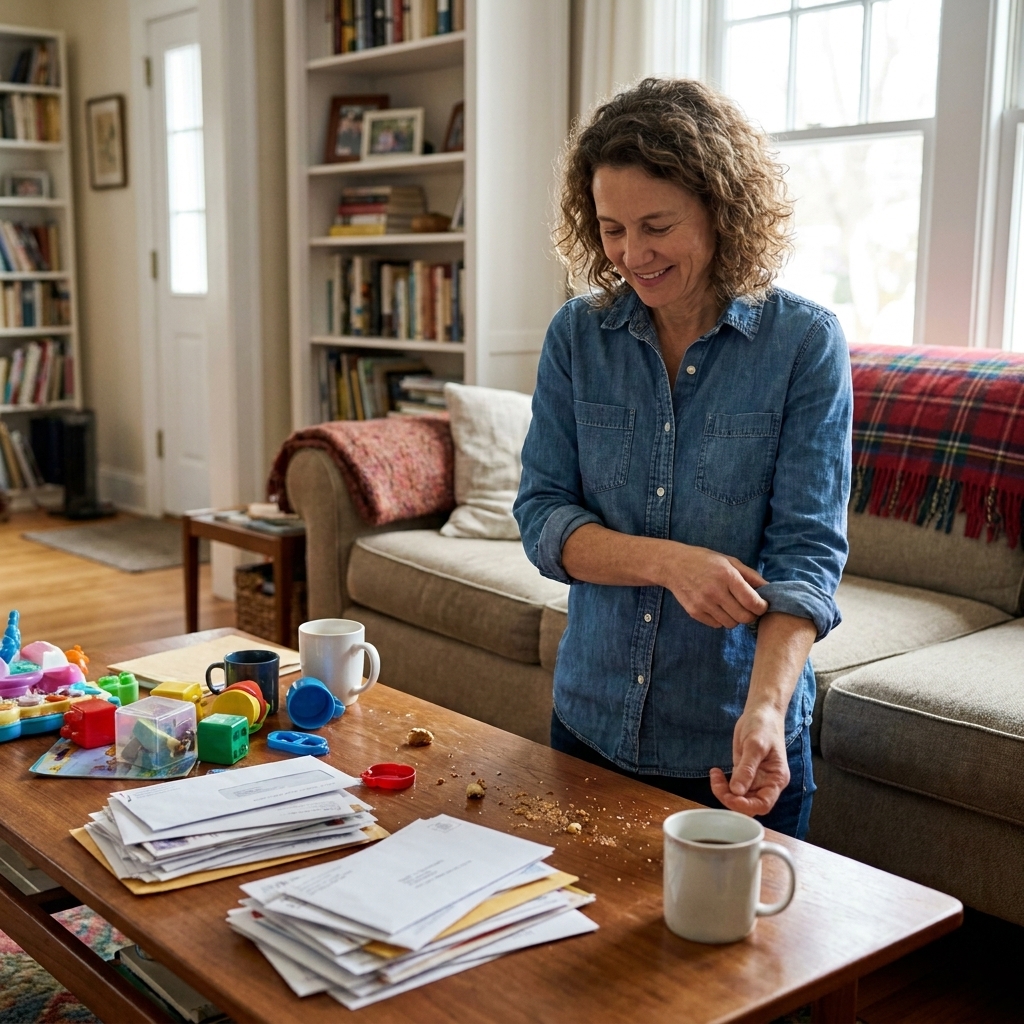
If you have ever tried to “get organized” by spending an entire Saturday rage-cleaning, you already know the problem: it works, until life happens again. The real secret is not more motivation. It is a tiny, repeatable routine that keeps clutter from ever reaching “weekend marathon” status.
This is the 15-minute daily decluttering routine I use as a reformed messy person. It is flexible, forgiving, and designed for actual households where people eat snacks, drop backpacks, and somehow generate paper like it is their job.
Why 15 minutes works
Decluttering is less about effort and more about frequency. Fifteen minutes is short enough that you can do it even when you are tired, even when the house is loud, even when you do not feel like it.
- It bypasses procrastination. Starting is easier when there is a hard stop.
- It prevents pileups. For many people, clutter is just “delayed decisions.” Daily minutes keep decisions small.
- It protects your weekends. Instead of heroic resets, you get gentle maintenance.
- It builds trust with yourself. You stop making promises you cannot keep and start seeing steady progress.
The rules that keep it easy
Rule 1: Declutter, do not deep clean
Put the vacuum down. You are removing and returning items, not scrubbing baseboards. If you accidentally start cleaning, it is usually a sign you hit something emotionally annoying (hello, paper pile) and your brain is trying to escape.
Rule 2: No organizing projects
Projects are how we turn 15 minutes into 2 hours. Your job is to make space by clearing obvious clutter. You can schedule a real project later if you need it.
Rule 3: One zone per day
Pick one small, specific zone. “The kitchen” is not a zone. “The kitchen counter to the left of the sink” is a zone.
Rule 4: Stop with empty hands
When the timer ends, do a quick lap and put away anything in your hands. The goal is to stop with nothing in-hand and no active sorting pile, not to create a perfect room.
Your 15-minute routine
Set a timer. Use a phone, a microwave, a cheap kitchen timer, whatever you will actually start.
Minute 0 to 2: Grab your tools
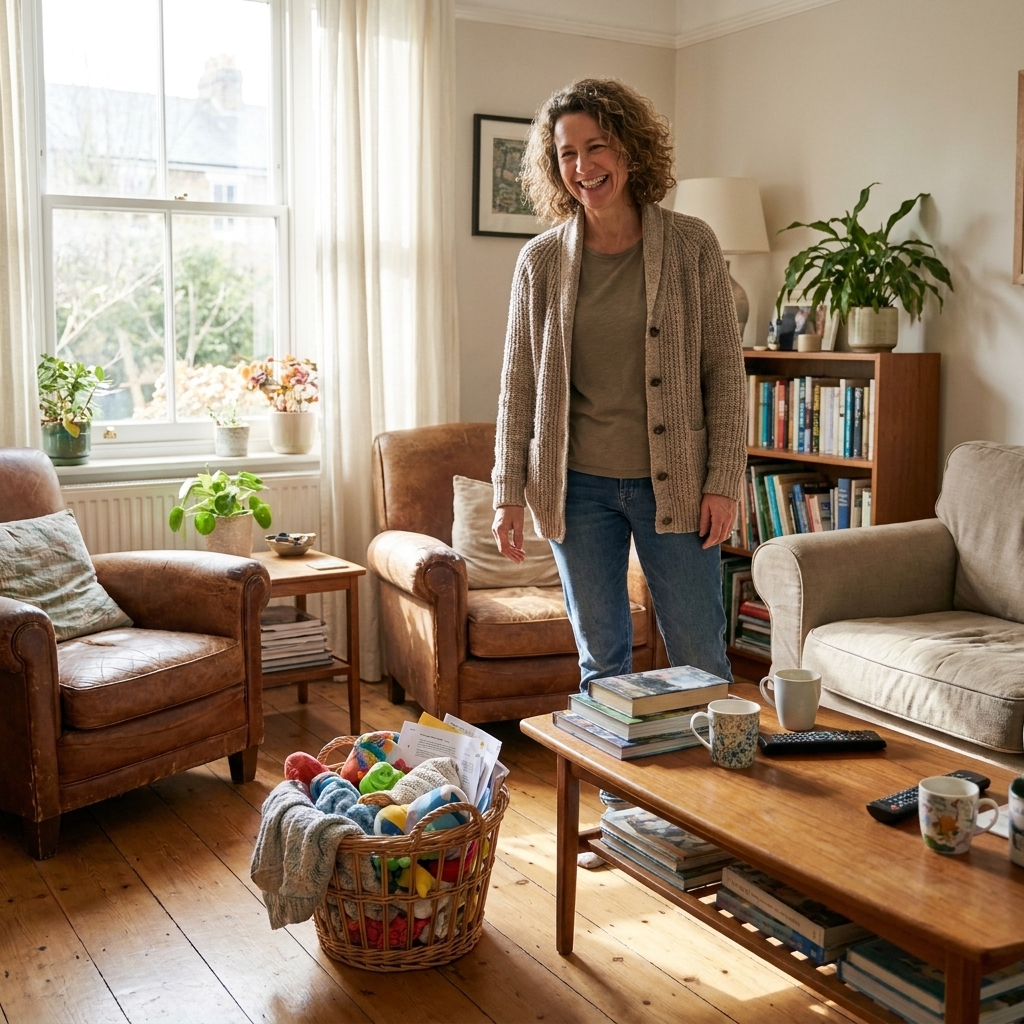
- One “put away” basket (laundry basket is perfect)
- One trash bag (or small trash can liner)
- One donate bag (optional but powerful)
The basket is the whole trick. It stops you from wandering around the house and forgetting what you were doing.
Minute 2 to 10: Clear the surface fast
Start with the most visible surface in your chosen zone: counter, coffee table, dining table, entry bench. Move quickly and make easy decisions only:
- Trash: wrappers, junk mail, broken bits, dried-up pens
- Put away: items that already have a home
- Relocate: items that belong in another room (into the basket)
- Donate: duplicates and “I do not even like this” items
If you touch it, decide it. Try not to create a new “neat pile” that will become tomorrow’s clutter.
Minute 10 to 12: Do one tiny container
Pick one small contained space in the same area:
- one drawer
- one shelf
- one bin
- one corner of a cabinet
Only aim for “less and functional.” Not perfect. If it needs dividers or bins, write it down and keep moving.
Minute 12 to 15: Reset and return
- Return what you can in three minutes. If you cannot finish, park the basket in a designated “to put away” spot for tomorrow.
- Take trash out if it is full.
- Put the donate bag by the door or in the trunk so it actually leaves.
A simple weekly rotation
If you get stuck deciding what to declutter, use a rotation. This keeps you from always “tidying the same two rooms” while the rest of the house quietly panics.
Weekly 15-minute plan
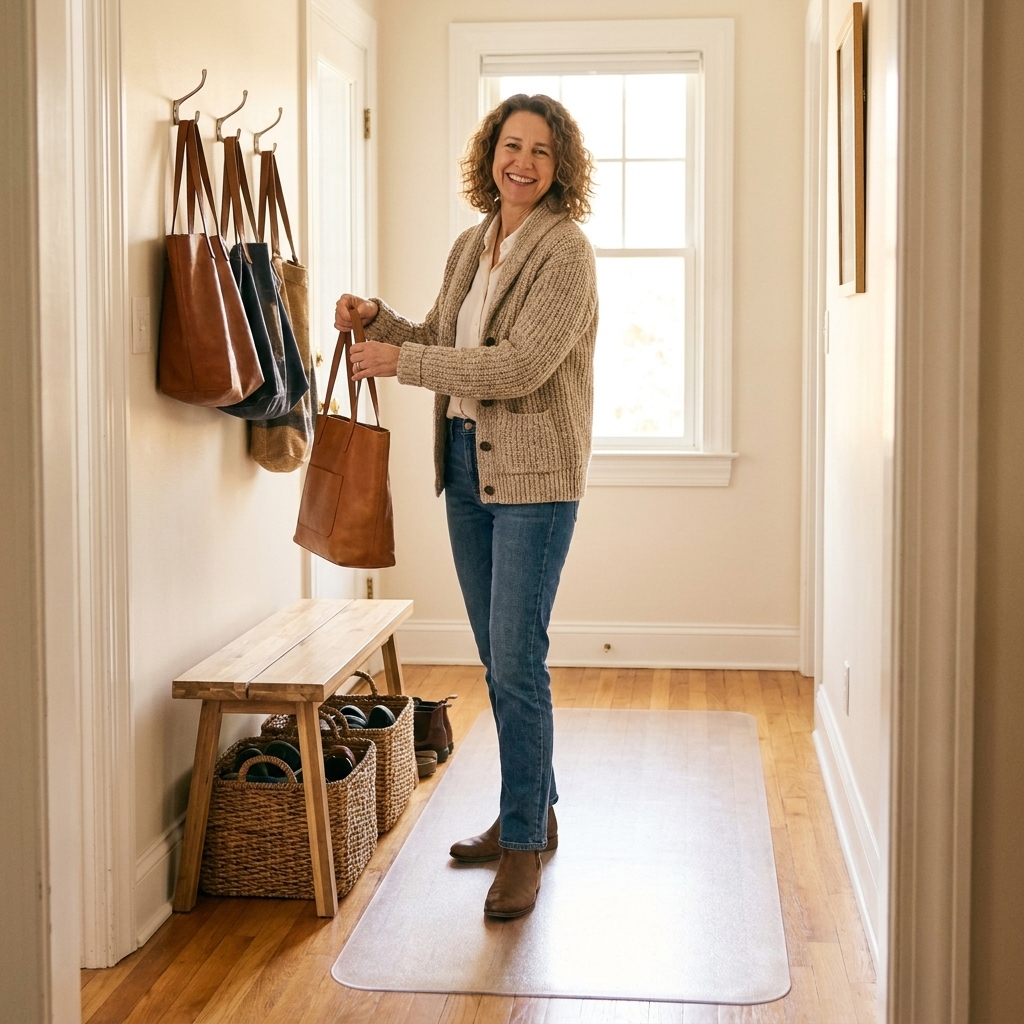
- Monday: Entryway drop zone (shoes, bags, mail)
- Tuesday: Kitchen counter and one drawer
- Wednesday: Living room surfaces and couch clutter
- Thursday: Bathroom counter and one cabinet shelf
- Friday: Bedroom nightstand and floordrobe sweep
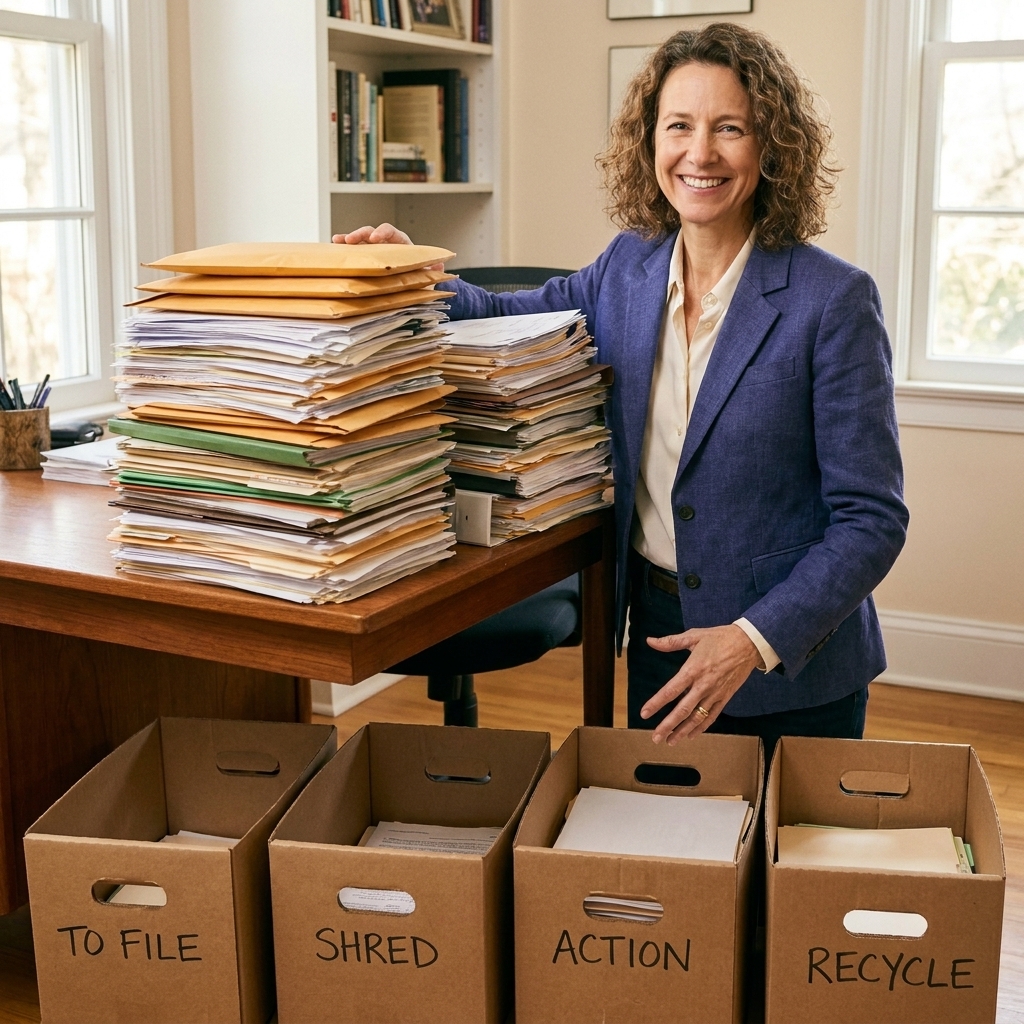
- Saturday: Paper and paperwork (just one stack)
- Sunday: Fridge shelf check or pantry “front row” reset
Feel free to swap days. The point is to touch each high-clutter zone regularly, not to follow rules like a robot.
Decision shortcuts
Decision fatigue is the thing that makes decluttering feel hard. These shortcuts keep you moving.
The 3-question filter
- Do I use this? (Not “might.” Actually use.)
- Do I like this? (Not “should.”)
- Would I buy it again today? (With today’s money and today’s space.)
If you get three no’s, it probably does not need more debate.
The two-touch rule
Clutter magnets are places where stuff lands and never leaves. For these zones, aim to touch an item twice maximum: pick it up, put it where it belongs. If it has no home, that is your note for later.
A tiny “needs a home” list
When you find items that clearly have no home (scissors, batteries, sunscreen), do not stop to redesign a drawer. Write it down: “batteries need a bin.” Later, during a longer session, you can add a small container or divider.
Room-by-room ideas
Kitchen
- Clear one counter section completely.
- Check one fridge shelf or door bin and toss anything that is clearly past its safe date or quality. When in doubt, follow label guidance and use your best judgment.
- Pick one “junk drawer cousin” and remove duplicates.
Living room
- Basket sweep: gather items that belong elsewhere.
- Clear the coffee table and put remotes in one container.
- Quick toy reset using one bin per category (blocks, dolls, cars).
Bedroom
- Floordrobe triage: hamper, hang, or donate.
- Nightstand: remove cups, old receipts, random cords.
- One drawer: socks or tees only.
Bathroom
- Counter reset: only daily essentials stay out.
- Under-sink: toss empties and consolidate duplicates.
- Quick towel check: donate scratchy extras you never reach for.
Entryway
- Sort mail immediately: trash, action, file.
- Contain shoes: only current pairs by the door.
- Empty bags: receipts, wrappers, mystery rocks from pockets.
Make it automatic
The easiest way to stick with a decluttering habit is to anchor it to something you already do.
- After dinner: 15-minute reset while the kitchen is already active.
- Before bed: quick basket sweep so you wake up to calmer spaces.
- Right after school pickup: everyone participates for 10 to 15 minutes.
- Right after morning coffee: same time every day, same timer.
If you have kids or roommates, name it something simple like “timer tidy.” The routine becomes normal faster when it is predictable.
If you miss a day
This routine is not fragile. Missing a day does not mean you “failed.” It means you are human and your home is being lived in.
- Do not double it. Two 15-minute sessions back-to-back can feel like punishment for a lot of people.
- Restart with the most visible surface. Clear wins build momentum.
- Use a rescue version: 5 minutes, trash only. That still counts.
Consistency comes from returning to the routine, not from never falling off.
Common edge cases
If you live in a small space
If “another room” is basically the same room, the basket still works. Use it as a quick sorter, then return items to their exact homes (or to one small “put away later” spot) when the timer ends.
If you are starting from buried surfaces
For the first few days, simplify the goal: trash and obvious dishes first, then one clear surface. Once you can see your main surfaces again, switch to the full routine.
If you share the home
Stick to communal surfaces and your own items unless you have a clear agreement. Decluttering is easier when nobody feels “sorted.”
Sunday upgrade
If you want that peaceful Sunday afternoon reset feeling without losing your whole weekend, do this once a week:
- 15 minutes: daily routine as written
- 15 minutes: one mini project from your “needs a home” list
- 15 minutes: donation drop-off prep (bag in the car, schedule pickup, or place by the door)
That is it. Forty-five minutes total. Many people are surprised by how much lighter the week feels.

Quick FAQ
Is 15 minutes really enough?
Yes, because clutter is usually the result of lots of small decisions avoided. Daily 15-minute sessions handle the small stuff before it becomes a major event.
Should I declutter before I buy organizers?
Absolutely. Declutter first, then buy containers for what is left. Otherwise you end up with beautifully stored clutter.
What if my family keeps messing it up?
Make the system easier, not stricter. Add a basket where things land, hooks where bags drop, and a small tray for the daily essentials. Then keep doing your 15 minutes. You are creating a tide that lifts the whole house.
What is the best decluttering basket?
A basic laundry basket or tote that is easy to carry and hard to ignore. Clear bins are great for storage, but for a daily routine, you want lightweight and quick.
Your first week
If you want to start today, here is the plan:
- Day 1: Clear one surface (counter, table, or entry bench).
- Day 2: One drawer in the same area.
- Day 3: Entryway drop zone sweep.
- Day 4: Bathroom counter reset.
- Day 5: Living room basket sweep.
- Day 6: Paper stack triage (trash, action, file).
- Day 7: Quick fridge shelf check.
Set the timer, keep it small, and stop on time. The magic is not in doing it perfectly. The magic is in doing it again tomorrow.