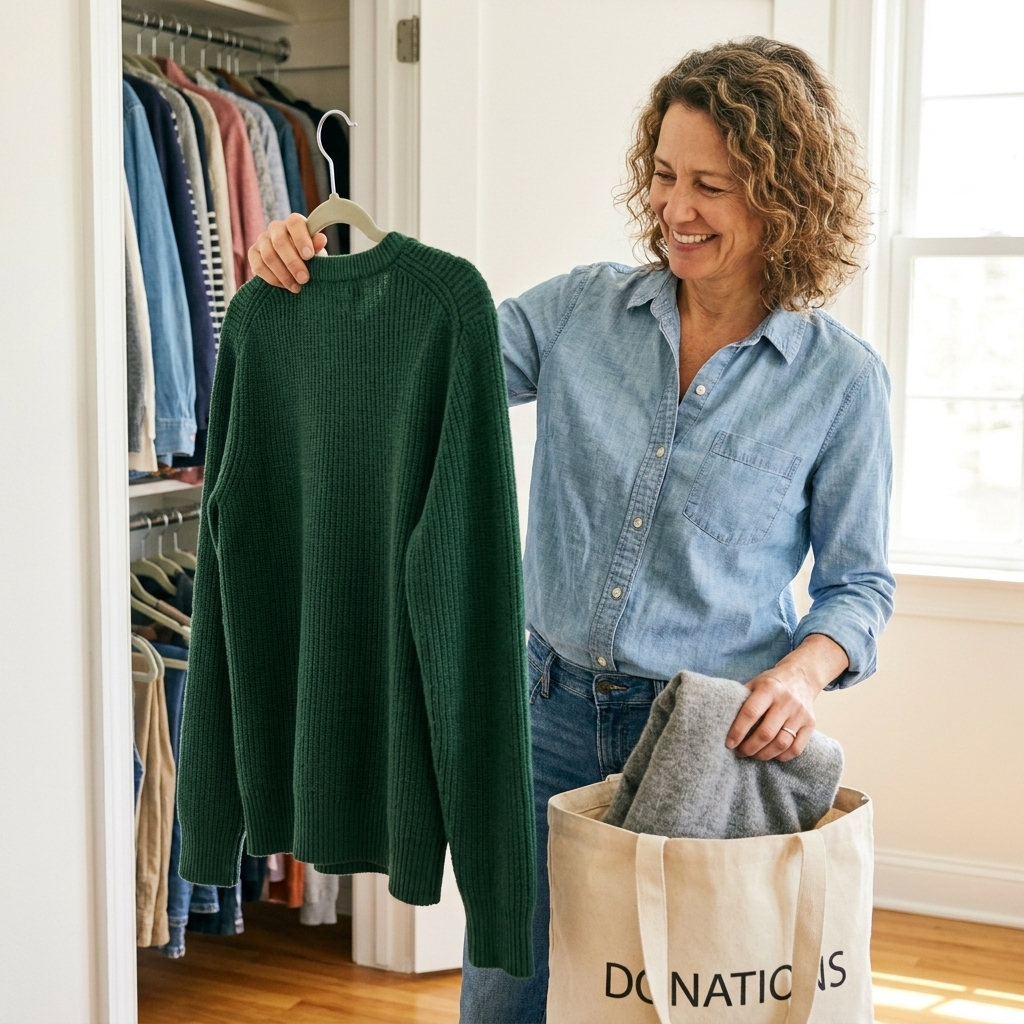
Confession from a reformed messy person: most clutter does not “appear.” It arrives in a bag.
When your home is finally feeling calmer, one enthusiastic trip to a big-box store or a late-night scroll through home gadgets can undo a month of decluttering. Not because you did anything “wrong,” but because impulse buying is basically clutter with a shipping label.
The good news is you do not need iron willpower or a no-fun budget. You need a few simple friction points and a routine that makes mindful buying the default.
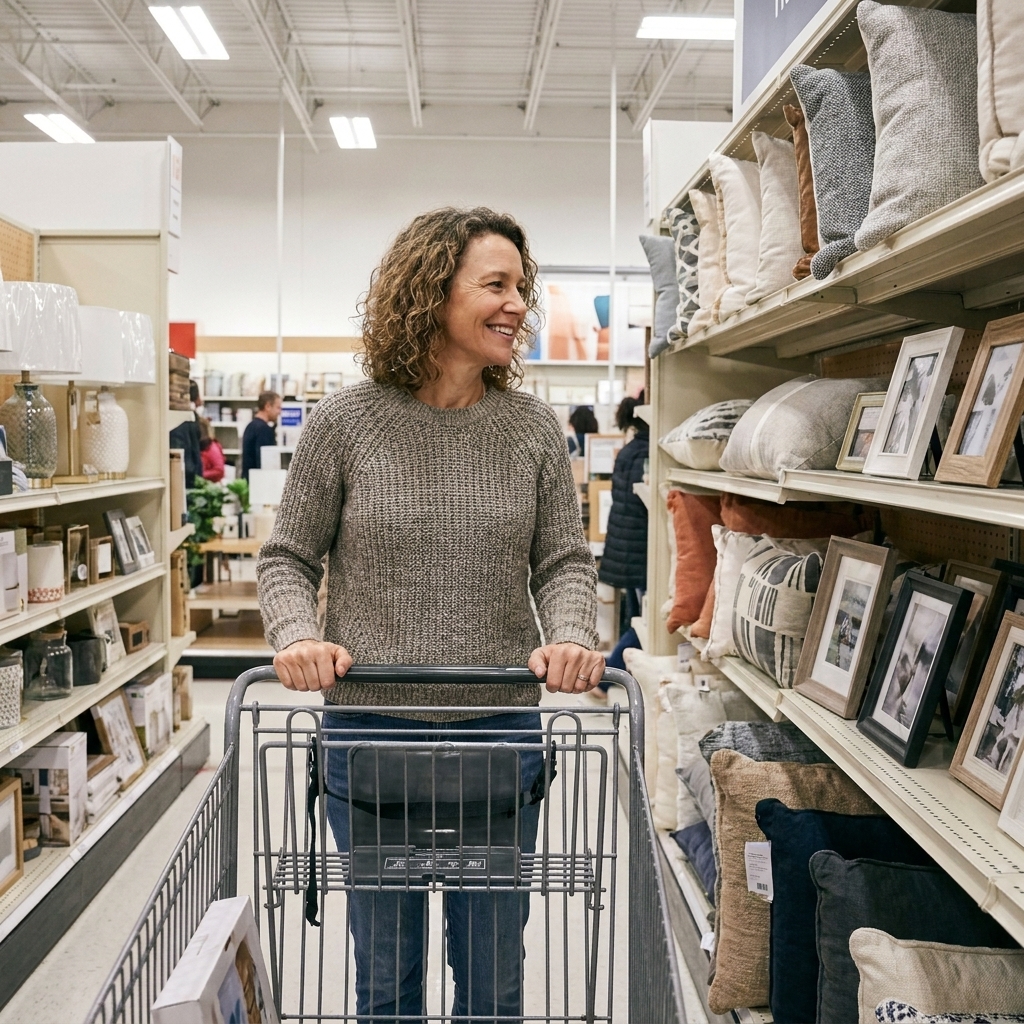
Why impulse buying creates clutter
Impulse buying is rarely about the item. It is about the feeling: fresh start energy, “my life will be easier,” a dopamine hit, or the fantasy version of you who always decants pasta into matching acrylic containers.
Here is what makes home-related impulse buys extra clutter-prone:
- They are often “aspirational solutions.” A new organizer, gadget, or decor piece promises a quick fix, but it still needs a place to live.
- They multiply. One candle leads to a tray, which leads to matches, which leads to a new shelf because now the tray needs a home.
- They sneak past your clutter radar. They look “useful” or “pretty,” so they do not register as clutter until they are living on the counter.
The mindset shift: you are shopping for space
This is the sentence that finally changed my buying habits: Every new item costs space, not just money.
Space is a limited resource. So before you buy anything for your home, ask:
- Where will this live on a normal Tuesday, not on a styled shelf?
- What am I willing to remove to make room for it?
- Will this reduce friction, or add one more thing I have to manage?
If you cannot answer the “where will this live” question in under ten seconds, it is a good sign you are not buying an item. You are buying a future decision you are postponing.
Know your impulse-buy triggers
Impulse buying becomes easier to interrupt when you know what sets it off. A few common triggers I see over and over (including in my own life):
- Stress shopping: you have had a day and “deserve a treat.”
- Scrolling shopping: you open an app for one thing, then suddenly your cart is full.
- Sale panic: it is discounted, so it feels irresponsible not to buy it.
- Clutter guilt: you buy organizers instead of dealing with what you already own.
- Identity shopping: you buy items for the person you want to be, not the life you are actually living.
Try this for one week: when you feel the urge to buy, jot one sentence in your notes app: “I want to buy this because…” Patterns often show up fast.
Pause systems that work
Willpower is unreliable. Systems are dependable. These are my favorite practical ways to add a tiny pause between wanting and buying.
1) Use a 48-hour cart rule
If it is not a true necessity, it sits in your cart for 48 hours.
- If you still want it after 48 hours, move to the next step: where will you store it between uses?
- If you forget it exists, congratulations. You just avoided future clutter.
2) Keep a “Home Needs List”
This is a short, boring list of what your home actually needs to function better, like:
- Replace cracked measuring cup
- One extra laundry basket for upstairs
- Command hooks for the entry drop zone
When you are tempted by something shiny, check the list. If it is not solving a real problem you already identified, it is probably a no.
3) Use one-in, one-out for clutter magnets
Some categories are basically clutter factories. For many households, these include:
- Throw pillows and blankets
- Mugs and water bottles
- Storage bins and baskets
- Holiday decor
- Kids’ art supplies and toys
If you bring one in, one has to leave, same day. Not “eventually.” Same day.
A quick example
Here is what this can look like in real life:
- You see a $25 basket online and feel the “my entryway will finally be cute” itch.
- You add it to your cart, then wait 48 hours.
- You check your Home Needs List and realize what you actually need is two wall hooks.
- You decide: if you still want the basket, it has to replace the one you already own. No new pile, no new problem.
Questions to ask before you buy
I keep these in my head like a little checklist. It is not about deprivation. It is about buying things that earn their keep.
The 10-second home test
- Do I already own something that does this? If yes, you probably do not need another.
- Will this live where I will use it? If no, it is likely a pass.
- Is this solving a recurring problem? If it only solves a once-a-year annoyance, pause.
- Is this a “container” purchase? If you are buying storage before decluttering, declutter first.
The future-me honesty check
Ask: Will I maintain this?
- Will you hand-wash that trendy water bottle?
- Will you decant snacks weekly into 12 tiny jars?
- Will you actually hang the wall hooks, or will they live in a drawer for two years?
If the item requires a version of you that does not exist, it is not a good purchase.
Buy organizing tools the right way
Organizing purchases can be helpful, but only in the right order. My rule: declutter first, measure second, buy last.
Step 1: Declutter the category
Empty the drawer, shelf, or cabinet. Decide what stays. You cannot organize your way out of owning too much.
Step 2: Measure and set the goal
Write down:
- Interior width, depth, and height
- What must fit
- What you want to make easier (grab snacks, pack lunches, find batteries)
Step 3: Buy fewer containers
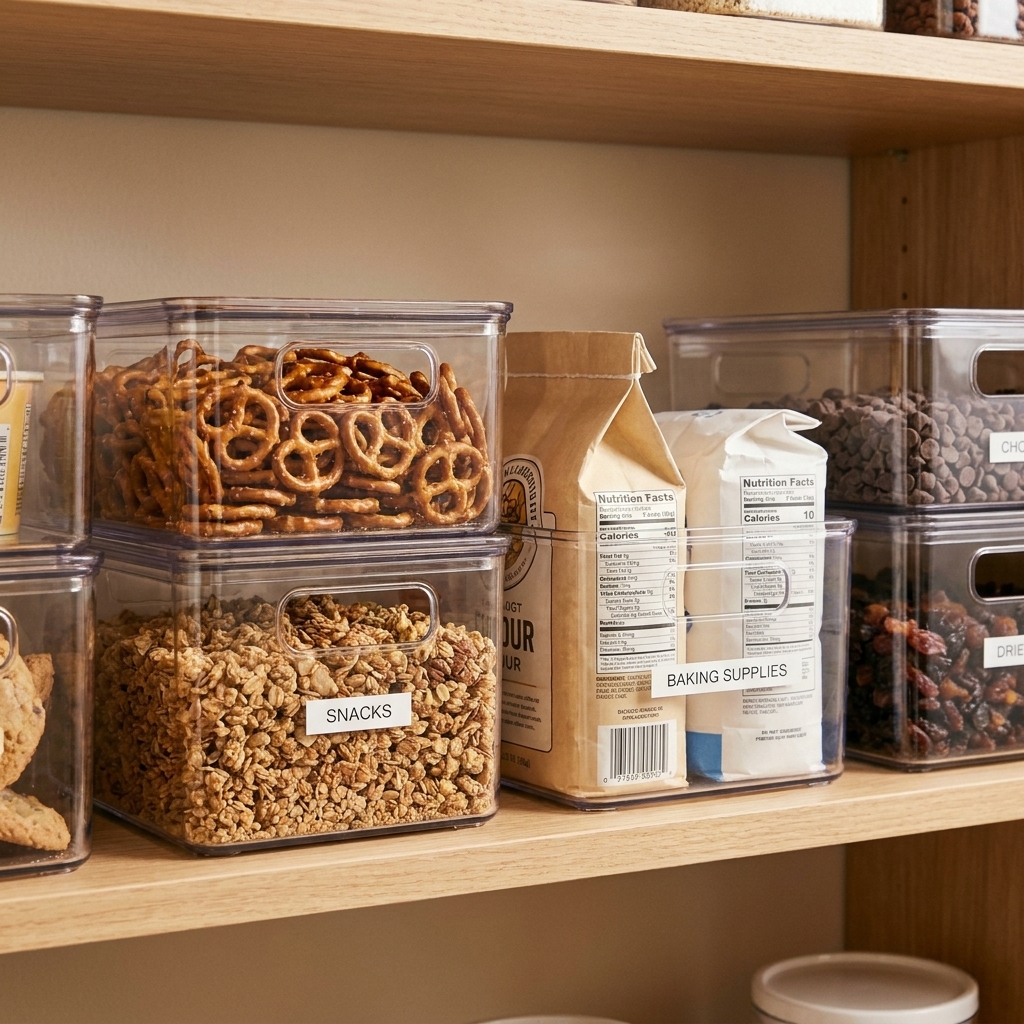
This is where my love for clear acrylic bins and inexpensive drawer dividers comes in, but only when they are doing a specific job. If you are buying “just in case,” it is not organizing. It is pre-clutter.
Boundaries that make buying harder
Make buying inconvenient. Not impossible, just inconvenient enough that the moment passes.
Try one this week
- Unsubscribe from retail emails and texts. If you never see “flash sale,” you will not have to resist it.
- Remove saved cards from shopping apps. Adding a couple extra steps can meaningfully cut down on impulse purchases.
- Delete one shopping app from your phone. You can still buy from a browser if you truly need to, but the friction helps.
- Set a weekly shopping window. One day a week you can purchase household items, ideally after reviewing your needs list.
- Adopt a “no decorative storage” rule. If it is a cute basket with no assigned job, it will become a junk collector.
If you already bought it
It happens. You are human. The goal is not perfection, it is shorter recovery time.
The 15-minute rescue plan
- Unbag it immediately. Bags are how clutter hides and multiplies.
- Decide its home today. If it has no home, it is a return candidate.
- Do a fast swap. If it is replacing something, remove the old item right now.
- Set a return deadline. Put a reminder in your phone for two days before the return window closes.
My personal rule: if I feel even mildly “meh” about an item within 24 hours, I return it. “Meh” is future clutter.
If returning is not realistic, consider donating the item unopened, offering it in a local buy-nothing group, or gifting it intentionally to someone who will actually use it. The goal is to keep one impulse buy from turning into a long-term pile.
A routine that sticks
Long-term change comes from repetition, not motivation. Here is a simple routine you can run weekly.
Sunday reset plus shopping review
During your Sunday afternoon house reset (my favorite kind of calm), add these two steps:
- Scan the hot spots. Entryway, kitchen counter, dining table. If new items are piling up, that is a signal to tighten buying boundaries.
- Update your Home Needs List. Write down what would actually make the week easier.
Then, when you shop, you shop from the list. Not from vibes.

Common impulse buys and better swaps
If you love the feeling of “refreshing” your home, you can still have that. Just choose upgrades that do not create new piles.
- Instead of new decor: rotate what you already own, or clear one surface completely.
- Instead of another candle: use what you have until you can see the bottom of two jars.
- Instead of a new organizer: remove 20 percent of what is in the space and see if the problem disappears.
- Instead of “just in case” kitchen tools: set a rule that new tools must replace an existing one.
- Instead of more baskets: use one open bin as a temporary holding zone, then empty it daily for a week to identify what is really happening.
FAQ
How do I stop buying organizers I do not need?
Make a rule that you only buy organizers after you declutter and measure. If you cannot name exactly what items the organizer will hold and where it will live, it is a no. Also, be suspicious of “pretty storage.” It often becomes permission to keep extra stuff.
What if impulse buying is my main hobby or stress relief?
Start by replacing the habit, not just removing it. Try a low-clutter treat: borrowing library books, a fancy coffee at home, a walk while listening to a podcast, or a small budget that must be spent on consumables (like flowers or a special snack) instead of objects.
Is it okay to buy something if it makes me happy?
Yes. Happiness is allowed. The key is to make sure it is not stealing peace from your future self. If it has a home, fits your budget, and you genuinely want it after a pause, buy it and enjoy it on purpose.
What if my spending feels hard to control?
If shopping urges feel intense, secretive, or financially scary, you are not alone and you do not have to white-knuckle it. Consider talking to a mental health professional or a financial counselor for support, especially if anxiety, ADHD, or compulsive spending is part of the picture.
A gentle challenge
Pick one tiny boundary and try it for seven days:
- 48-hour cart rule
- Unsubscribe from retail emails
- One-in, one-out for mugs and water bottles
- Buy only from your Home Needs List
Your home does not need you to become a different person. It just needs you to stop inviting clutter in through the front door.