If your laundry room is small, it has one special talent: it attracts piles. Detergent bottles migrate. Socks form little unions behind the dryer. And somehow, clean clothes still end up living in a basket for three days.
I am not naturally tidy, so I have to build systems that are easy to follow when I am tired, busy, and carrying a mountain of towels. The good news is that tight laundry spaces can be incredibly efficient when you go vertical and you set up sorting that prevents the floor pile in the first place.
Start with zones
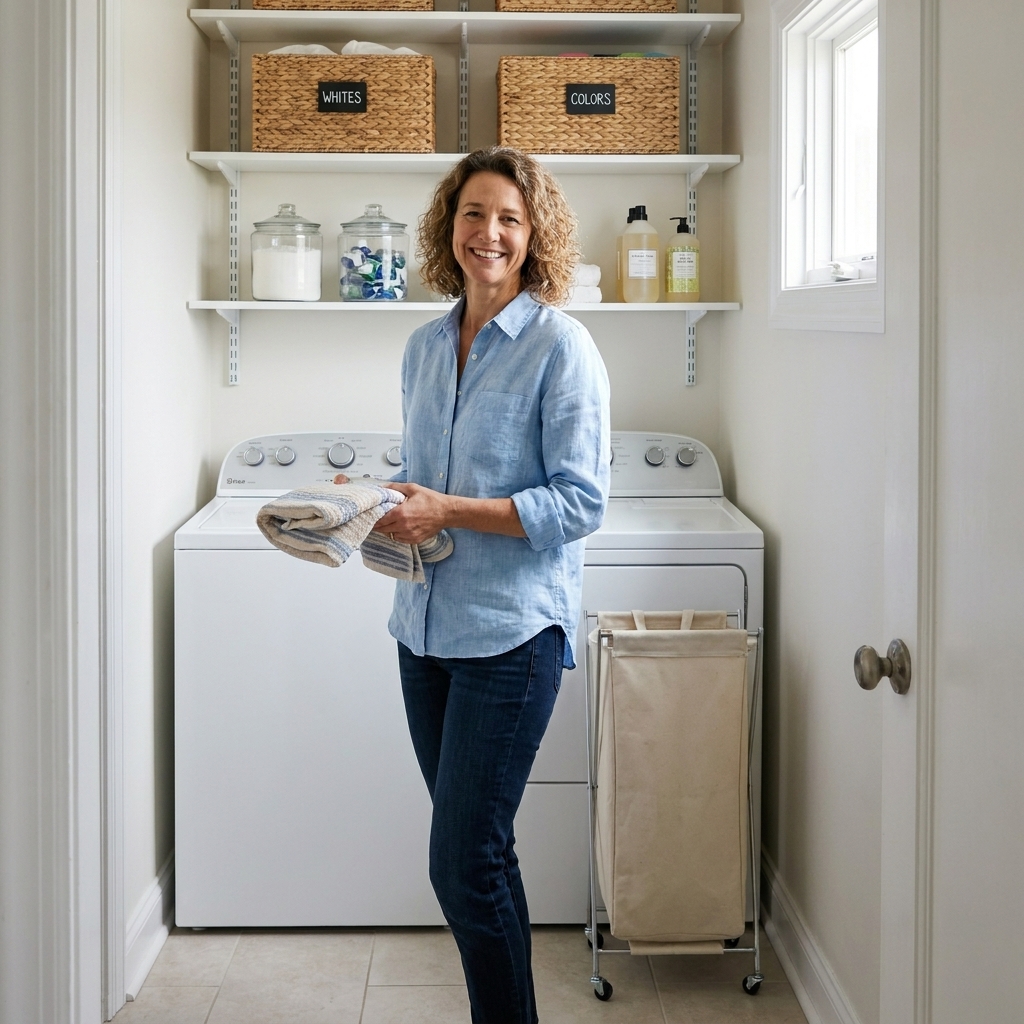
Before you buy a single bin, decide what your laundry room needs to do. In a small footprint, every item should earn its space.
- Dirty in: where clothes land and how they get sorted
- Wash: detergent, stain tools, measuring scoop, dryer sheets or wool balls
- Dry: machine drying plus a place for air-dry items
- Clean out: basket or folding spot, plus a quick path back to bedrooms
Once you have these zones, the storage choices get clearer. You are building a simple, repeatable flow.
Vertical storage that works
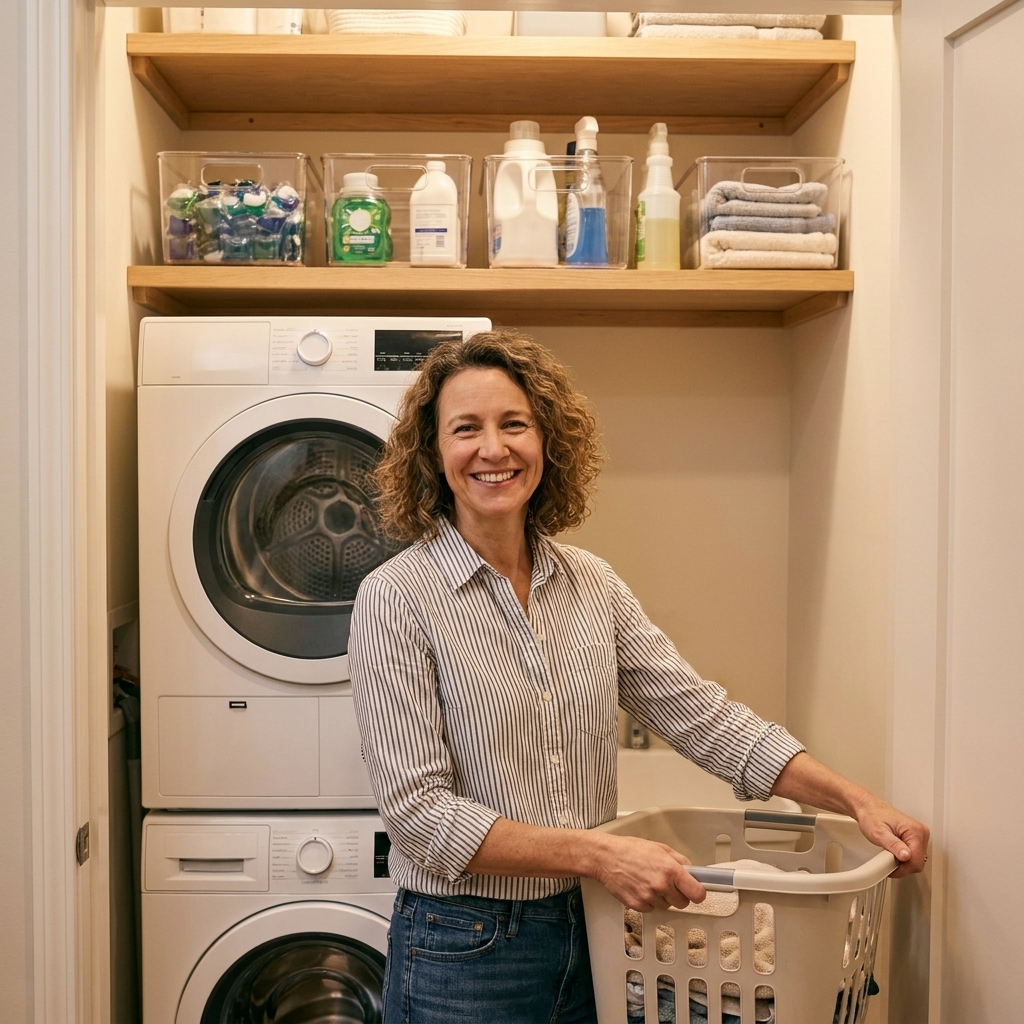
1) Wall shelves above the machines
This is the easiest square footage you will ever “find.” One or two sturdy shelves above the washer and dryer can hold almost everything that usually clutters the tops of machines.
- Keep daily-use items on the lowest shelf (detergent, stain spray).
- Use lidded bins for backstock (extra pods, refills, microfiber cloths).
- Put rarely used items up high (hand-wash soap, upholstery cleaner).
Quick setup tip: Shallow shelves (about 6 to 10 inches deep) hold what you need without feeling like they are looming over you. Keep heavy liquids low, and use studs or the right anchors for the wall so the shelf does not become a surprise hazard.
My reformed-messy rule: If it leaks, it lives in a bin. Laundry products are sneaky drippers.
2) Peg rails and hooks
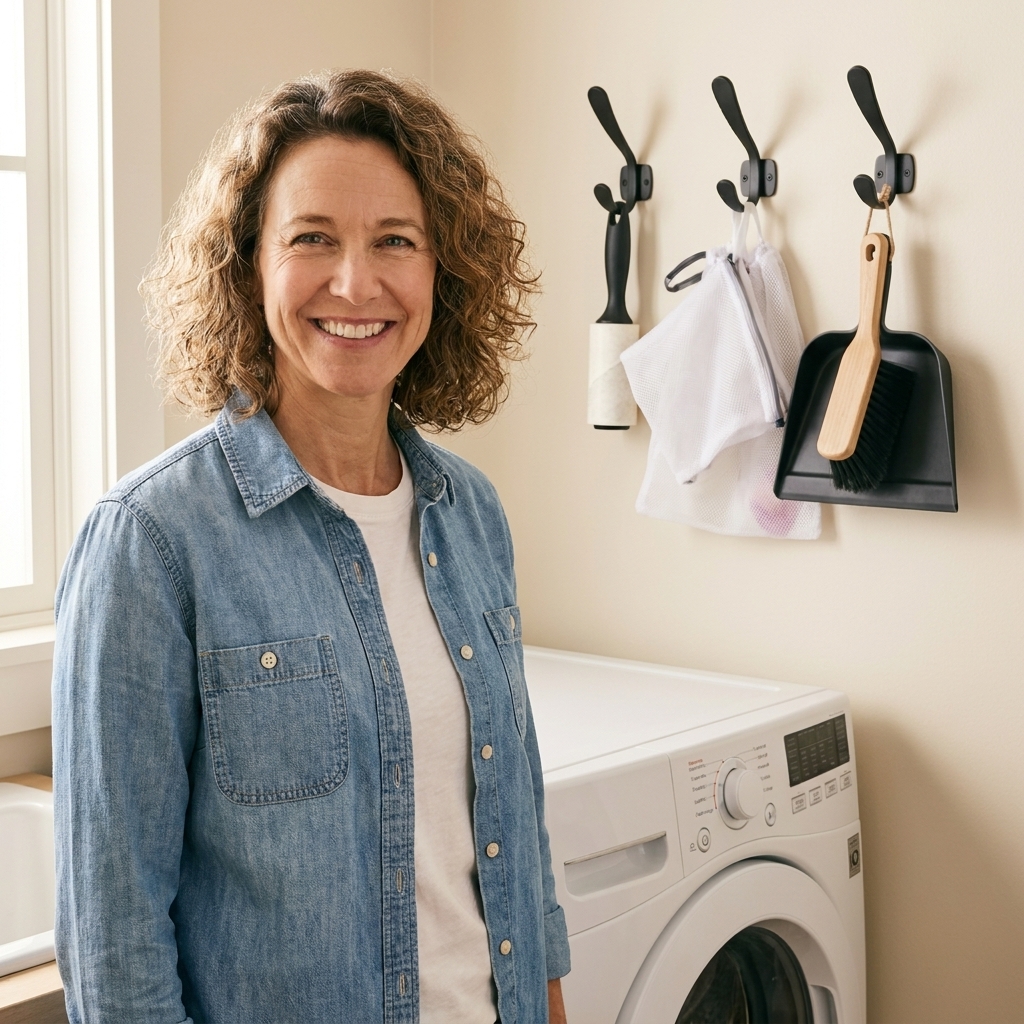
Hooks are the underrated heroes of tight rooms. They store the awkward stuff that never fits nicely in cabinets.
- Lint roller
- Mesh delicates bags
- Handheld vacuum
- Apron or cleaning gloves
- Dustpan and small brush
If you can add a short peg rail near the door, you will stop tossing these items onto the machines “for now.”
3) Door-mounted storage
If your laundry room has a door, you have a free vertical panel. Over-the-door racks are great for items that are light and narrow.
- Stain sticks and stain pens
- Small spray bottles
- Clothespins
- Extra dryer balls
- Mini sewing kit for popped buttons
Tip: Choose a rack with a low profile so the door closes easily. If the door sticks, you will stop using the system. Ask me how I know.
Also: Do not overload it. A door rack packed with heavy bottles can stress hinges and get annoying fast.
4) Magnetic organizers (if your machines allow it)
When wall space is limited, you can sometimes use the side of the machines. Strong magnetic caddies can hold:
- Stain spray
- Measuring scoop
- Small scrub brush
- Lost-sock cup (yes, really)
Two quick checks: test the surface with a magnet first (some panels are not magnetic), and avoid blocking vents, controls, or service access. Keep it light since vibration is real.
Wall-mounted drying racks
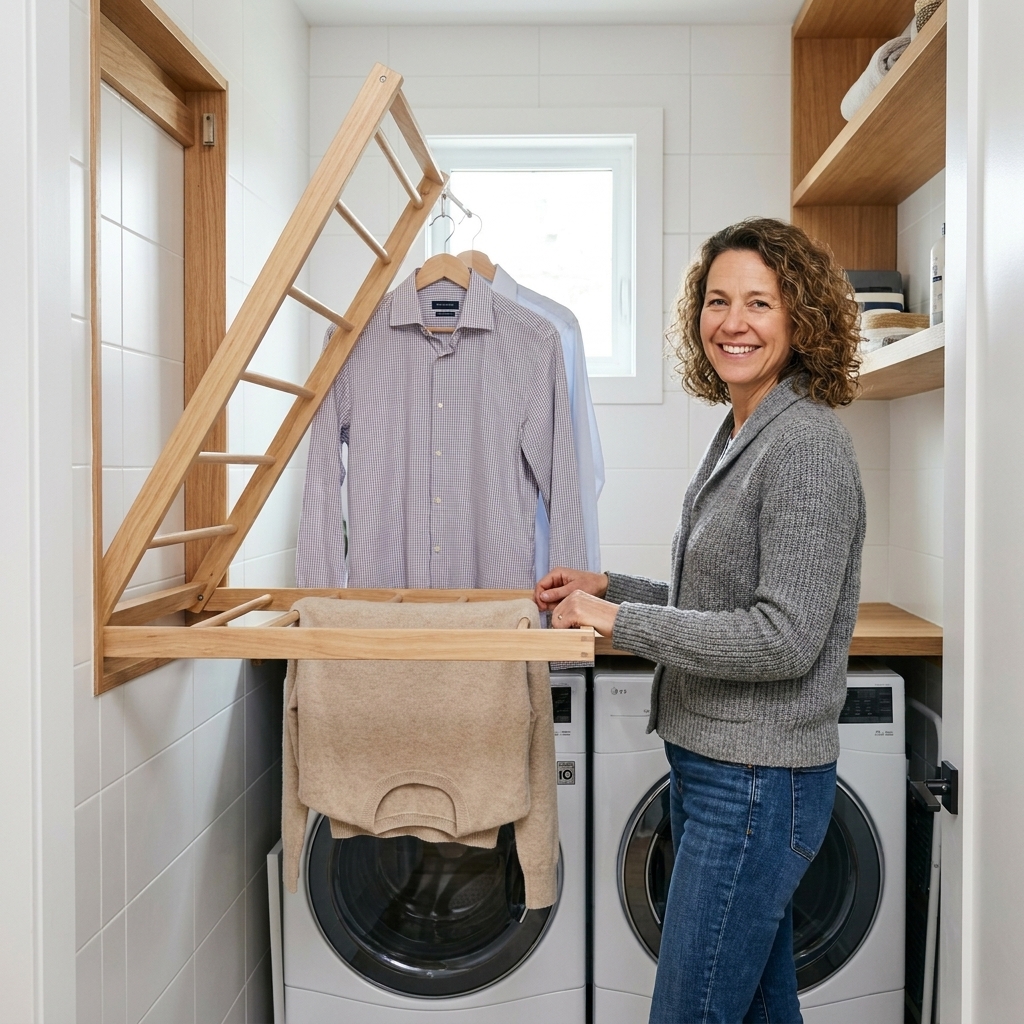
Air-dry laundry is a common reason small laundry spaces turn into obstacle courses. A good wall-mounted drying solution should fold away flat and open in seconds.
Best options
- Folding wall rack: opens like an accordion, folds nearly flat when not in use.
- Retractable clothesline: great for a few items, hides away in a small casing.
- Drop-down drying rack: mounts high and pulls down when needed (amazing if you have kids who like to swing on things).
Placement that stays out of the way: mount it on the wall opposite the machines, or above a narrow cart so you can still roll the cart out when the rack is open.
Safety note: Make sure it does not interfere with appliance doors, dryer vent access, or airflow. Install into studs or use the manufacturer-approved anchors and weight limits.
Narrow rolling carts
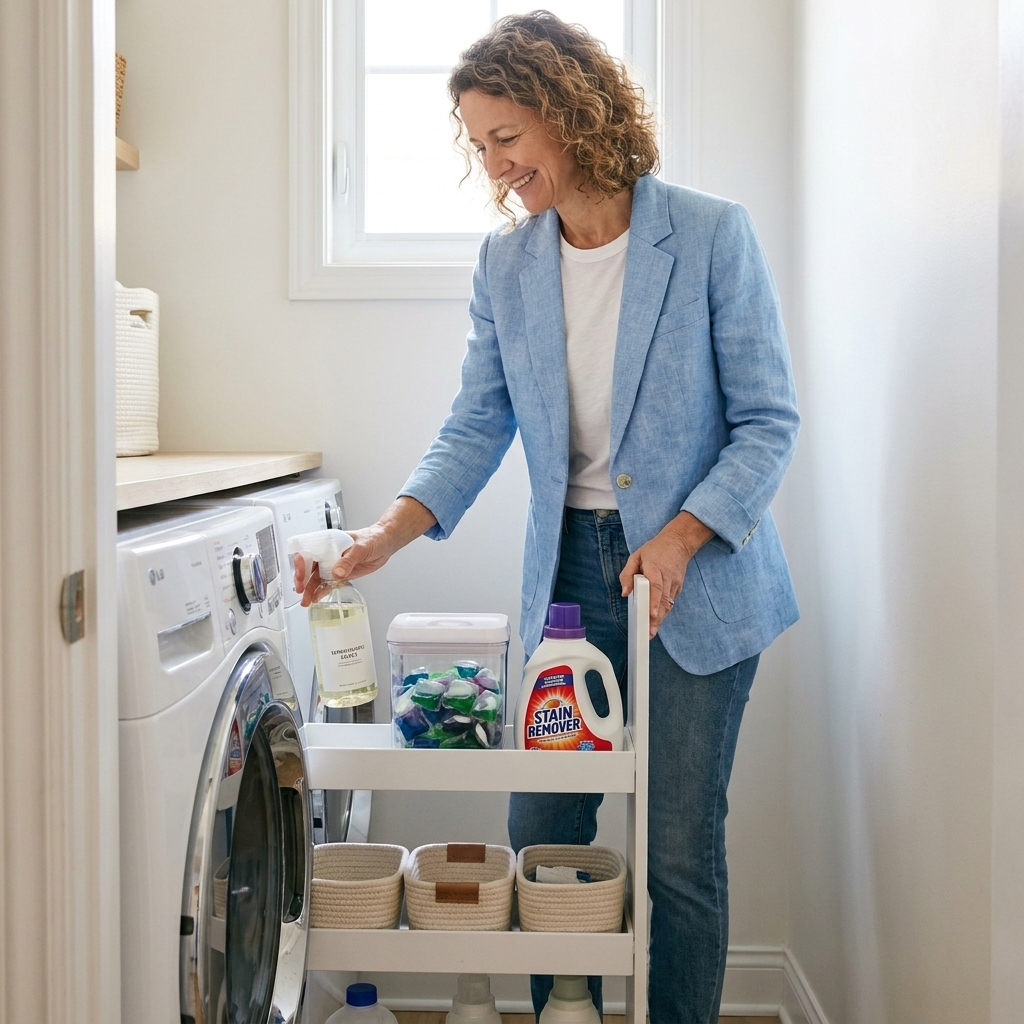
If you have a slim gap beside a washer or dryer, you may have storage. The key is clearance: do not pinch hoses or cords, do not block vents, and leave enough room for vibration and airflow as your appliance manufacturer recommends.
When it fits safely, a narrow rolling cart is perfect for small items that would otherwise become countertop clutter.
What to store
- Pods or detergent sheets
- Oxi booster
- Stain removers
- Delicates bags
- Measuring spoons for powder
Make it frictionless: Put your most-used products on the top shelf, and backstock on the bottom. If you have to dig, you will abandon it.
Sorting systems that stop piles
The best small laundry setups do not rely on willpower. They rely on sorting that happens automatically, before clothes ever hit the floor.
Option 1: Two-hamper system
This is my favorite for busy households because it is easy to maintain.
- Hamper A: lights and everyday clothes
- Hamper B: darks, towels, and everything else
Why it works: you can start a load with almost no extra steps, and you still avoid the “everything pile.”
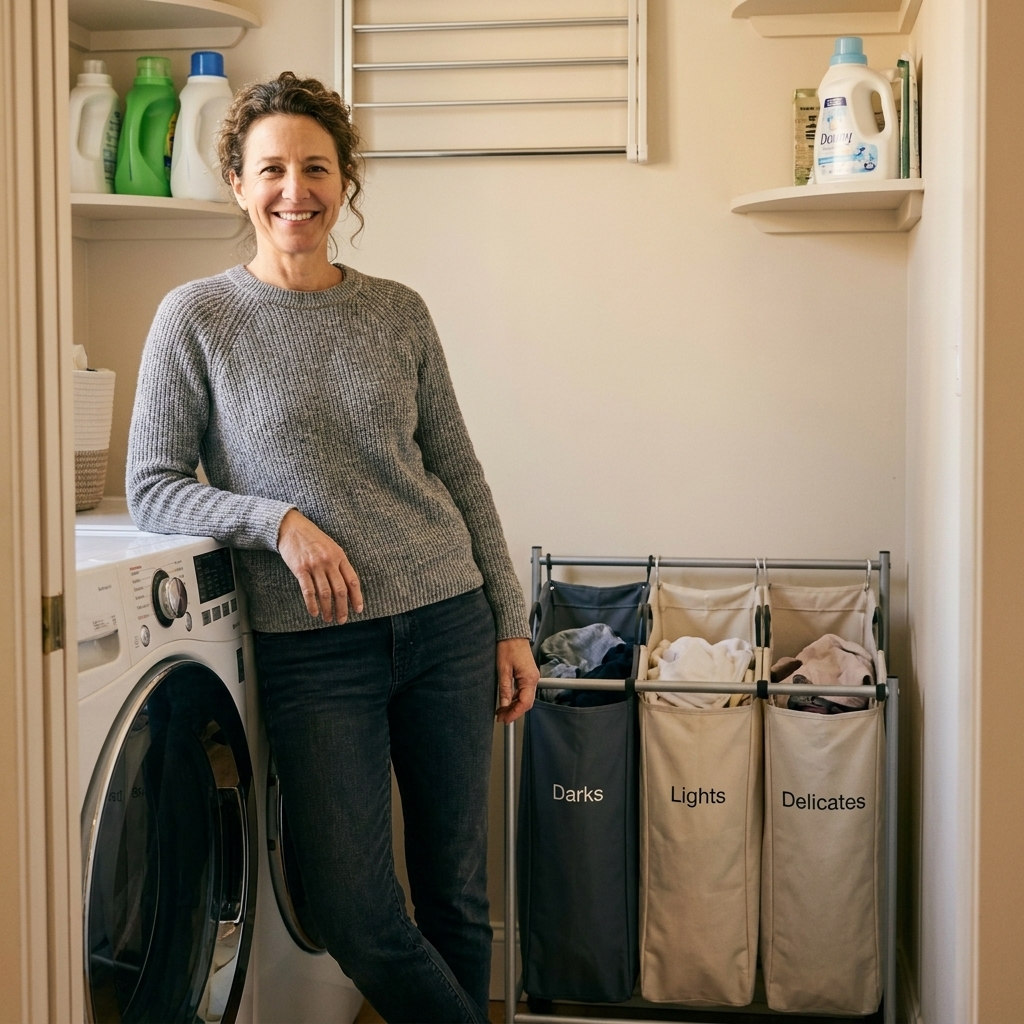
Option 2: Three-bag sorter
- Lights
- Darks
- Towels and sheets
Reality check: Only do three bags if you truly run enough loads to justify it. Extra categories become extra clutter if they sit half-full for weeks.
Option 3: Stackable baskets for “not dirty, not clean”
If your household creates the classic “worn once” clothes pile, give it a designated home that is not a chair.
- Use two stackable open bins: one for re-wearable tops, one for jeans and sweatshirts.
- Keep them near bedrooms if possible. If they live in the laundry room but the pile happens in the bedroom, the system will fail.
This is not about perfection. It is about containing the chaos in a way that does not annoy you daily.
Folding and clean-out setups
Most small laundry rooms do not have space for a full folding table, but you can still create a clean-out station that keeps baskets from camping on the floor.
Fold-down wall table
A wall-mounted drop-leaf table gives you a temporary folding surface. When you are done, it folds flat and disappears.
- Mount it at a comfortable height.
- Store a small basket underneath for mismatched socks.
Install smart: This is a place to use studs or heavy-duty anchors, and to follow the table’s weight rating. Fold-down tables are wonderful, but only when they are properly secured.
Countertop over front-load machines
If you have side-by-side front-load machines, a simple countertop bridge gives you a permanent folding spot. It also stops the “random item shelf” problem because now you have one clear surface with a job.
Clearance check: Make sure the countertop does not block detergent drawers, controls, or needed ventilation space.

Make products smaller
Bulky packaging is a space thief. In a small laundry room, decanting is not about making things pretty. It is about making them fit.
Easy swaps
- Detergent sheets instead of large jugs
- Clear airtight containers for pods or powder (with the measuring scoop inside)
- Refill pouches stored in a bin up high
Safety note: If you decant pods or powder, use a container with a secure lid and keep it out of reach of children and pets. Some manufacturers recommend keeping products in original packaging for dosing and safety details, so keep the label or instructions handy and follow the product guidance for storage.
10-minute weekly reset
This is the maintenance routine that keeps your systems from slowly collapsing.
- Clear the tops of machines. Put stray items back into their bins or hooks.
- Empty lint. Check the lint trap and the floor around the dryer.
- Do a quick product audit. Toss empty bottles, wipe drips.
- Reset sorting. Make sure hampers are open and bags are not overflowing.
- Return the tools. Stain spray, delicates bags, and the missing-sock cup go back to their homes.
When you do this weekly, your laundry space stops being the place you avoid.
Layout ideas
Hallway or closet laundry
- Use stacking machines if possible.
- Add one shelf above the unit plus a door rack.
- Choose a folding wall drying rack instead of a floor rack.
Long and narrow room
- Go for shallow shelves so the room feels less crowded.
- Use hooks and a slim cart instead of bulky cabinets.
- Mount drying solutions on the longest open wall.
Bathroom laundry
- Keep laundry products in lidded bins to avoid moisture issues.
- Use magnetic caddies (if the surface allows) or a narrow cart that can roll away.
- Choose a retractable clothesline for air-dry items.
Extra bathroom caution: Store chemicals away from heat and humidity when you can, and do not overload outlets. If you are dealing with cords near a sink or water source, make sure the setup is appropriate for a GFCI-protected area.
FAQ
What is the best way to organize a very small laundry room?
Use vertical space first (shelves, hooks, door storage), then add one slim mobile option (a narrow rolling cart, if you can do it without blocking hoses or airflow). Finish with a sorting system that matches your habits, usually two hampers or a three-bag sorter.
How do I keep the top of my washer and dryer from becoming a clutter shelf?
Give everything that lands there a home within arm’s reach. A low shelf with two bins (daily products and backstock) plus one hook rail for tools makes it easier to put items away than to set them down.
What drying rack works best in a tight space?
A folding wall-mounted drying rack is usually the best balance of capacity and fold-away convenience. If you only air-dry a few items at a time, a retractable clothesline is even more space-friendly.
Do I need to sort laundry if I am short on space?
You do not need a complicated system, but you do need a system. Even a simple two-hamper setup prevents the all-in-one pile that takes over small rooms fast.