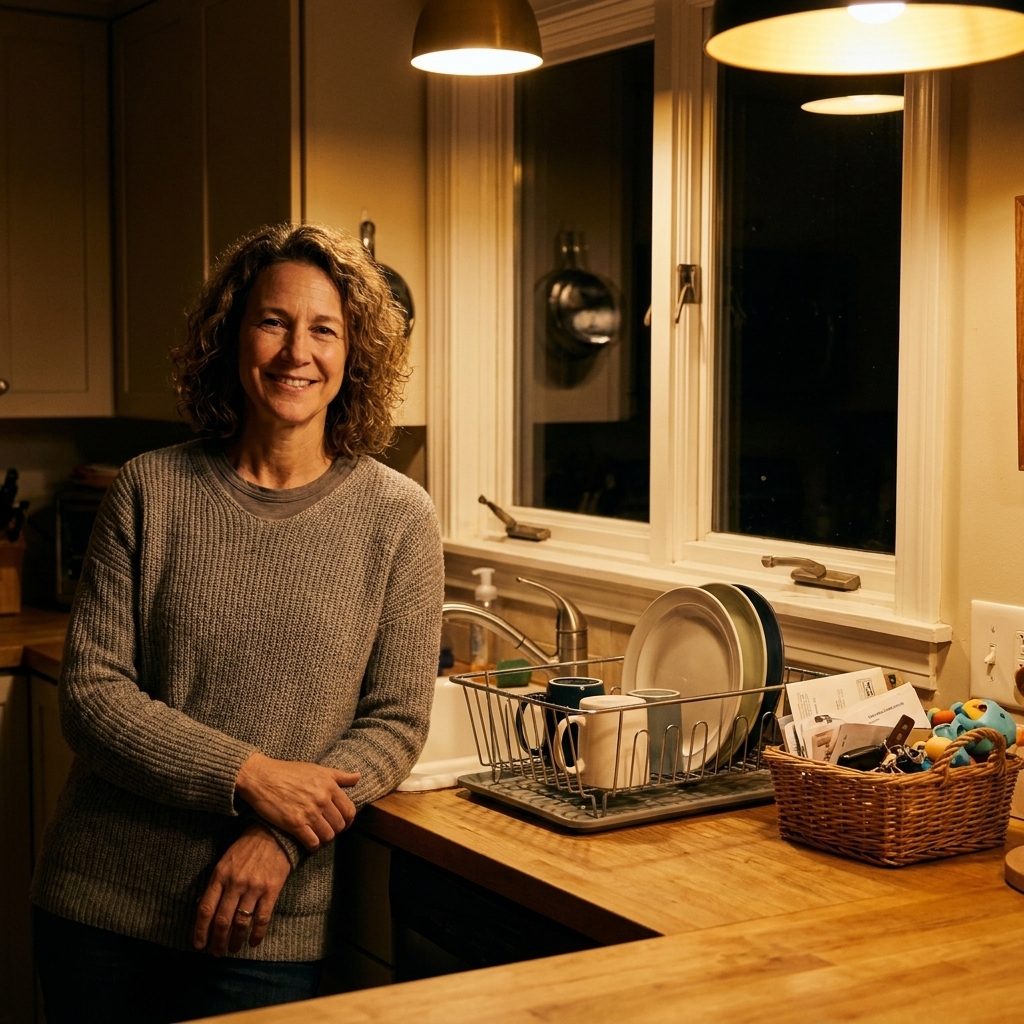
If you have ever thought, I swear I just cleaned, you are my people. I am not naturally tidy. I am a reformed messy who learned organization the hard way: tiny tasks do not stay tiny. They quietly merge into a counter pile, a laundry chair, and a Sunday reset that eats your entire afternoon.
The good news is you do not need a whole new system to fix that. You need a microhabit that stops clutter creep in its tracks.
What the 2-minute rule is
The 2-minute rule is simple: If something takes two minutes or less, do it right now.
It is often credited to David Allen’s Getting Things Done, and while it shows up in productivity advice, it is pure gold for home organization because in many homes, clutter is not caused by one big event. It is caused by hundreds of tiny delays:
- Leaving the mail “for later”
- Setting a cup in the sink instead of the dishwasher
- Dropping shoes next to the shoe rack instead of on it
- Tossing a random item on the stairs to take up “someday”
Each one feels harmless. Together, they create that constant background mess that makes your home feel loud.
The secret: you are preventing a future project
When you spend 90 seconds hanging a jacket or wiping a small spill, you are not just cleaning. You are avoiding a larger cleanup later. That is why the rule feels almost magical. It turns “weekend marathons” into “weekday minutes.”
What counts as a 2-minute task?
Think: one location, one action, no decisions. Here are household tasks that often fit into two minutes, especially when your setup is simple:
- Hang up a coat and put shoes on the rack
- Put dirty clothes directly into the hamper
- Unload five items from the dishwasher
- Wipe crumbs off the counter after making toast
- Do a fast bathroom sink wipe after brushing teeth
- Return scissors, tape, and pens to their home after using them
- Move a tied trash bag to the door (so it actually leaves next time)
- Recycle junk mail immediately and put one important paper into an “inbox” tray
- Do a quick toy sweep into a bin before bedtime
Notice what is not on the list: reorganizing a closet, deep cleaning grout, sorting sentimental items. The 2-minute rule is not for big projects. It is for closing the loop on tiny messes before they become piles.

Where it helps most
If you only use this habit in a few places, use it where clutter tends to breed fastest.
1) The entryway
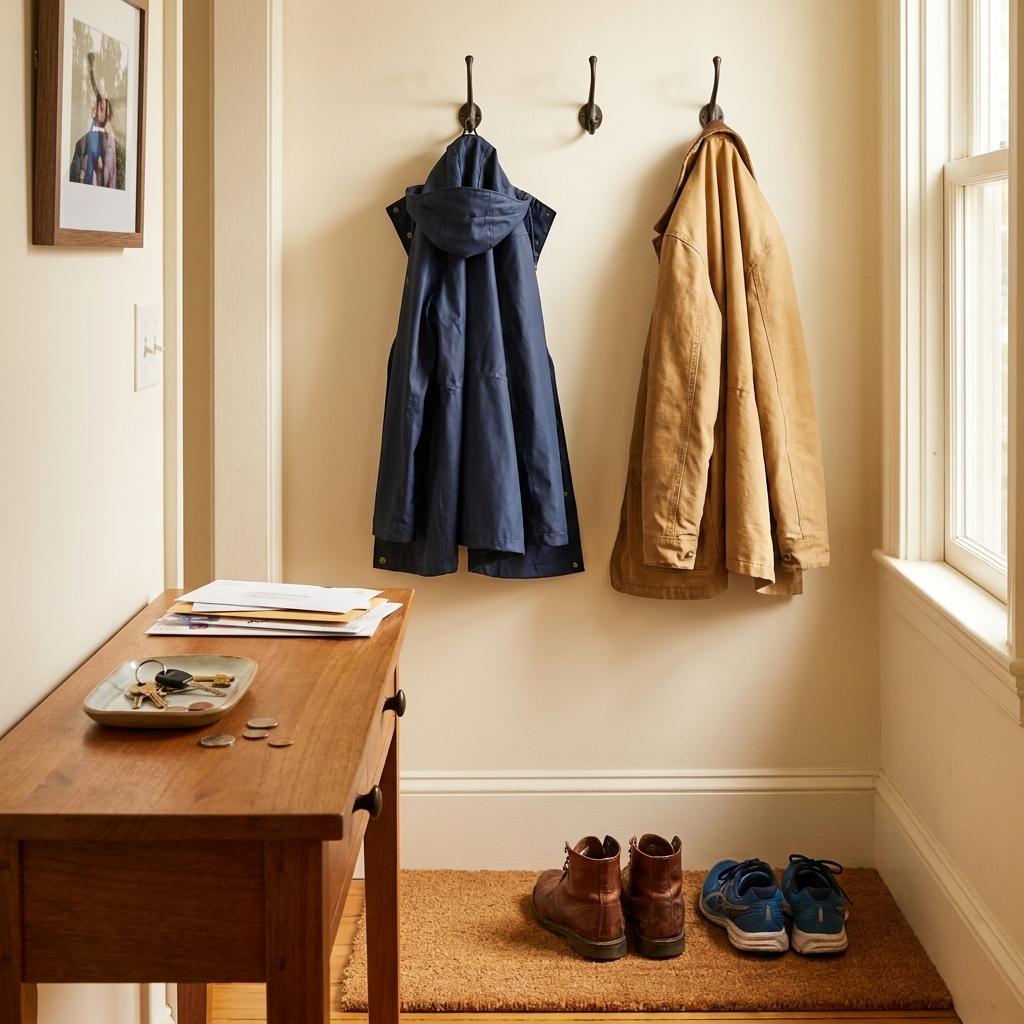
Entryways become clutter magnets because they catch items in motion. The 2-minute rule here is:
- Keys into the bowl
- Shoes onto the mat or rack
- Backpack hung on a hook
- Junk mail recycled immediately
If you do those four things consistently, your hallway will stop looking like a donation pile.
2) The kitchen landing strip
The kitchen counter is where unfinished decisions go to multiply. Two-minute wins:
- Put condiments back right after making lunch
- Load the cup instead of “letting it soak”
- Wipe the stove once it is cool enough to touch safely
- Do a 90-second reset before bed
3) Bathrooms
Bathrooms feel like they get messy for no reason. Usually it is tiny things:
- Put products back under the sink after using them
- Hang the towel instead of tossing it
- Wipe toothpaste splatter before it dries
4) Bedroom laundry zone
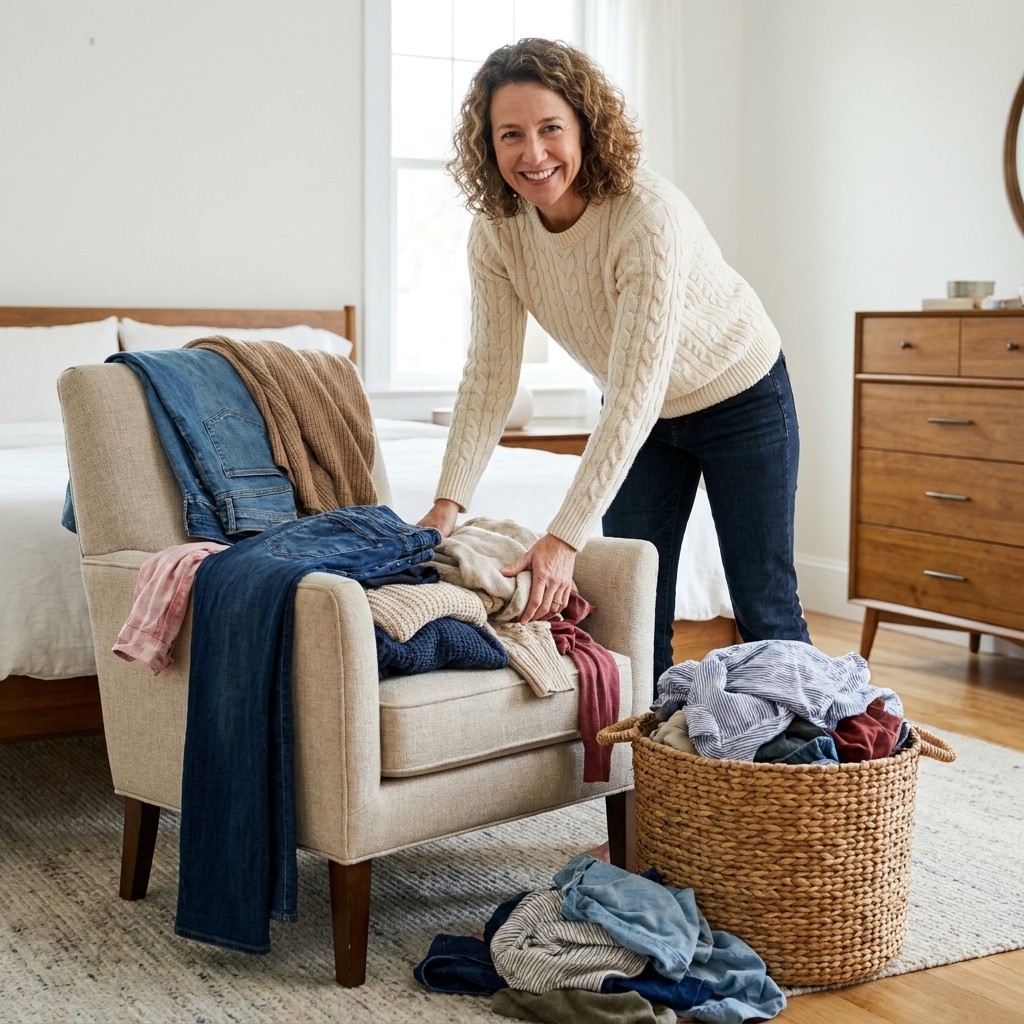
If your bedroom has “the chair,” I see you. The 2-minute rule here is basically: make a decision now.
- Dirty goes in the hamper
- Clean gets hung or folded
- Not sure becomes a short-term hook, not a chair pile
Make it realistic
I want to be very clear: the 2-minute rule is not about doing everything instantly, all day long, like a cleaning robot. It is a tool. Use it to support your life, not shame yourself.
Try the one-touch mindset
When you pick something up, aim to put it where it belongs in one touch. Not on the counter. Not on the stairs. Not in a “sort later” pile.
If your item does not have a home, that is useful information. You just found the root problem: you need a container or a category.
Set a boundary for chaos
If you are in the middle of homework chaos, dinner burning, or a toddler meltdown, you get a pass. A practical workaround:
- Create one small “pause bin” per floor, like a basket on a shelf
- Drop the stray items there in 10 seconds
- Empty the bin during your next 10-minute reset
This keeps the rule from turning into all-or-nothing perfectionism.
Adjust the rule
If two minutes feels like a lot (or not enough), you can flex it without breaking it:
- The 1-minute version: great for kids, partners, or anyone building the habit from scratch.
- The 5-minute version: helpful in bigger households where “quick” is still a little longer.
- Bank it for later: if you get interrupted, toss the item in the pause bin and handle it during your nightly reset.
Common roadblocks
“It takes me longer than two minutes.”
Totally possible, especially if your storage is inconvenient. If hanging the coat takes five minutes because the closet is jammed, the problem is the system, not you. Fix with:
- Fewer coats on the main hook rail
- One easy-access hook per person
- A small donation bag in the closet to reduce overflow
“My family does not do it.”
Start by making the right behavior the easiest behavior. The more steps you remove, the more likely people comply.
- Hooks at kid height
- Open bins instead of lidded boxes
- Shoe basket near the door, not inside a closet
And yes, you can absolutely narrate it casually: “Two-minute task. Future me says thanks.” It is corny. It works.
“I forget.”
Pair it with something you already do:
- While coffee brews: put away five clean items
- After brushing teeth: quick sink wipe
- Before you sit down at night: 2-minute living room sweep
Start today
If you want this habit to stick, do not try to apply it to your entire home at once. Pick one hot spot for one week.
My 7-day starter plan
- Choose one zone: entryway, kitchen counter, or bathroom sink.
- Define the “done” version: for example, “counter is clear except the coffee maker.”
- Do only 2-minute tasks in that zone: no organizing projects.
- Repeat for 7 days.
After a week, you will feel the difference. Not because your house is perfect, but because clutter is not getting a chance to set up camp.
Safety first
This is a tiny habit, not a race. If a task involves heat, sharp tools, or chemicals, do it safely, not quickly. And if you are running late, leaving on time is the organized choice.
When not to use it
This rule is powerful, but it is not the answer to everything. Skip it when:
- You are running late and doing it now will create a bigger problem
- You are exhausted and forcing it will backfire
- The task triggers a bigger decision you cannot make in two minutes, like sentimental clutter
The goal is progress, not pressure. Sometimes the most organized choice is to rest and reset later.
FAQ
Is the 2-minute rule enough to keep a house clean?
It will not replace deep cleaning, but it can dramatically reduce daily mess and prevent buildup. Think of it as maintenance that protects your bigger routines.
What if everything feels like more than two minutes?
That usually means you have too much stuff, or your storage is too hard to use. Start with one small declutter, like clearing one hook row or one drawer, then the 2-minute tasks become truly quick again.
Does it work with kids?
Yes, especially when you make the action simple. Open bins, low hooks, and clear “homes” matter more than lectures. Aim for short, repeatable wins.
How is this different from a nightly reset?
A nightly reset is a scheduled cleanup. The 2-minute rule is a moment-by-moment habit. Together, they are a dream team: fewer messes during the day, and a faster reset at night.
The real payoff
The best part of the 2-minute rule is not a sparkling house. It is the feeling of walking into your kitchen in the morning and not immediately seeing yesterday’s leftovers, crumbs, and paperwork staring back at you.
Tiny tasks are going to happen either way. You can do them in calm, two-minute bursts, or you can do them all at once on the weekend, tired and annoyed. I know which version my reformed-messy self is choosing.