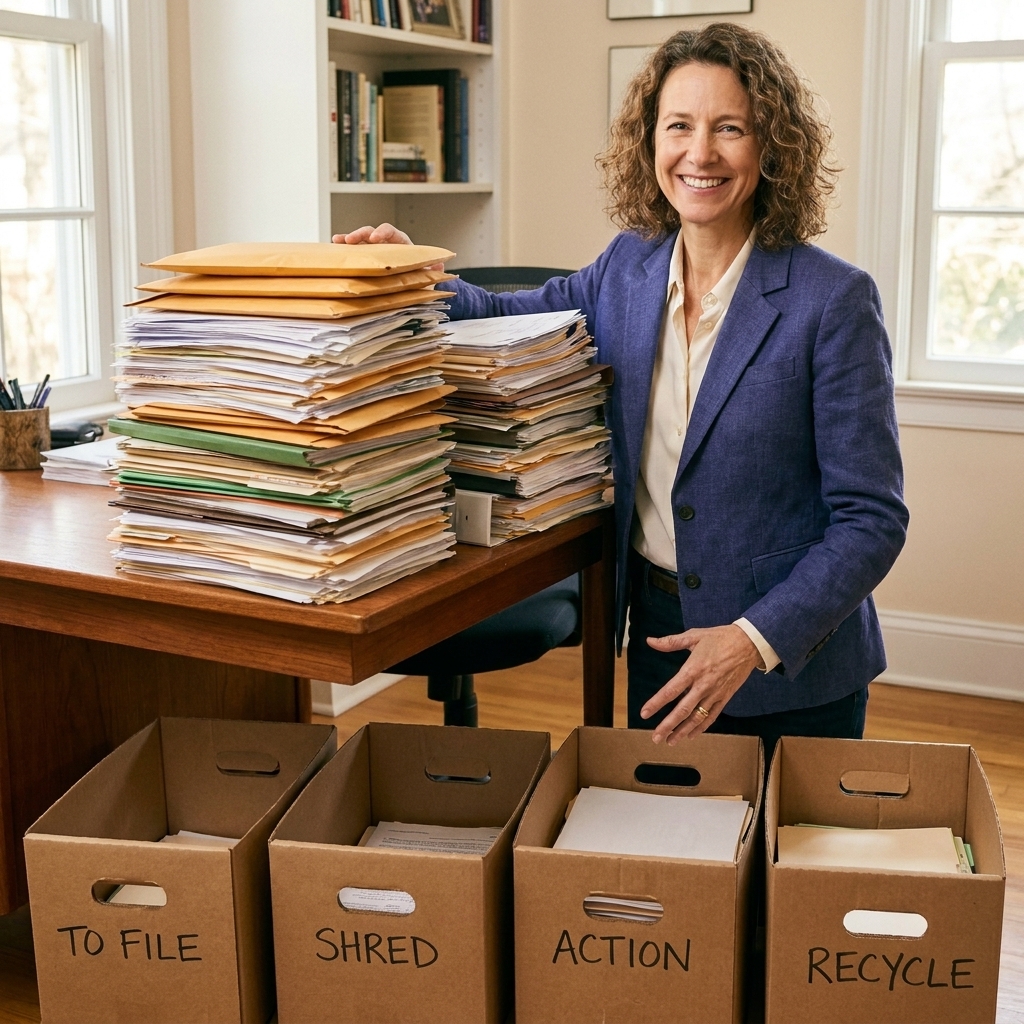
If you have ever packed a junk drawer into a box and labeled it “misc,” you are my people. I am not naturally tidy. I am a reformed messy who learned the hard way that moving is the fastest way to pay money to transport items you do not even like.
This 4-week decluttering timeline is designed to happen before you start serious packing. The goal is simple: fewer decisions on move week, fewer boxes, and a new home that does not inherit your old clutter.

How this timeline works
Each week has a focus and a few high-impact zones. You will:
- Declutter first so you are not packing things you will later donate.
- Use simple categories that keep you moving: Keep, Donate, Sell, Recycle, Trash.
- Make it “good enough” for a move. This is not the time for museum-level perfection.
If you have less than 4 weeks, jump to the week you are in and do a faster version. If you have more than 4 weeks, repeat Week 2 or Week 3 zones at a slower pace.
Time reality check: Most days are designed for about 30 to 60 minutes. If you have a bigger house (or a bigger “misc” habit), aim for one longer session on the weekend.
Quick setup (30 to 60 minutes)
Grab these supplies
- One laundry basket or bin for “put away in another room” items
- Heavy-duty trash bags (trash) and clear bags (donations if you like visual cues)
- One medium box labeled “DONATE”
- A marker and painters tape for quick labels
- A “moving out” folder (paper or digital) for receipts, donation notes, and list of items sold
Choose your decluttering rules
Use any rules you like, but these three are my go-to when time is short:
- Moving tax rule: If it costs money to move it, it has to earn its spot.
- One-minute decision rule: If you cannot decide in 60 seconds, it goes into a “Maybe” box with a deadline (end of Week 3).
- Duplicate cap: Keep your best one, plus one backup if you truly use it.
Important: Put a donation pickup date or drop-off date on your calendar now. Decluttering without an exit plan turns into “neat piles I live with for weeks.”
Week 1: Purge the obvious
Week 1 is about quick wins. We are hunting down the no-brainers: broken items, expired products, and things that clearly do not fit your life anymore.
Day 1 to 2: Trash, recycling, and hazardous items
Aim for: 30 to 45 minutes per day.
- Walk the house with a trash bag and a recycling bag.
- Gather dead batteries, old paint, chemicals, sharps, and light bulbs for proper disposal.
- Toss broken items you realistically will not fix before the move.
If you have a “fix it someday” shelf, moving is your someday. Either fix it this week or let it go.
Safety note: Disposal rules for batteries, e-waste, paint, and needles vary. Check your city or county guidelines so you do not accidentally create a problem for your trash pickup crew.
Day 3 to 4: Pantry and fridge clean-out
Aim for: 45 to 60 minutes per day.
- Throw away expired food, spices that smell like dust, and mystery freezer items.
- Set aside unopened, in-date food for donation if your local pantry accepts it.
- Plan meals around what you have so you buy less before the move.

Day 5: Bathroom and medicine cabinet sweep
Aim for: 30 to 45 minutes.
- Dispose of expired medications properly. In many areas, pharmacies, police stations, or municipal drop boxes offer take-back options.
- Let go of half-used products you do not love.
- Keep one open backup per person, not five.
Day 6 to 7: Linen closet and towels
Aim for: 30 to 60 minutes each day, depending on how deep the towel pile goes.
- Keep the towel sets you actually use and like.
- Demote stained towels to cleaning rags or toss them.
- Be realistic about guest bedding. If guests do not stay over, you do not need three extra comforters.
End-of-week checkpoint: Schedule your first donation drop-off or pickup for early Week 2. Get items out of the house.
Week 2: Closets and hidden clutter
This week hits the areas that create the most boxes: clothing, shoes, bags, and the closets where clutter quietly multiplies.
Fast closet strategy
Do not try on 150 items unless you love emotional pain. Use this order:
- Pull the obvious “no” items: itchy, ripped, stained, never-wear.
- Pull duplicates: keep the best black leggings, the best white tee, the best hoodie.
- Use the “next 30 days” test: If you will not wear it in the next month of normal life, it is probably not moving-worthy.
Day 1 to 2: Clothes, shoes, accessories
Aim for: 45 to 60 minutes per day.
- Create a small “move first” capsule for move week and the first week in your new home.
- Donate shoes that pinch, peel, or have not been worn in a year.
- Limit sentimental clothing to a single bin for now (we will revisit in Week 4).

Day 3: Coat closet and entryway
Aim for: 30 to 45 minutes.
- Keep only current-season outerwear accessible.
- Donate umbrellas with broken ribs and bags you never reach for.
- Build a simple moving-friendly drop zone: one hook per person and one bin for shoes.
Day 4 to 5: Laundry room and cleaning supplies
Aim for: 30 to 60 minutes per day.
- Use up open products instead of moving half-empty bottles.
- Discard old, crusty sponges and mystery cleaners.
- Do not move duplicates of the same thing “just in case.”
Day 6 to 7: Under-bed, hallway closets, random shelves
Aim for: 30 minutes per zone (set a timer).
- Empty one small zone at a time into a “sort pile,” then immediately re-home or donate.
- Set a timer for 30 minutes so you do not get stuck.
- Recycle cardboard boxes you were “saving.” Your new home will provide plenty of cardboard pretty quickly, I promise.
End-of-week checkpoint: Make a second donation run. If you are selling items, list them now with a strict deadline (end of Week 3).
Week 3: Kitchen, garage, bulky stuff
Week 3 is where you save real moving money. Bulky and heavy stuff adds up fast, and it is the most annoying to pack.
Day 1 to 2: Kitchen gadgets, dishes, food storage
Aim for: 45 to 60 minutes per day.
- Declutter by category: mugs, water bottles, containers, small appliances.
- Keep the number of plates and cups that matches your real routine, not your fantasy hosting persona.
- Match containers to lids and let the container bottoms without lids (and lids without bottoms) go.
My rule: if a gadget only does one thing and I have not used it in a year, it is auditioning for someone else’s kitchen.
Day 3: Pantry round two
Aim for: 30 to 45 minutes.
- Commit to “eat down” meals.
- Donate unopened, shelf-stable extras you will not use before moving.
- Set aside a small “open first” bin for move week snacks, coffee, and breakfast basics.
Day 4 to 5: Garage, shed, storage unit
Aim for: 60 minutes per day (or one longer weekend block).
- Group like with like: tools, sports, seasonal decor, camping.
- Get rid of broken gear and incomplete sets.
- Check local rules for paint, propane canisters, and chemicals. Many movers will not transport certain hazardous items, and rules vary by mover and jurisdiction.

Day 6: Furniture and big decor
Aim for: 45 to 60 minutes.
- Measure your new space (or use the floor plan) and be honest about fit.
- If you are replacing it soon, do not move it.
- Sell or donate bulky items early so you are not scrambling on move week.
Day 7: Paper and “misc” categories
Aim for: 45 to 60 minutes.
- Recycle old manuals and keep digital copies when available.
- Shred sensitive documents you do not need.
- Create one small file folder for move paperwork, receipts, and essentials.
End-of-week checkpoint: Anything you planned to sell needs to sell by the end of this week, or it becomes a donation. No guilt. Deadlines are kindness.
Week 4: Sentimental and sanity
This week is about finishing strong without emotional burnout. We will tackle sentimental items with guardrails, plus the things that derail packing: toys, craft supplies, and the “where do I even start” piles.
Day 1: Kids toys and books (or hobby clutter)
Aim for: 45 to 60 minutes.
- Use a container limit: one bin per category (blocks, dolls, cars).
- Donate outgrown toys, incomplete sets, and anything that annoys you more than it delights them.
- For books, keep favorites and donate the rest. Libraries and schools sometimes accept donations.
Day 2: Sentimental items
Aim for: 30 to 60 minutes, then stop before you spiral.
Sentimental clutter is not trash, but it can become a burden if it multiplies unchecked. Try this:
- Choose one “memory bin” per person. If it fits, it stays.
- Photograph bulky keepsakes you do not want to move.
- Keep items that tell your story, not items that guilt you.
Day 3: Bedroom drawers and nightstands
Aim for: 30 to 45 minutes.
- Declutter socks, underwear, old pajamas, and cords you cannot identify.
- Keep one small bag or box for chargers, meds, glasses, and sleep essentials.
Day 4: Bathroom and cleaning supplies round two
Aim for: 30 to 45 minutes.
- Commit to finishing products.
- Pack a small “open first” bathroom kit: toilet paper, hand soap, shower items, towel, trash bags.
Day 5: The first-night essentials box
Aim for: 30 minutes.
This is the box that saves your sanity. Label it boldly and keep it with you if possible.
- Basic tools (box cutter, scissors, screwdriver)
- Phone chargers
- Paper towels, trash bags, disinfecting wipes
- Toilet paper and hand soap
- Two sets of sheets and towels
- Snacks, water bottles, coffee or tea
- Kid or pet essentials (favorite toy, leash, bowls)
Day 6 to 7: Final sweep and donation exit
Aim for: 30 to 60 minutes per day.
- Do a room-by-room sweep with a laundry basket and collect strays.
- Remove the final donation bags and recycling.
- Pack the items you are definitely keeping, knowing you did the hard decisions already.

End-of-week checkpoint: Your home should feel lighter, not empty. You are aiming for fewer boxes and fewer regrets.
What to do with the stuff
Donations
- Bag or box donations by category (clothes, housewares, toys) so drop-off is quick.
- Donation rules vary by organization. Many do not accept items like used mattresses, opened toiletries, or certain baby gear, so check first.
- Call ahead for rules on items like cribs, car seats, and large furniture.
- If you itemize and your tax authority allows it, keep a simple list or receipts for your donations.
Selling
- Sell only higher-value items that are worth your time.
- Set prices to move quickly. The goal is decluttering, not running a small business mid-move.
- Use safe meet-up locations and do porch pickup only if you are comfortable.
Recycling and hazardous waste
- Check your city’s drop-off sites for paint, chemicals, batteries, and electronics.
- Do not leave hazardous items for the next owner unless you have written permission and it is legal in your area.
Trash (no guilt category)
If something is broken, moldy, or not donation-worthy, it is allowed to be trash. Your new home does not need a box of guilt.
Common declutter traps
Trap: “I might need it someday”
Counter: “Would I pay to move it and store it for a year?” If the answer is no, let it go.
Trap: Saving it for the new house
Counter: Only move items you love or actually use. The new house will not magically make you start using the waffle maker you hate cleaning.
Trap: Getting stuck on sentimental items too early
Counter: Save sentiment for Week 4 when your decision muscles are stronger and you have container limits in place.
Trap: Making donation piles that never leave
Counter: Put a pickup or drop-off date on the calendar and treat it like a real appointment.
FAQ
How far in advance should I start decluttering before a move?
Four weeks is a sweet spot for most households, especially if you are decluttering nights and weekends. If you have kids, a garage, or a packed storage area, starting six to eight weeks out is even better.
Should I declutter or pack first?
Declutter first whenever possible. Packing is faster when you are only handling items you have already decided to keep.
What if I do not have time to sell anything?
Skip selling. Donate. Selling can be great, but it adds admin and decision fatigue. The fastest path to a lighter move is a donation box by the door and a deadline.
What should I not move?
Common items movers may not take include open chemicals, propane tanks, gasoline, and some cleaners. Plants can also be restricted depending on distance and local regulations. Always check your mover’s prohibited items list and your local rules.
Does decluttering matter if I am DIY moving with a truck?
Yes, it just changes the math. If you are paying movers by weight or volume, less stuff can mean lower cost. If you are DIY moving, less stuff can mean fewer trips, less lifting, less time loading and unloading, and fewer “why did I bring this” moments.
How do I declutter when I feel overwhelmed?
Start with trash. Then do one small category for 15 minutes. Momentum is more powerful than motivation, and tiny wins stack up fast.
A simple promise
You do not need to earn a fresh start with perfect organization. You just need a plan and a few consistent decisions. If you follow this timeline, you will move fewer boxes, spend less time unpacking, and walk into your new home with more breathing room.
And if you still end up with one mystery “misc” box, welcome to the club. The difference is that it will be one, not twelve.